
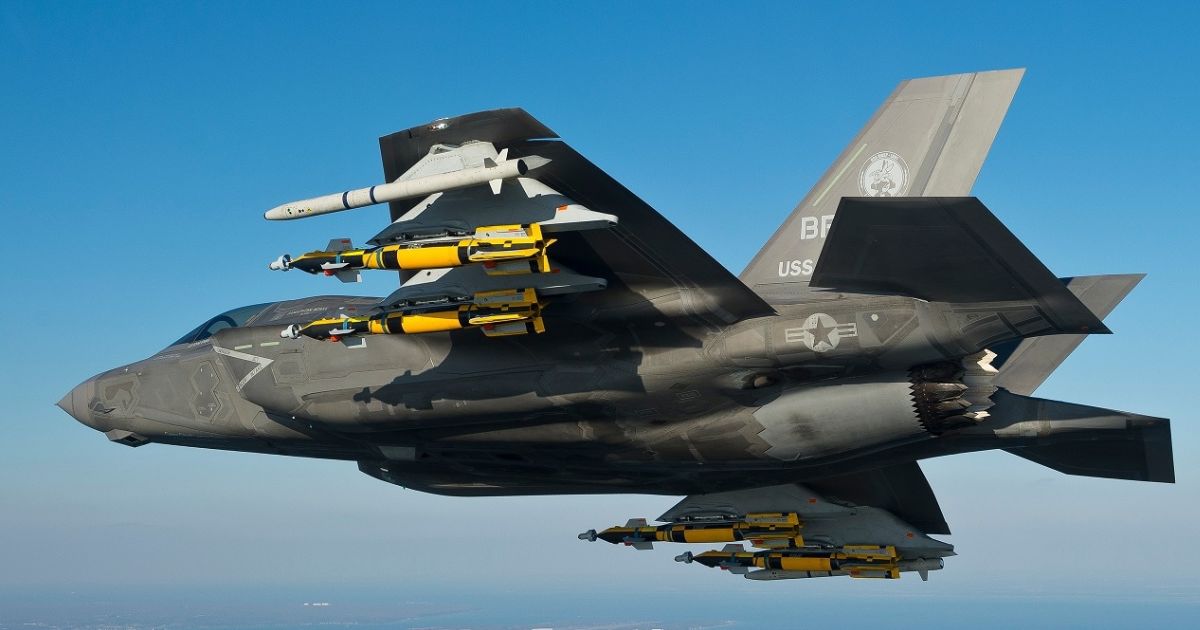
The government of India on Friday reaffirmed that no official talks have been held with America to buy F-35 fighter aircraft. This has been clarified despite references to the platform mentioned in the joint statement following the visit of PM Narendra Modi to Washington in February. The statement expressed a hope for a review of US policy for releasing cutting-edge military platforms to India, including the F-35 and underwater systems.
Minister of State for External Affairs Kirti Vardhan Singh clarified a written reply to Congress MP Balwant Baswant Wankhade in the Lok Sabha. His answer came while there was an increase in bilateral tensions prompted by US President Donald Trump’s recent public remarks and an unexpected increase in tariffs on Indian exports. While defence ties remain a pillar of India-US relations, New Delhi has signalled caution and restraint in light of new trade friction and growing diplomatic discomfort.
Trump’s Tariff Shock Sours Diplomatic Mood
One day ahead of India’s response in Parliament, Bloomberg reported that New Delhi had no intention of striking back immediately at Trump’s newly announced 25% tariffs on major Indian exports. According to unnamed officials, Indian policymakers were “shocked and disappointed” by the action.
Rather than reacting with counter-measures, India was looking at how to de-escalate tensions. This involved boosting imports from America, including liquefied natural gas, telecom gear, and gold. There were no new defence purchases—specifically high-value items like the F-35—on the cards, however.
ALSO READ: Trump Delays Tariffs by a Week — India, Canada, & Mexico Are Still in Crosshairs?
Clarification Follows Trump’s Public Rebuke
Relations became even more tense following Trump’s charges that India was imposing “strenuous and obnoxious” trade restrictions. He also threatened additional penalties, citing India’s fuel and defence relations with Russia. Later, on a posting on Truth Social, Trump brushed off both India and Russia as “dead economies,” belittling their international significance.
Such comments have frozen the diplomatic mood. They have also raised questions about the high-level defence cooperation between the two nations in the future.
No Backdoor Bargains on F-35, Centre Assures
In Parliament, Mr Singh categorically declared that there had been no official US offer for the sale of F-35s. Neither India had any formal negotiations on the subject. His comments refute speculation fanned by Trump’s previous reports during his February meeting with Modi.
The joint statement had only said that Washington would consider reviewing its internal export policy on sensitive defence platforms.
India Engages US Over Pakistan Flare-Up
Replying to another question of the same MP, Mr Singh informed that India was diplomatically assertive following the April 22 Pahalgam terror strike. He assured that India had conveyed its restrained yet firm approach to international partners, including America.
On May 9, India specifically informed US Vice President J.D. Vance that it would retaliate proportionally if Pakistan carried out another attack.
But the real military de-escalation dialogue was held bilaterally between Pakistan and India. It was done at the request of Pakistan and through regular military channels.
India Puts Defence Purchases on Ice
While defence has traditionally acted as a buffer in trade disputes, India seems to be doing the opposite. It is now actively withholding significant US defence buys. Informants attribute this hiatus to not merely tariffs, but also an increasing sense of uncertainty regarding US policy under Trump.
With no official proposal on the table and no discernible diplomatic signals coming from Washington, India is deciding to wait and observe.
This strategic patience highlights a larger rebalancing in Indian foreign policy, as it balances its choices in the midst of tumultuous global alignments.