
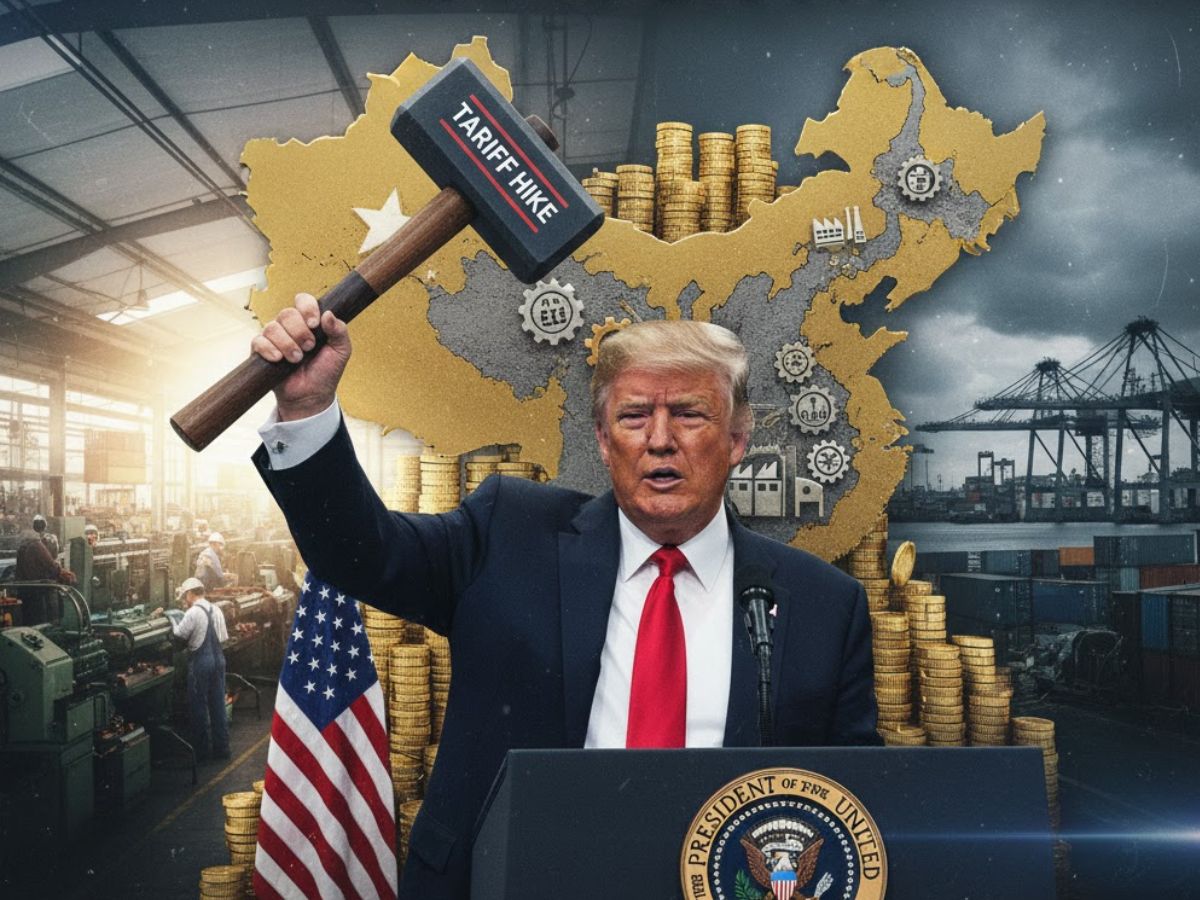
U.S. President Donald Trump has threatened to increase tariffs on Chinese exports and cancel a planned meeting with President Xi Jinping, raising alarm over the fragile state of global economic relations. Trump responded sharply after China tightened export rules on rare earth elements, essential for tech production. He warned on social media of possible financial retaliation, highlighting tensions between the world’s top consumer and producer.
Why Are Rare Earth Elements Important?
Essential for electric vehicles, aircraft engines, and military equipment, rare earths are mostly made by China, which controls over 90% of the supply. Trump described China’s export restrictions as a “hostile order” that could harm the global economy.
Also Read: Multiple Fatalities After Massive Explosion Rocks Tennessee Factory
What Exactly Did Trump Say?
Trump’s posts on Truth Social were clear and direct: he accused China of attempting to monopolize rare earth production. “For every Element that they have been able to monopolize, we have two,” he wrote, indicating that the U.S. has alternative sources. He also questioned the need for his upcoming meeting with Xi at the Asia-Pacific Economic Cooperation (APEC) forum in Gyeongju, South Korea, scheduled for October 31, citing the sudden export restrictions.
How Are Markets Reacting?
Global financial markets reacted sharply. The S&P 500 dropped over 2%, marking its largest one-day fall since April. Investors rushed to safe havens such as gold and U.S. Treasury securities, as the value of the dollar declined in relation to other currencies. “Trump’s post could herald the beginning of the end of the tariff ceasefire,” according to analysts like Craig Singleton, a China expert at the Foundation for Defense of Democracies, who highlighted the growing instability in trade ties.
What Has China Done?
China’s export restrictions, announced Thursday, added five new rare earth elements and dozens of refining technologies to its controlled list. The measures also require foreign producers using Chinese materials to comply with these rules. Experts like Scott Kennedy from the Center for Strategic and International Studies suggest China believes the U.S. will be the first to yield if tensions escalate, positioning Beijing to withstand potential retaliation better than Washington.
Also Read: Leap of Faith: Hamas’s Calculated Risk on a Trump-Brokered Truce | Why Hamas is Betting on Trump?
What Could Happen Next?
Trump’s warnings of a “massive” tariff increase raise the possibility of a renewed trade war. Recent U.S. measures, such as banning Chinese airlines from flying over Russia and removal of certain electronics from online retail, already indicate rising economic friction. Observers now question whether any detente between Washington and Beijing can survive, especially with both sides prepared for hardline measures.