
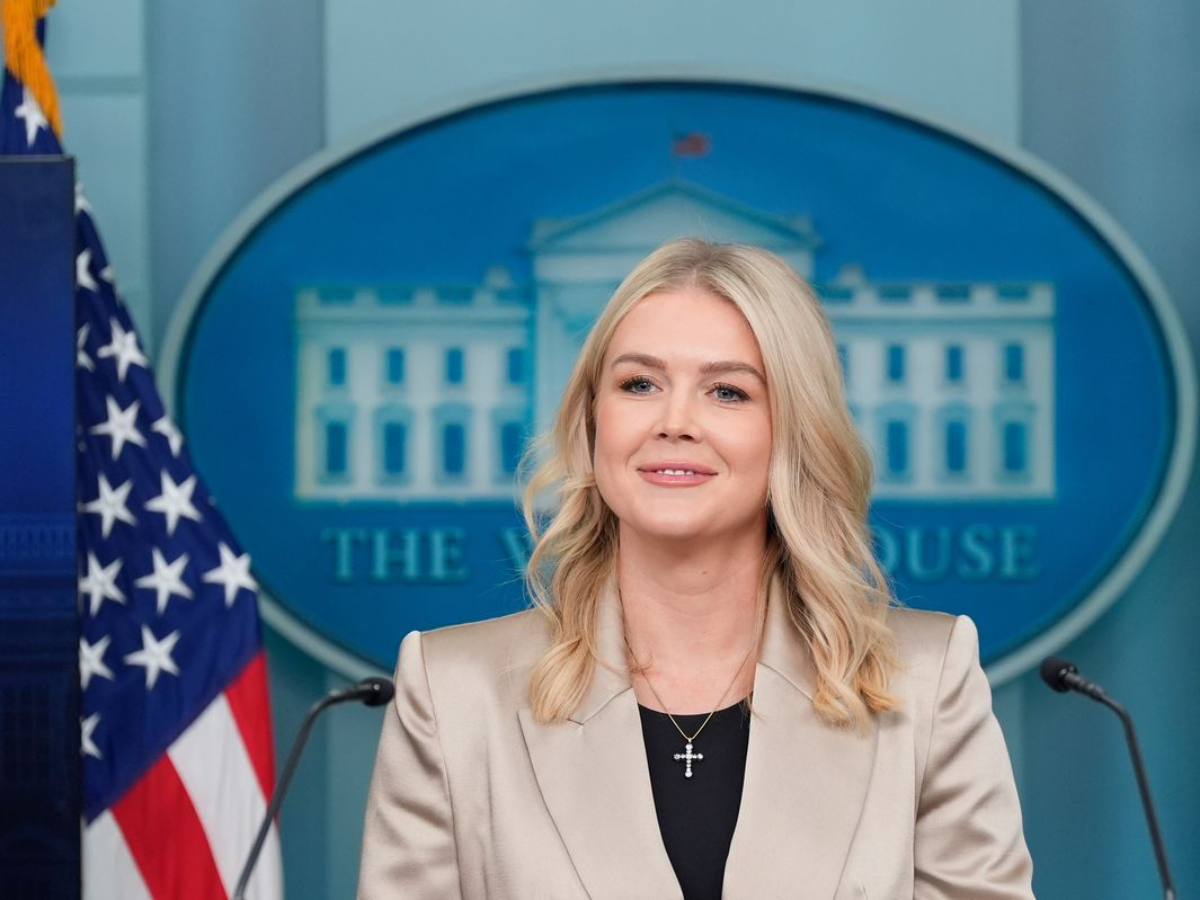
Karoline Leavitt admitted while serving in that position at the White House, she developed PTSD. This brought the intense demands of the role back into public focus. She spoke about the personal toll due to being in a nonstop political environment under a president known for rapid-fire decision-making and continuous media scrutiny.
Press Secretary & the Pressures of the Job
Now 28, Leavitt described a work rhythm that seldom subsides. She said her schedule often compels her to abandon family plans at the last minute, leaving little room for a predictable personal life.
Her attempts at short trips with her husband, Nicholas Riccio, were repeatedly derailed by flare-ups in foreign policy. She spoke candidly about the anxiety this unpredictability has created, saying she avoids making plans altogether.
A Demanding Role Under Donald Trump
In her ten months on the job, Leavitt has earned a reputation for her staunch loyalty to Trump and her blunt, businesslike briefings. In recent days she’s taken questions on Trump’s scathing comments about political rivals and his insults directed at members of the press.
ALSO READ: Bangladesh Ex-PM Khaleda Zia’s Party Slams Interim Govt for Handing Key Ports to Foreign Firms
Behind the scenes, she starts before the sun is up, ends late, and stays on call long after she’s left the West Wing.
Living on the Clock: A 24/7 Assignment
Leavitt says her work follows her home. She reads the news, monitors activity from across agencies and is accessible to the Cabinet and to Trump. She described the role as a 24/7 job, which matches a pace few press secretaries in past administrations have kept.
Yet she said both Trump and Chief of Staff Susie Wiles encouraged her to make time for her young family.
Personal Cost of Public Roles
Her disclosure has reignited discussion about the psychological burden that high-pressure political jobs can impose. Though officials expect grueling schedules, Leavitt’s experience illustrates how the frenetic pace of modern politics bleeds into every corner of personal life.
Her story has sparked a broader conversation about what support systems staff members need inside an administration that never truly switches off.
ALSO READ: UK Autumn Budget 2025: How the Budget Will Affect the Average Family’s Cost of Living in 2026
What is Post-Traumatic Stress Disorder?
Post-traumatic stress disorder is a mental health condition that can develop after a person experiences or witnesses extremely stressful or destabilising events. Though PTSD is often associated with combat or violence, it can also emerge from prolonged psychological strain, an unpredictable work environment and chronic stress.
In high-pressure jobs like White House press secretary, where the stakes are always high and the public scrutiny never ceases, emotional overload can trigger symptoms similar to those seen in more traditional trauma cases. The condition is acknowledged by professionals in mental health as the body’s response to being pushed beyond its capacity to cope for extended, uninterrupted periods.
PTSD Symptoms & Its Impact on Daily Life
Symptoms of PTSD often center around anxiety, disrupted sleep, irritability, and an inability to stay present, though people are affected differently. For some, it includes flashbacks of stress reactions, emotional numbing, or sudden waves of fear due to pressures experienced earlier.
The condition makes even simple routines of planning family time or unwinding after work overwhelming for a person in a demanding political job. It can also make relationships suffer, reduce concentration and weaken one’s ability to disconnect from professional obligations.
These symptoms explain why Karoline Leavitt said she avoids making plans and why the relentless pace of her job left a lasting mental imprint long after the workday ended.
ALSO READ: Who is Rachel Reeves? UK’s First Female Chancellor Family, Career, Net Worth & More
Disclaimer: This article is based on publicly reported information and reflects editorial interpretation. It does not offer medical advice or personal diagnosis.