
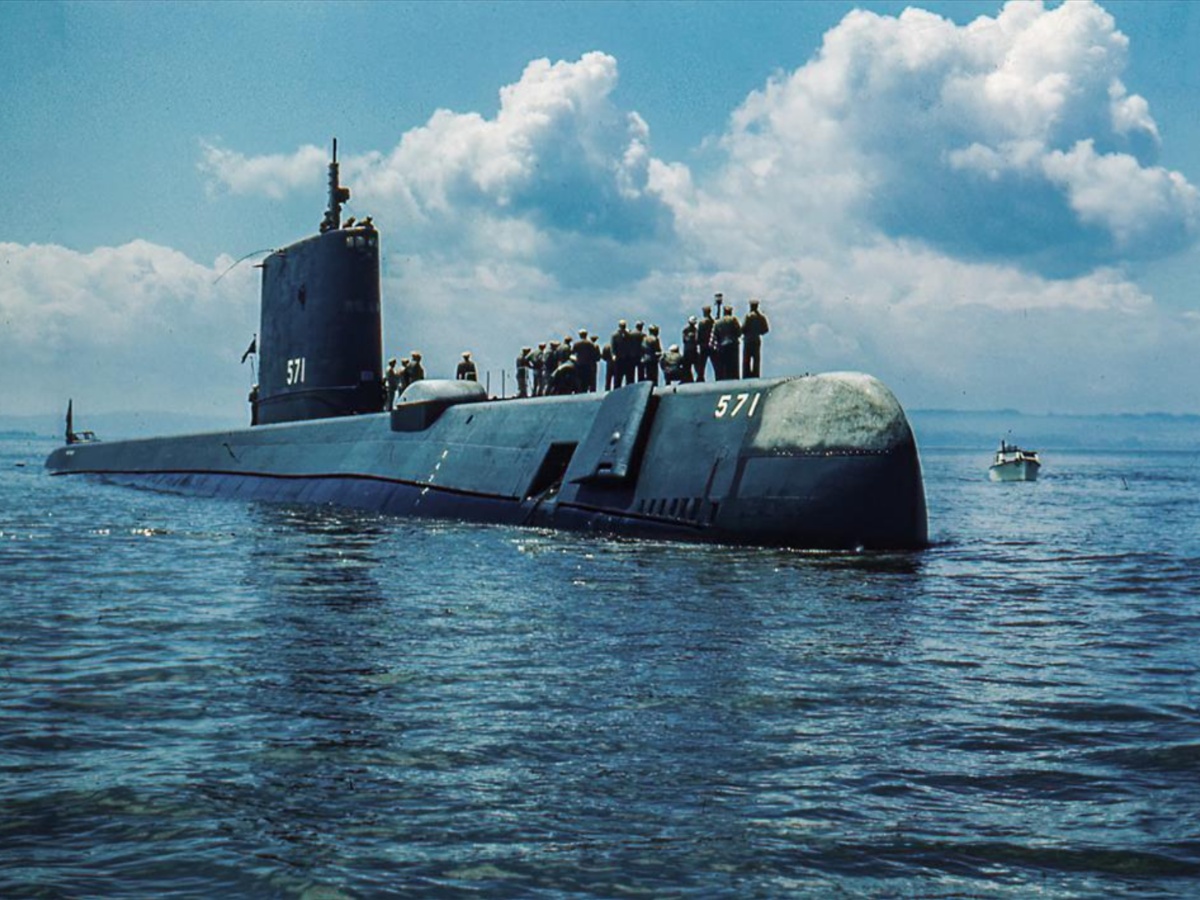
On August 3, history marked two milestones—one beneath the Arctic and the other across the Atlantic and in 1958, the USS Nautilus became the first submarine to cross the North Pole underwater, showcasing the US Navy’s nuclear submarine prowess during Cold War tensions.
Meanwhile, on this same day in 1492, Italian explorer Christopher Columbus began a voyage that would reshape global history and from strategic military advances to early exploration, August 3 has witnessed key chapters in the story of humanity.
USS Nautilus Crosses the North Pole Underwater
On August 3, 1958, the USS Nautilus (SSN-571) made history by completing the world’s first fully submerged voyage beneath the geographic North Pole that operated by the United States Navy, the Nautilus was also the world’s first operational nuclear-powered submarine. Its groundbreaking journey took place under the mission codenamed Operation Sunshine.
The submarine set sail from Pearl Harbor in July and remained submerged for nearly 1,400 miles under the Arctic Ocean and navigating under a thick sheet of polar ice, the Nautilus reached the geographic North Pole at 11:15 pm EDT, transmitting the iconic message: “Nautilus 90 North.”
This mission proved the submarine’s endurance and demonstrated a new era in naval strategy but the ability of nuclear-powered vessels to travel long distances underwater without surfacing or refueling offered unmatched stealth and strength—critical advantages during the Cold War era.
Read More: India to Keep Buying Russian Oil Despite Trump’s Claims and U.S. Pressure
Christopher Columbus Sets Sail in 1492
On this day in 1492, Christopher Columbus left the Spanish port of Palos de la Frontera, hoping to find a westward route to Asia and it was backed by Spanish monarchs King Ferdinand and Queen Isabella, Columbus led three ships—the Niña, the Pinta, and the Santa María—across the Atlantic with a crew of 90.
Although most believed his route was unrealistic, Columbus pressed on but after weeks at sea and growing fear among the crew, he finally sighted land on October 12, unknowingly reaching the Bahamas. Believing he had arrived in Asia, he called the local inhabitants “Indians.”
Though Columbus never found Asia, his voyage initiated the European colonisation of the Americas, forever altering the course of global history.
Other Key Events on August 3
1960: The Republic of Niger gained independence from France.
1949: The National Basketball Association (NBA) was formally established.
1940: The USSR absorbed Lithuania, after occupying the Baltic region.
Why August 3 Still Matters
From underwater voyages to colonial beginnings, August 3 reminds us that history moves in both bold strokes and quiet shifts. It tells us how far we’re willing to go—for power, for discovery, or for freedom. Whether deep beneath the polar ice or across stormy Atlantic seas, humanity has always found ways to reach beyond its limits.