
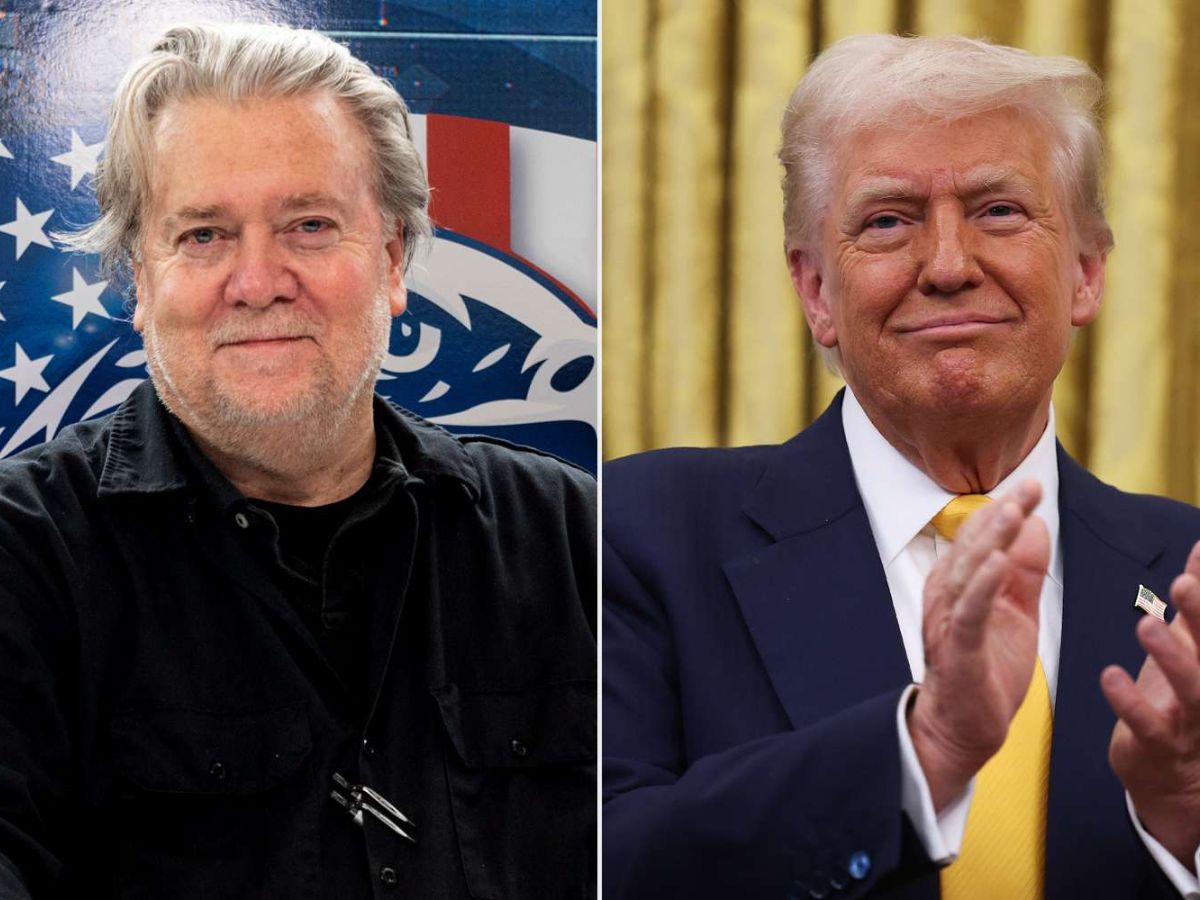
Steve Bannon, ex-White House chief strategist, claimed that Donald Trump intends to seek a third term in 2028, causing a political storm. This bold move would defy the 22nd Amendment and could make the election a prelude to an unprecedented political event.
What Exactly Did Steve Bannon Say?
During an interview with The Economist, Bannon, a key Trump ally, was unequivocal about the president’s intentions. “He’s gonna get a third term, Trump ’28, Trump is gonna be president ’28,” Bannon stated, adding, “so people just ought to get accommodated with that.” He framed this goal as a national necessity, arguing, “We need him for at least one more term, and he’ll get that in ’28.” Bannon further described Trump as an “instrument of divine will,” suggesting a sense of inevitability around his political destiny, despite acknowledging Trump is not “churchy” or “particularly religious.”
How Could Trump Possibly Circumvent the Constitution?
The main query that Bannon’s assertions raise is “how.” The 22nd Amendment, which was drafted to prevent the executive branch from becoming unduly concentrated, is a cornerstone of American democracy. When pressed on how Trump would bypass this legal barrier, Bannon was cryptic but confident. He claimed there were “many alternatives,” though he refused to specify what they are. He coyly stated that at the “appropriate time, we’ll lay out what the plan is,” while insisting, “there’s a plan and President Trump will be the president in ’28.” This vagueness leaves room for intense speculation about potential legal or political strategies.
Also Read: ‘A Plan to Fight ‘Jungle Raj’ Charge’: Opposition to Focus on Jobs, Health in Manifesto
Why is This Claim So Significant?
Bannon’s comments go beyond simple campaign rhetoric because they directly challenge the norms of American governance. A Trump ally is gauging public opinion by publicly speculating about a third term, which has long been regarded as politically taboo and unconstitutional. Bannon sought to normalize the concept, arguing that Trump had “longer odds in ’16 and longer odds in ’24” than he does for 2028. The statement forces a national conversation about the resilience of American democratic institutions in the face of ambitious political plans.