Hawaii encountered its first waves of tsunami on Tuesday evening after a record 8.8-magnitude earthquake occurred off Russia’s Kamchatka Peninsula. The initial waves hit close to Nawiliwili on Kauai island at about 8 PM local time, as verified from buoy data. But while warnings were being issued, scores of individuals were spotted gazing at a rainbow from cliffs overlooking Hanalei Bay, mere moments before the tsunami hit.
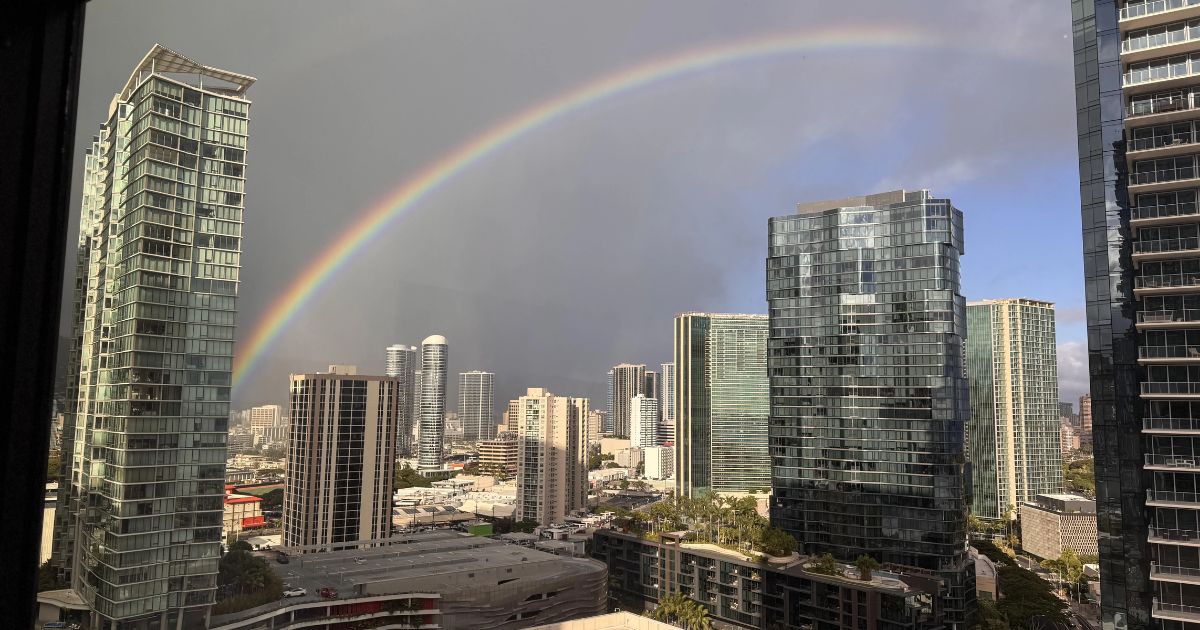
BREAKING: A pre-tsunami rainbow appears over Kauai’s northern shore in Princeville, near Hanalei Bay, Hawaii.
Locals gather on 100-foot cliffs within the designated safe zone
— Insider Paper (@TheInsiderPaper) July 30, 2025
Webcams recorded the stunning vistas — the awesomely beautiful scenery as well as the ominous threat. Such antics could be fatal, authorities cautioned. As the sea water receded and waves rolled closer, Hawaii officials called on residents and visitors alike to seek higher ground.
Rainbow Before Disaster
In a breathtaking but chilling moment, a rainbow materialised in the skies above Kauai just as the tsunami was about to strike. It was witnessed by live cameras over Princeville, close to Hanalei Bay. Dozens of locals watched the spectacle from cliffside trails, oblivious or in denial of the impending hazard from the Pacific.
There is no scientific connection between rainbows and tsunamis. Rainbows are caused when sunlight travels through raindrops, in particular weather conditions. They are not precursors to seismic activity. But on Tuesday, the timing contributed to the otherworldly quality as waves from the Russian quake approached Hawaii.
Tsunami Confirmed, Sea Recedes
The Pacific Tsunami Warning Centre verified wave activity following buoy data near Nawiliwili, reporting increasing sea disturbances. Shortly afterwards, live internet cameras in Kauai and Oahu indicated the sea dramatically receding — a telltale indication of approaching tsunami waves. Sea levels visibly decreased close to shorelines, triggering emergency sirens throughout the islands.
The Russian quake, one of the 10 strongest ever measured by the US Geological Survey, had already caused waves reaching up to 12 feet as far away as the Pacific. Alerts were sounded not only in Hawaii but throughout Japan, South America, and much of Central America.
Warnings Ignored by Many
In spite of sirens and warnings, numerous tourists in Hawaii stayed along the beaches, attracted by the scenic splendor and possibly unaware of the threat. Honolulu Mayor Rick Blangiardi called for individuals to go into inner buildings or higher ground immediately.
Governor Josh Green sent a stern warning,”People should not, and I’ll say it one more time, should not linger near the coastline or endanger their lives just to witness what a tsunami is. It is not an ordinary wave. It will kill you if you are struck by a tsunami.”
When Scenic Becomes Deadly
The rainbow was a natural phenomenon, perhaps, but the throngs of people that came out to take pictures of it suggest something more ominous — disaster tourism. Increasing numbers of people are opting to remain and observe spectacular weather or natural phenomena rather than fleeing. The quest for Instagram moments endangers lives and overextends emergency services.
In this instance, the rainbow was not miraculous. It was a warning sign, dismissed.
Urgent Need for Awareness
Hawaii’s tsunami response highlights both the power of nature and the risks of human complacency. As seismic activity increases around the Pacific Ring of Fire, experts warn that more tsunamis are likely. The public must heed warnings, not chase photo ops.