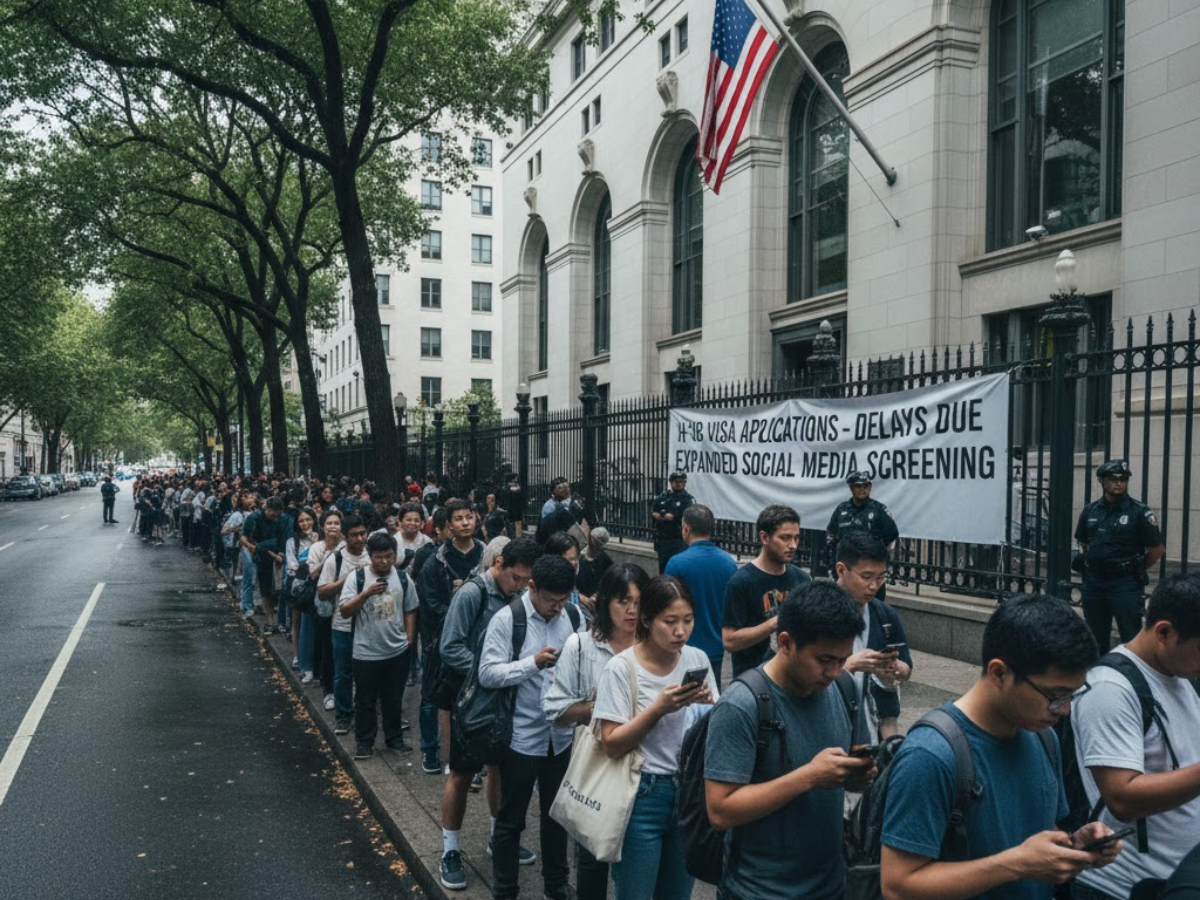
A quiet but consequential shift in US visa processing is reshaping the experience of skilled foreign workers, particularly those on H-1B visas. Starting December 15, the US State Department expanded its social media screening policy to include H-1B professionals and their H-4 dependents.
What was once limited to students and exchange visitors has now moved into the skilled workforce space, triggering uncertainty, delays and anxiety for thousands of applicants from India.
Expansion of Social Media Vetting
Until recently, such social media scrutiny was limited largely to F, M, and J categories. The new rules put H-1B applicants and renewals under the same lens. Consular officers do a review of online activities that have now become a part of background checks and applicants are asked whether their social media profiles are public and accessible.
This change signals a broader emphasis on digital footprints in immigration decisions, even for those applicants with established employment histories.
What is the 221(g) Slip’s Role
The majority of applicants coming out of interviews are being handed a 221(g) slip, a notice that the visa cannot be approved immediately. It is not a rejection but a temporary halt under US immigration law while further checks are completed.
ALSO READ: PM Modi Meets Omani Leaders to Enhance Strategic, Defence & Bilateral Cooperation
In most recent cases, the slip reflects administrative processing tied to social media review rather than missing documents or eligibility concerns.
Delays, Passports & Mixed Signals
Applicants report mixed results after interviews: some are asked to leave their passports with the consulate often a signal that approval may be imminent-while others are returned, usually to await an indeterminate months long review.
Online forums suggest a lack of transparency in the process, as some applicants report status updates occurring within days, while others can often wait for indefinite lengths of time without word.
Slip Color Understanding & Misconceptions
The color of the 221(g) slip has become a focus of interest, although experts urge not reading too much into it. Most applicants receive white slips today, but colors are not standardized to have a meaning.
Immigration professionals say that what is written in terms of instruction and requests means much more than the appearance of the slip.
Why H-1B Applicants are Receiving 221(g) Slips
- The 221(g) slip indicates the visa cannot be approved immediately and requires further review.
- Recent increase due to expanded social media vetting for H-1B and H-4 applicants.
- May involve background checks or verification of employment and documents.
- Does not mean rejection and the application is temporarily on hold.
- Visa status is updated online once the review is complete.
- Resolution timelines vary, some cases are cleared in days others may take weeks or months.
What are the Impact on Indian H-1B Holders
Indian professionals are among the worst-hit. Several who went to India for regular visa stamping saw appointments delayed well into the next April or May. Unable to re-enter the US without a valid stamp, some were stuck-struggling with work disruptions and uncertainty in their careers.
The heightened scrutiny, combined with a lack of clarity on timelines, has now transformed what was initially a procedural change into a personal and professional crisis for scores of families.
ALSO READ: ‘Export Operations for Crude & Byproducts continue normally’, Venezuela says amid Trump