
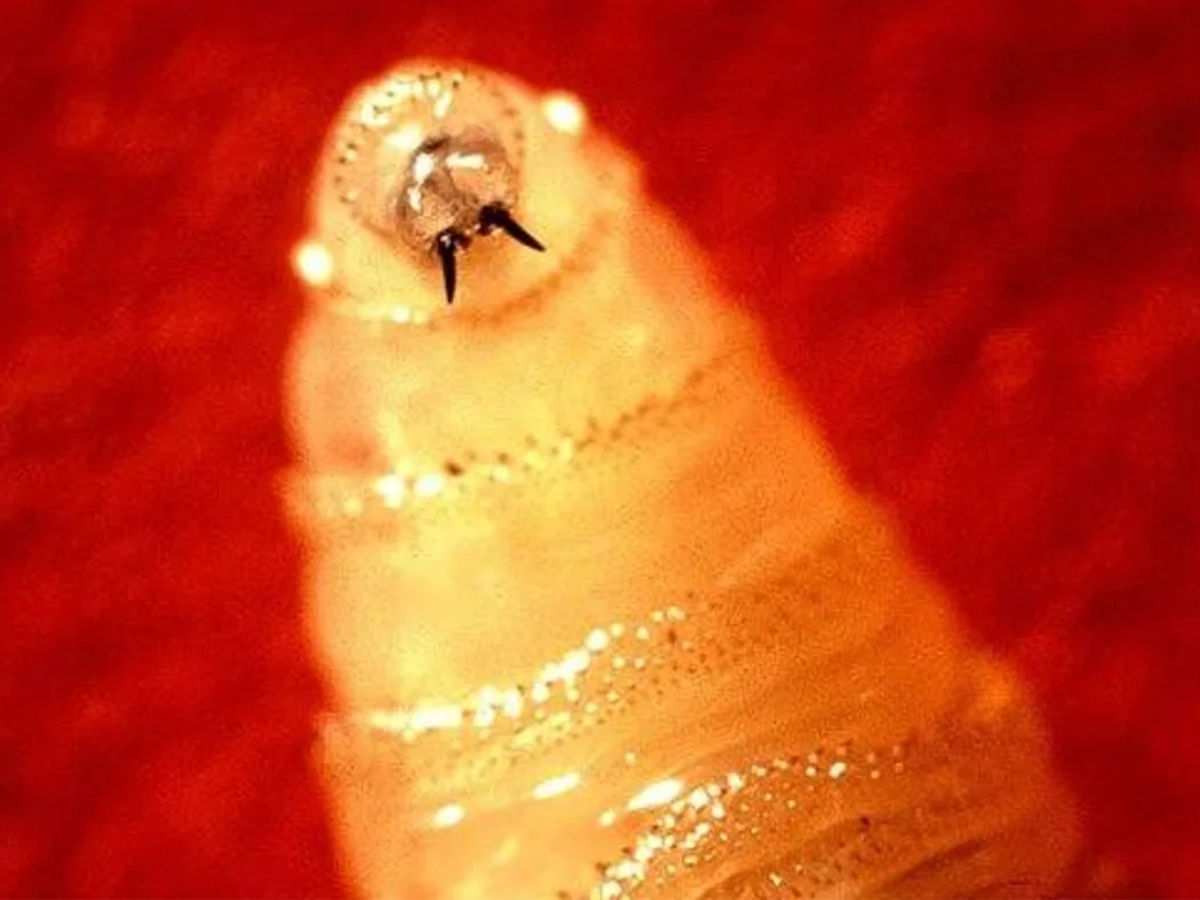
The United States reported its first human case in years of the New World screwworm, a flesh-eating parasite, causing health authorities to raise an eyebrow, while the risk to the general public is still low. The patient was found in Maryland in an individual who had recently visited El Salvador.
Rare and Painful Infestation
The U.S. Department of Health and Human Services verified on Monday that the patient had been infected with the parasite, also scientifically referred to as Cochliomyia hominivorax. The CDC called the infestation “very painful”, as the larvae dig into flesh, consuming living tissue.
This is the first human case of travel-related New World screwworm myiasis from an outbreak-affected country diagnosed in the United States,” officials reported. While the infection presents a frightening situation, experts point out that it is treatable and not generally fatal if treated immediately.
How the Parasite Works
The New World screwworm, which was largely eliminated from the United States in the 1960s, is slowly migrating northward from Latin America. The female fly deposits its eggs on warm-bodied animals, typically livestock like cattle, although occasionally humans can serve as hosts.
National Cattlemen’s Beef Association CEO Colin Woodall characterized the parasite to NPR as “a horrific parasite” that burrows into flesh and literally eats out the animal from the inside.
The CDC explains that in humans, larvae most often infect open wounds but can infect sensitive areas such as the nose, eyes, and mouth, requiring immediate medical treatment, sometimes surgery to have the larvae removed.
The patient from Maryland was verified to have the parasite through telediagnosis, in which specialists examined photographs of larvae on August 4, 2025. Although Reuters initially broke the story, the precise details such as whether the patient is the same one who was earlier reported upon return from Guatemala are not yet clear.
The authorities emphasize that the threat to public health in the U.S. is extremely low since human infections are rare. Nonetheless, the case highlights the parasite’s tendency to re-emerge and cause serious tissue damage if left untreated.
Efforts to Prevent Outbreaks
The United States Department of Agriculture recently released plans to manage New World screwworms, with emphasis on safeguarding the cattle industry. A major step is to introduce sterile males into the environment, which will stop the female insects from reproducing. This approach, successful in the 1960s, is one element of a five-faceted plan to stamp out infestation.
“Female screwworms only once mate during their lifetime, and thus this technique actually lessens the population,” officials said, citing the preventive strategy as a new twist on a centuries-old eradication program.
A Reminder of Vigilance
While the parasite is found in people is relatively rare, medical experts advise travelers to outbreak areas to be cautious. Early diagnosis and treatment of the parasitic infection are still essential in averting serious complications.
While officials wait for developments, the Maryland case is a grim reminder of how pathogens can cross boundaries in unexpected ways and why constant vigilance will remain a requirement for public health and animal protection.