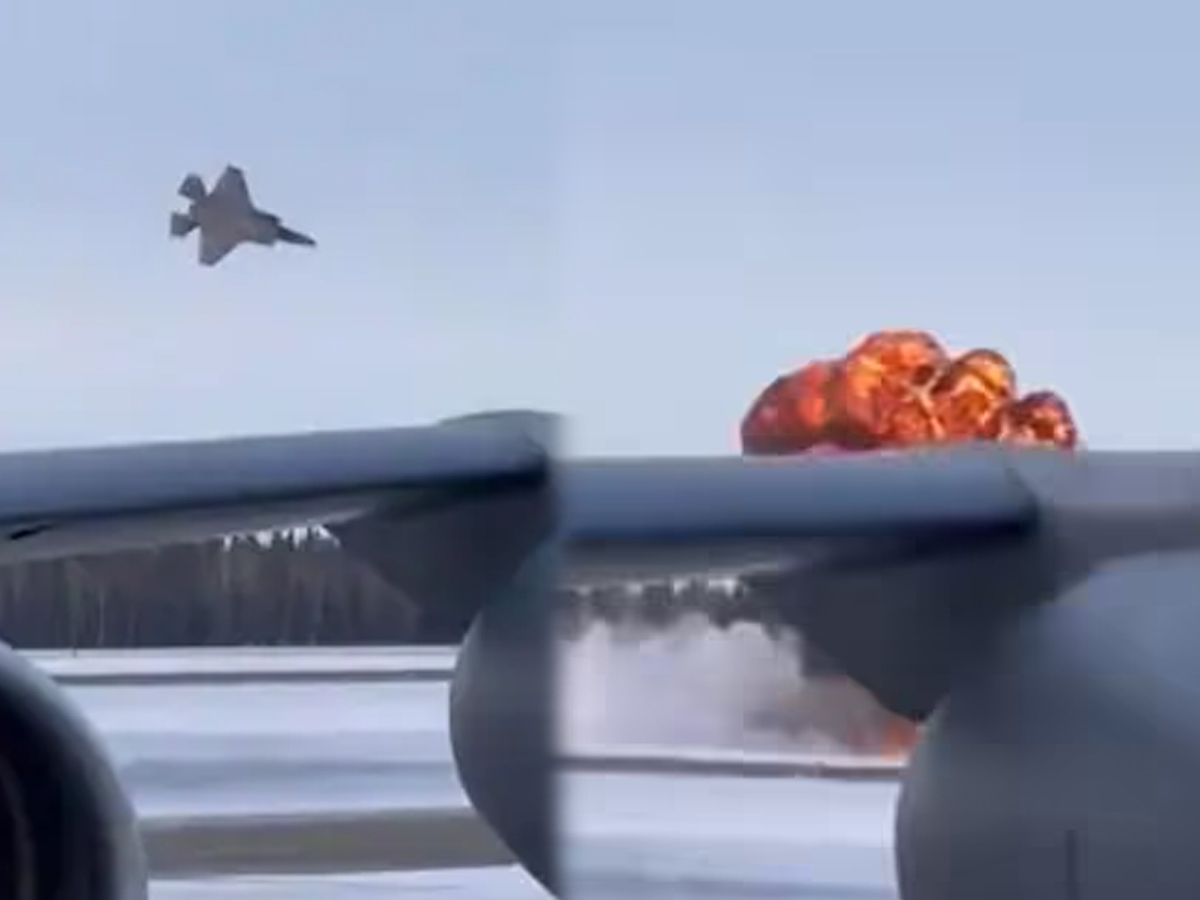
Alaska F-35 Crash: A shocking US Air Force report has revealed new details about an F-35 fighter jet crash in Alaska earlier this year. The $200 million aircraft went down on January 28 at Eielson Air Force Base in Fairbanks after a critical landing gear malfunction.
The pilot ejected safely and survived with minor injuries. However, the aircraft exploded into a fireball and was destroyed.
Alaska F-35 – 50 minutes Call With Engineers
A dramatic series of events leading up to the disaster was disclosed in the accident report. While on a live conference call with five engineers from Lockheed Martin, the F-35 pilot circled the sky for about fifty minutes.
JUST IN: F-35 fighter jet crashes at Eielson Air Force Base in Alaska. The pilot survived pic.twitter.com/zEuPNY8jqk
— BNO News (@BNONews) January 29, 2025
Three landing gear specialists, a flight safety engineer, and a senior software engineer were on the team, and they attempted to fix the stuck landing gear in a number of ways together, but to no avail.
Failed Attempts to Fix Landing Gear
Soon after takeoff, the landing gear failed to retract properly. When the pilot lowered it again, the nose gear locked at an angle.
The pilot attempted two “touch-and-go” landings to straighten it. But instead, both main landing gears froze, creating an even more dangerous situation.
According to the report, “The aircraft operated as though it was on the ground when flying,” causing the F-35 to shift into automated ground-operation mode. This made the jet impossible to control.
What Went Wrong With the F-35
An inspection of the wreckage uncovered a shocking detail. One-third of the hydraulic fluid in the nose and right main landing gear systems was water. This froze in the extreme cold, blocking the hydraulic lines.
At the time of the crash, temperatures in Fairbanks were recorded at -1 degree Fahrenheit. Just nine days later, another F-35 at the same base suffered a similar issue but managed to land safely.
Lockheed Martin Warning Ignored
The investigation pointed out that Lockheed Martin had already issued maintenance guidance in April 2024. The bulletin warned that ice in the hydraulic system could make it “difficult for the pilot to maintain control of the aircraft” in freezing weather.
The report noted: “If the engineers on the call had referenced this bulletin, they likely would have advised a planned full stop landing or a controlled ejection instead of a second touch-and-go attempt.”
Bigger Questions About F-35 Safety
The crash raises serious concerns about the F-35 program, already one of the costliest defense projects in history. Questions are being asked about how water entered the hydraulic systems and whether maintenance protocols were followed properly.
CNN reported that Lockheed Martin has been contacted for comment on the findings.
For now, the US Air Force faces a pressing issue—ensuring the safety of its pilots and preventing similar incidents in extreme weather conditions.