
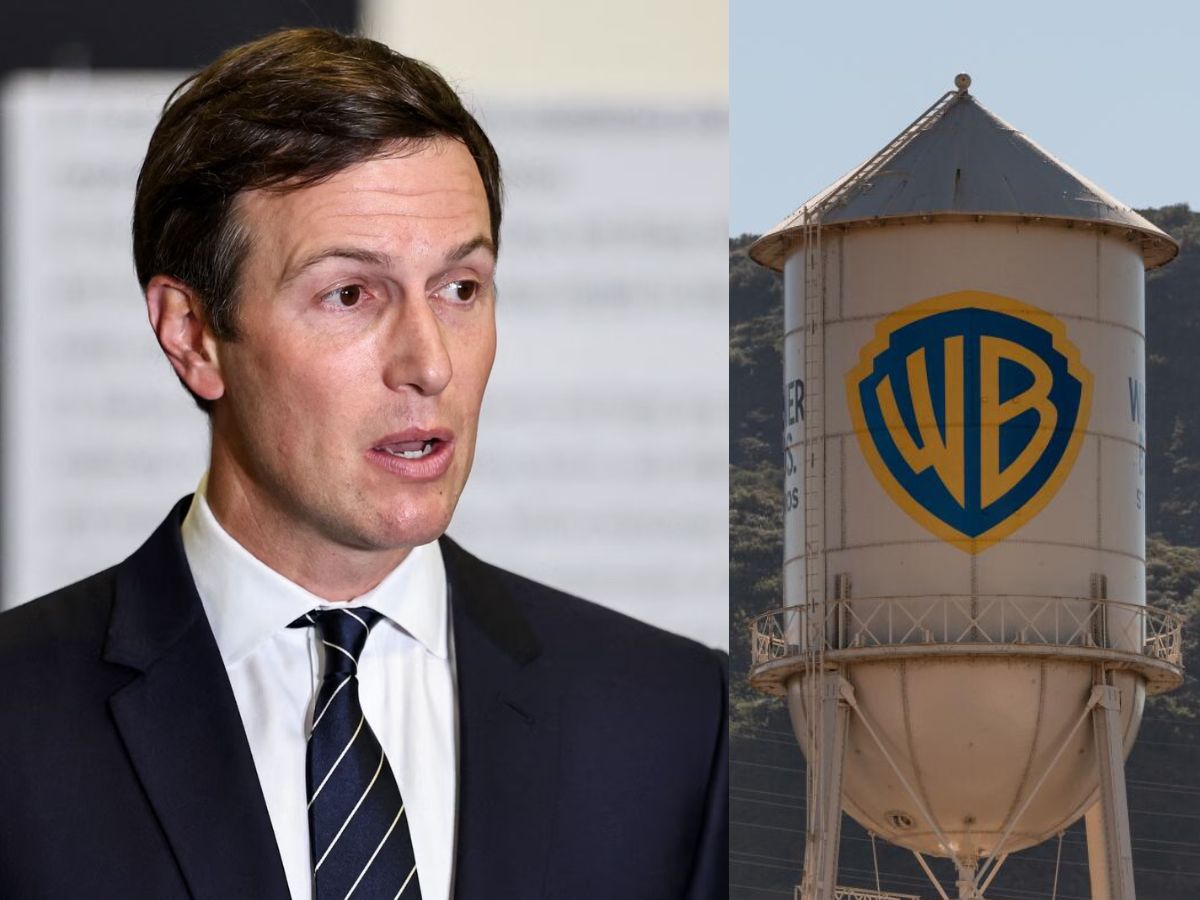
Jared Kushner’s role in financing a rival bid for Warner Bros Discovery has sparked major ethical concerns. As the former White House adviser and son-in-law of President Donald Trump helps fund Paramount’s $108 billion offer, experts warn it blurs the line between family business interests and government influence over a landmark media deal.
What is Jared Kushner’s Role in the Deal?
Paramount Skydance confirmed that its hostile takeover bid for Warner Bros Discovery includes financing from Kushner’s investment firm, Affinity Partners. The funding consortium also includes the sovereign wealth funds of Saudi Arabia, Qatar, and Abu Dhabi.
This places Kushner, a senior advisor in Trump’s first term who remains involved in Middle East policy, directly on one side of a high-stakes corporate battle. The rival bidder, Netflix, has already secured an agreement with Warner Bros, but now faces this politically connected counter-offer.
Also Read: Who Is Neal Mohan? Indian-Origin Tech Executive Chosen as 2025’s CEO of the Year
Why Are Ethics Experts Raising Alarms?
Legal and governance experts are calling the situation a textbook conflict of interest. They argue President Trump, who stated he would “be involved” in the decision regarding the Netflix deal, now faces a scenario where his administration’s regulatory decisions could benefit his son-in-law’s financial interests.
Key criticisms include:
- “Exhibit A” Conflict: Nell Minow of ValueEdge Advisors stated, “If you were teaching a class at business school on conflicts of interest, this would be Exhibit A,” urging Trump to recuse himself entirely.
- Erosion of Norms: Jordan Libowitz of CREW noted that presidents traditionally go “out of their way” to avoid entanglement with family businesses to maintain public trust.
- Expanding Blurred Lines: Scott Amey of the Project On Government Oversight warned, “The blurred line between running the government and the family’s business interests is expanding each day.”
What is the Stance of the Trump Administration?
President Trump told reporters on Monday that he had not spoken with Kushner about Warner Bros and that neither Netflix nor Paramount “are friends of mine.” This attempt to distance himself came just a day after he publicly stated he would be involved in the decision on the Netflix deal, highlighting the awkward position.
The White House and Affinity Partners did not immediately respond to requests for comment on the ethical concerns. The ultimate regulatory decision rests with the Antitrust Division of the Justice Department, which must review any final deal for potential harm to competition.
Have Similar Concerns Been Raised Before?
Yes. Questions about Kushner benefiting from his proximity to the presidency are recurring. Notably:
- Gaza Proposal: Trump’s controversial 2025 proposal to clear Gaza and develop it as a beach resort echoed an idea previously floated by Kushner.
- Middle East Fundraising: In the run-up to Trump’s 2024 campaign, Affinity Partners got major Middle Eastern investment, leading to questions about timing and motivations.
Your Questions Answered: Kushner Deal Ethics FAQs
Q: Is what Jared Kushner is doing illegal?
A: Not necessarily. Private investment is legal. The main ethical and possible legal concerns focus on President Trump’s actions. If he uses his official authority to shape the deal in a way that benefits Kushner’s investment, it could trigger abuse-of-power questions, even though conflict-of-interest laws do not technically apply to the president.
Q: Who will decide which deal gets approved?
A: The U.S. Department of Justice’s Antitrust Division will conduct the regulatory review. However, the President oversees the executive branch and appoints its leadership, creating a channel for potential influence that experts find concerning.
Q: What should Trump do to avoid the conflict, according to experts?
A: Experts in ethics advise that Trump fully recuse himself. This entails a clear declaration that he won’t participate, won’t comment, and that the DOJ can conduct its review without input from the White House.
Q: Could this affect the deal’s approval chances?
A: Potentially. Public criticism and legal risks tied to the appearance of corruption could make regulators act more carefully, which may delay or complicate the approval of either bid.
Q: What about Kushner’s foreign partners?
A: Saudi, Qatari, and Emirati state investments complicate a domestic media merger, intertwining U.S. security, diplomacy, and corporate concerns.
Also Read: Congress Moves to Slash Hegseth’s Travel Funds to Force Release of Strike Videos