Smuggling Ring Exposed
A Chinese citizen has been sentenced to eight years in an American jail for smuggling firearms, ammunition, and military materials from North Korea to Pyongyang, the Justice Department said Tuesday. Shenghua Wen, 42, was paid close to US$2 million by the North Koreans for his work, which entailed utilizing Hong Kong as a transit point.
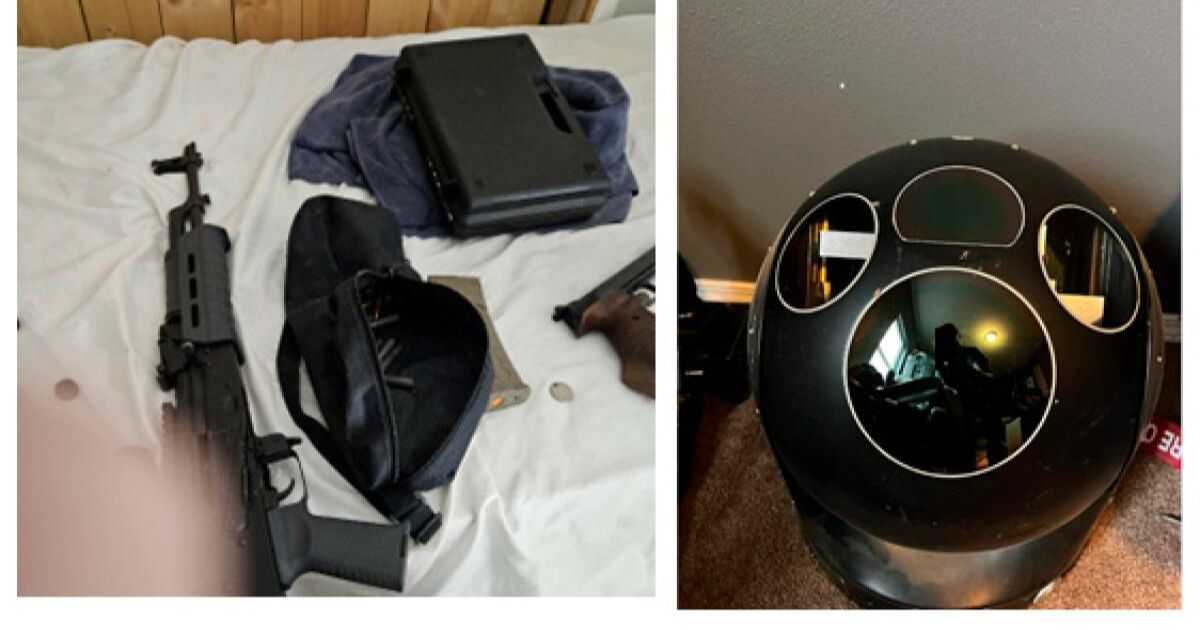
Wen took advantage of loose US gun controls to purchase the guns in Texas, transport them to California, and send them out of the Port of Long Beach, court documents show. Others were covered up on export documents one was labelled a refrigerator.
Wen, who arrived in the US in 2012 on a student visa and stayed beyond its terms, pleaded guilty in June to conspiracy to break the International Emergency Economic Powers Act and acting as an illegal foreign government agent. He was arrested in December.
North Korea Connection
Court documents show that Wen’s association with North Korea goes back years. Prior to coming to the US, he had encountered North Korean officials in China’s consulates who asked him to acquire goods on behalf of Pyongyang. In 2022, nine years after the first contact, North Korean officials reached out once again online to instruct Wen to purchase weapons, spying equipment, and other sensitive devices.
Wen admitted that Pyongyang probably chose him due to his smuggling experience. Some of the goods purchased included 50,000 rounds of 9mm bullets, chemical threat detection devices, and a handheld broadband receiver aimed at finding concealed eavesdropping equipment.
Court records show Pyongyang asked for military uniforms and equipment to be ready in case of a surprise attack on South Korea, a civilian airplane engine, and thermal imaging devices that can be used in drones or aircraft surveillance.
In 2023, Wen bought AK5000 Inc., an American firearms dealer based in Houston, for about US$150,000 with North Korean money. He then exported at least three shipments of firearms from Long Beach, one of them finding its way to the North Korean port of Nampo via Hong Kong.
Legal and Strategic Implications
Experts point out that the case highlights the innovative means by which North Korea avoids international sanctions. Yun Sun, a senior fellow at the Stimson Center, called the operation “bizarre,” stressing that it’s doubtful one man could have a meaningful effect on North Korea’s military. Yet she pointed out that it flags China as a transshipment hub and possible loopholes in customs controls.
Wen pleaded guilty in his plea agreement to having known his activities were against the law, not having sought the proper licenses, and not having notified US authorities that he was working on behalf of the government of North Korea.
The case highlights persistent difficulties in the imposition of sanctions on North Korea, a state repeatedly sanctioned by the UN since it conducted its first nuclear test in 2006. The use of intermediaries, foreign workers, and shell companies to smuggle sanctioned items has become more and more prevalent, a 2021 Rand study concludes.
Sanctions Evasion and International Concerns
The importation of weapons and military hardware into North Korea using intermediaries like Wen illustrates the ways in which sanctions are evaded despite stringent controls. Although North Korea is a highly sanctioned country, authorities have managed to keep finding ways to continue to obtain weapons and military supplies, frequently using third parties and innovative routes to smuggle them.
The Chinese embassy in Washington and lawyers for Wen did not immediately comment on requests. In the meantime, the case is a grim reminder of how much global cooperation is needed to keep banned weapons and sensitive technology out of the hands of sanctioned countries.
ALSO READ: North Korea Shuts Door On US And South Korea, Raising Tensions In Asia