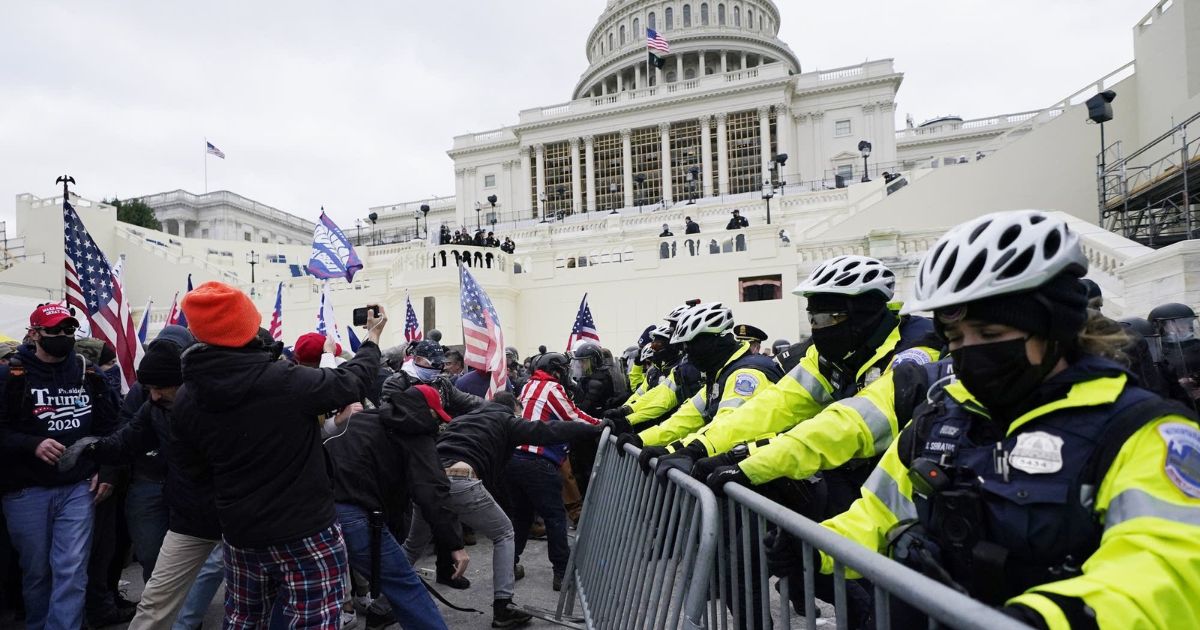
A political and legal tempest has broken out in Washington, DC, following the city attorney general’s lawsuit against former President Donald Trump for his bid to take over the Metropolitan Police Department. The suit, filed last Friday, seeks to enjoin what DC leaders call an illegal power grab that undermines the city’s autonomy.
The controversy arises over Trump’s use of a little-known provision of the 1973 Home Rule Act to seize control of the police force of the city for 30 days in a declared emergency. Although the law provides limited federal control over DC, no president’s takeover of a police force has ever been challenged in court before.
Who Really Runs Washington?
Unlike states in the United States, the District of Columbia is under the jurisdiction of Congress and has the final say in legislation. Yet the Home Rule Act permits residents to choose their own mayor and council, who handle most day-to-day administration. Congress still has the ability to veto local legislation and management of the city’s budget.
Typically, the mayor of the city Democrat Muriel Bowser at present has control of the Metropolitan Police Department. Section 740 of the Home Rule Act, however, allows the president to seize power for a period of up to 30 days in times of emergency. On Monday, Trump said there was a “crime emergency” in DC when city statistics are revealing violent crime at its lowest rate in more than 30 years and continuing downward.
Trump’s 30-Day Deadline And His Strategy to Punt It
Although the law is clear that a presidential coup can’t last more than 30 days without approval from Congress, Trump indicated he could prolong his domination without it if he declares the circumstances a national emergency. Legal professionals say no, however, as any such prolongation would need to be approved by a joint resolution of Congress a virtual impossibility at this point in the political climate, considering Democratic opposition in the Senate.
Attorney General Brian Schwalb’s lawsuit contends that the president’s authority is restricted and does not permit a total federal takeover of DC’s police. The suit insists local officials have authority over policing policies and the chain of command even in an emergency.
To date, US District Judge Ana Reyes has been skeptical of Trump’s reading of Section 740, intimated that the law does not lend itself to his broad assertions of authority.
Beyond DC: Could This Become a National Model?
Trump has suggested that what he’s doing in Washington could be a model for other cities, especially Democratic-held ones such as Chicago, which he criticizes for not controlling crime. Constitutional and legal restrictions, though, make this doubtful. States, under the 10th Amendment, have sole policing authority for their citizens, and there is no corresponding legal provision allowing the president to seize control of state or city police forces.
All the same, Trump might still call in the National Guard or federal officers to support local police, as he has previously done. As a top-profile case in point, he deployed 4,000 National Guard soldiers to Los Angeles during anti-immigration protest riots. That action got California’s governor suing him for allegedly breaking the 1878 Posse Comitatus Act, which in general forbids the military from being involved in domestic law enforcement.
A judge in the case is now deciding whether Trump’s deployment was legal. The decision could determine how far a president’s hand can stretch into local police work and how strongly states and cities can resist.
A High-Stakes Test of Federal Power
The conflict between Trump and DC politicians is more than a disagreement about crime rates or states of emergency. It’s a test of how much control a president can exert over America’s sole federal district and whether the law imposes substantive constraints on that power.
With the courts finally intervening, the fight could establish a precedent for the power balance between the federal executive and local government. For DC, it’s about defending home rule. For Trump, it’s about establishing presidential power. And for the rest of America, it’s a look at how future presidents will push the limits of emergency powers.
ALSO READ: Washington DC Sues Trump Over Alleged Illegal Police Takeover