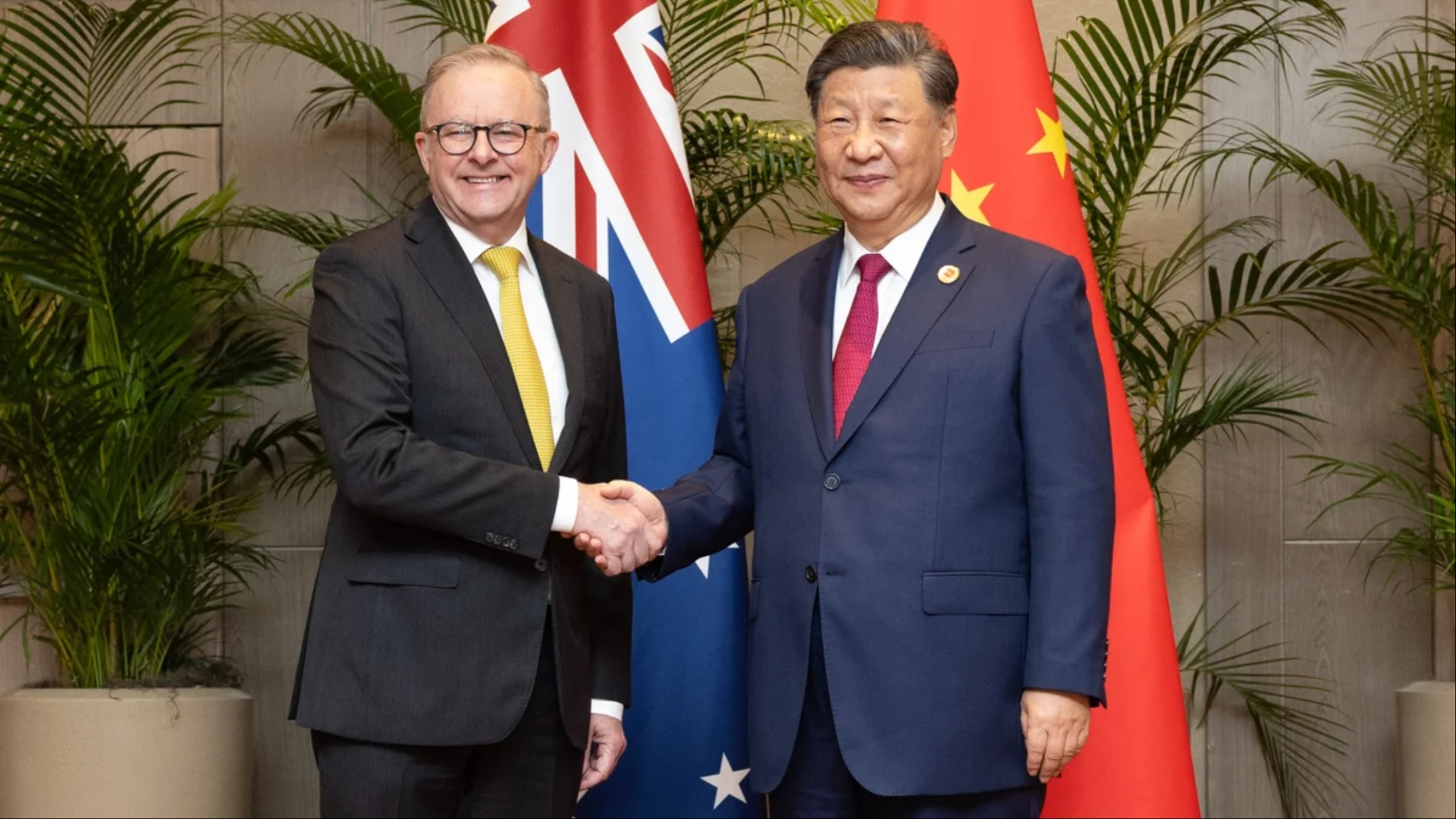
Australian Prime Minister Anthony Albanese has made a bold diplomatic move, he began a high-profile visit to China from July 12 to July 18, choosing to meet President Xi Jinping before holding talks with US President Donald Trump. The decision has drawn global attention and raised questions about shifting alliances in the Indo-Pacific. Surprisingly, it is Trump’s very own policies that may be driving Canberra and Beijing closer.
This is Albanese’s second visit to China as prime minister — a strong signal of warming ties, he is scheduled to meet Chinese Premier Li Qiang, President Xi Jinping, and Chairman Zhao Leji during the trip. The agenda includes trade, tourism, and potential cooperation in artificial intelligence, despite Canberra’s concerns over AI as a national security risk.
Xi Before Trump: A Strategic Message
What shocked many was Albanese placing Beijing ahead of Washington in his diplomatic calendar, his next meeting with Trump is unlikely before the Quad summit or the UN General Assembly in September. Shadow Defense Minister Angus Taylor criticized the move, saying Albanese seemed more willing to engage with Xi than Trump.
Still, the strategy appears deliberate, and China remains Australia’s largest trading partner, handling nearly one-third of its total trade. “The relationship with China means jobs in Australia,” Albanese reminded reporters before the trip.
Trump’s Tariffs Push Allies Elsewhere
Trump’s high tariffs and “America First” stance have caused global trade disruptions, while Australia still enjoys relatively low duties from the US, the uncertainty remains. Countries like Australia are looking to strengthen ties with China to ensure long-term trade stability.
Albanese’s cautious distance from Trump may also be political, Trump remains unpopular in Australia, and Albanese had campaigned against “Trump-style politics.” With a stronger Labour majority, he now has more room to act independently on foreign affairs.
Defense with the US, Trade with China
Foreign Minister Penny Wong recently highlighted this balance, in her ASEAN speech, she warned of China’s “worrying” military buildup but also praised China’s role in solving global issues. She said Australia and the US fully agree on maintaining Indo-Pacific peace, even if they differ on some policies.
Meanwhile, the AUKUS submarine deal is under review by the US Department of Defense, with Trump’s record of cutting foreign commitments, Australia remains cautious.
History Repeats
Albanese’s diplomatic sequence isn’t unprecedented, in 2013, Prime Minister Tony Abbott took an “Asia first” approach, he visited key Asian nations before Washington and met Xi at APEC. Back then, no one questioned his choices, but with Trump now in power and China’s military expansion accelerating, today’s scenario invites more scrutiny.
Albanese is walking a careful line; Trump’s unpredictable approach and protectionist policies may have unintentionally pushed Australia to rekindle its ties with China. The Beijing visit, scheduled before Washington, reflects a nuanced, pragmatic foreign policy shift.