
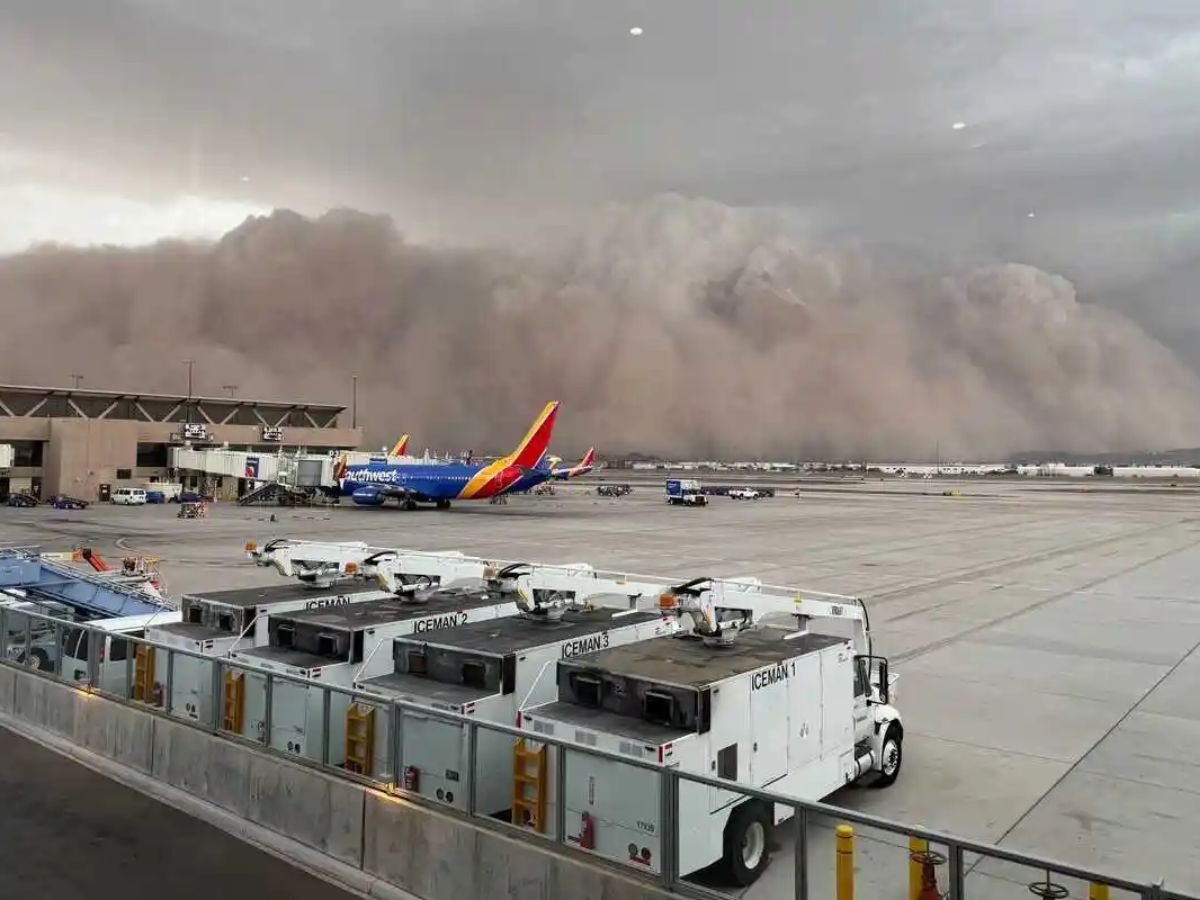
Massive walls of dust, known as haboobs, sweep across the Southwest United States every summer, leaving both wonder and fear in their wake. These storms are not only breathtaking vistas but also potentially fatal situations, particularly for drivers who are unexpectedly stranded in a dazzling wall of sand. A single haboob can stretch thousands of feet into the sky, several miles wide, and move at speeds of up to 60 mph (97 kph).
How Haboobs Form
According to Sean Benedict, meteorologist at the National Weather Service in Phoenix, haboobs originate inside strong thunderstorms. When powerful downdrafts hit the desert floor at speeds between 50–80 mph (80–129 kph), they kick up loose soil, dust, and farm-field debris. This surge of dust then rolls outward, creating a massive, moving wall ahead of the storm.
If thunderstorms fizzle out, the dust quickly settles. But in many cases, rain-cooled air at the storm’s leading edge pushes warm air upward, generating more storms and even stronger downdrafts. That process allows the haboob to grow and, in some cases, travel up to 100 miles across the desert.
The Southwest’s Dust Corridor
Arizona is particularly vulnerable. The desert highway between Phoenix and Tucson is often called the “dust corridor” because of its frequent storms. But haboobs are not limited to Arizona—they also occur in Nevada, New Mexico, and Texas.
The National Oceanic and Atmospheric Administration (NOAA) reports that Phoenix alone experiences one to three large dust storms every year, making dust warnings a critical part of summer weather alerts.
Climate Change and Dust Storm Intensity
The big question remains: Will haboobs become more common as the climate changes? Scientists observe that since the 1970s, the Southwest monsoons have been stronger due to warming brought on by humans. Paradoxically, these stronger storms happen alongside worsening droughts and expanding arid lands, both of which create ideal conditions for dust storms.
Still, Benedict cautions that it is difficult to predict whether haboobs will grow more frequent. Their formation depends not only on storm patterns but also on land use—such as the presence of plowed farmland, which provides extra dust to fuel the storm.
Not Every Dust Storm is a Haboob
It is important to note that not all dust storms qualify as haboobs. The defining feature is their connection to thunderstorm downdrafts. Haboobs carry the combined force of weather and topography, making them much more violent than ordinary dust storms, which can happen without thunderstorm activity.
A Deadly Threat on the Roads
Perhaps the most dangerous aspect of a haboob is its effect on visibility. Within minutes, these storms can blot out the sun and reduce visibility to zero. For drivers, this creates an almost impossible situation.
“People on the roads when they can’t see anything, they’re just gonna try to follow those tail lights in front of them,” Benedict explained. “If there is an accident, you might not know and you just get these big pile ups. So it’s definitely very dangerous when the visibility drops that low.”
Experts advise motorists caught in a dust storm to pull over as far as possible, turn off headlights, and wait until visibility clears. Leaving lights on can mislead other drivers, creating deadly chain-reaction collisions.
Also Read: Trump Warns: “It Won’t Be World War, But an Economic War” for Russia
A Force of Nature, Growing Stronger?
Haboobs remain one of the most striking—and terrifying—weather events in the American Southwest. Whether climate change will make them more frequent is still uncertain, but their destructive potential is already clear. The balance between drought and storms may shift even more as summers get hotter and dryer, which would make the ideal environment for these enormous walls of dust.