
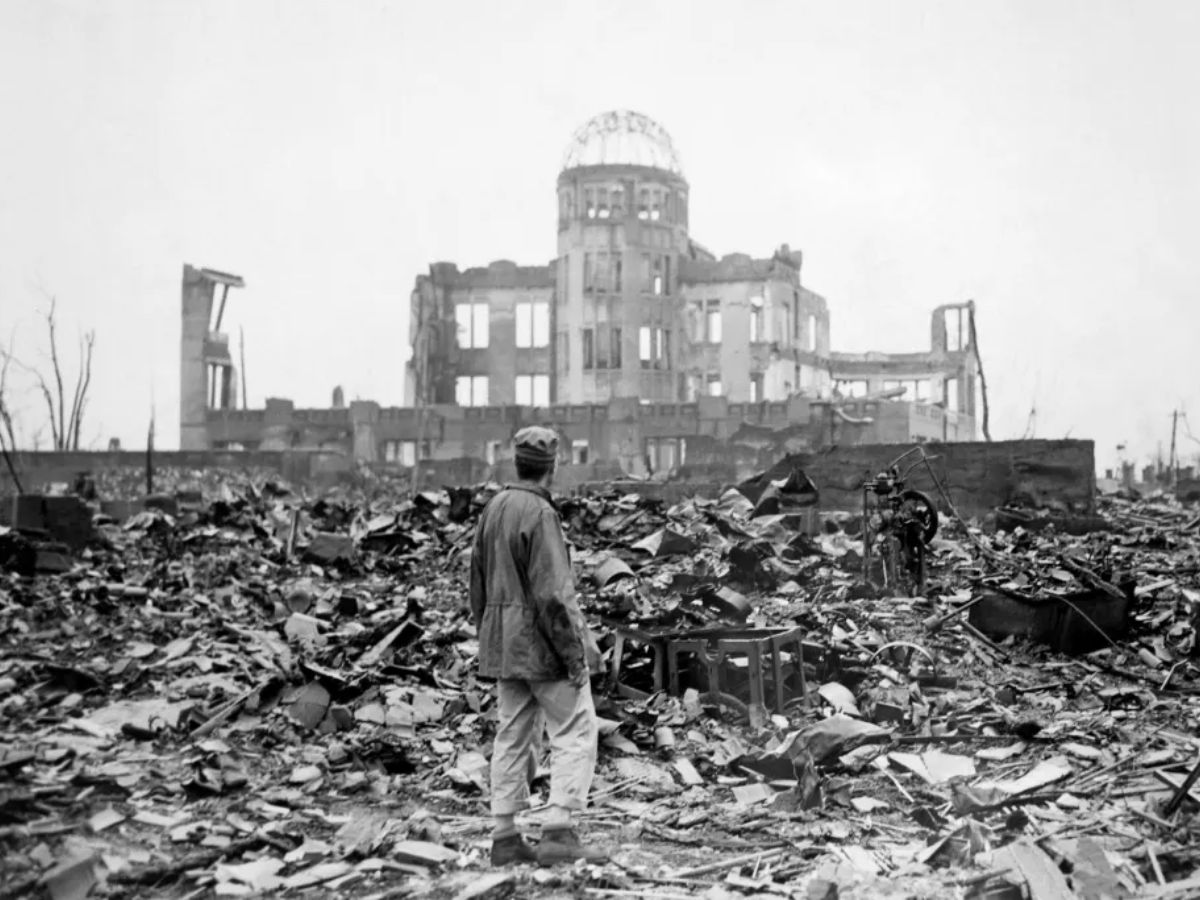
Over 140,000 people were killed when the United States unleashed an atomic bomb on Hiroshima on August 6, 1945. It was the world’s first nuclear assault. It’s been eight decades since that tragic incident. Hiroshima Day serves as a reminder of the terrible cost of nuclear war.
However, it also poses a query, which is what prevents the other nations from acquiring nuclear weapons, and why just nine countries currently have them. The current nuclear environment, the international system of restraint, and the reasons why many countries decide not to equip themselves.
It also introduces a new concern—what happens if nuclear disarmament efforts lose momentum in an increasingly unstable world?
Who Has Nuclear Weapons Today?
Just nine countries possess nuclear weapons. These are the United States, Russia, China, the United Kingdom, France, India, Pakistan, North Korea, and Israel. Russia holds the largest stockpile, with about 5,580 warheads. The United States follows with 5,044. Together, they control 90% of the world’s estimated 12,121 warheads.
Five of these countries—the US, Russia, UK, France, and China—are officially recognised as nuclear states under the Nuclear Non-Proliferation Treaty (NPT). The others developed their arsenals outside the treaty framework.
ALSO READ: Trump’s Tariffs Slash US Trade Deficit by 16%, Lowest in 2 Years
What Stops Others from Going Nuclear?
1. The Power of Global Treaties
The NPT is the main reason most countries do not pursue nuclear arms. With 190 member states, the treaty was signed in 1968 and went into effect in 1970. It aims to prevent the spread of nuclear weapons, promote disarmament, and encourage peaceful nuclear cooperation. Under the pact, only five countries are permitted to have nuclear weapons; all others are prohibited.
2. High Economic and Technical Barriers
Building nuclear weapons is not easy, it requires a huge financial investment, advanced technology, and specialised infrastructure. Countries must enrich uranium or produce plutonium and develop long-range delivery systems. For most, the cost and complexity are too high.
3. Risk of Sanctions and Isolation
Any nation that secretly tries to build nuclear weapons faces severe global backlash. Sanctions on countries like North Korea and Iran show the heavy price of defying nuclear norms. These consequences often deter others from taking that path.
4. Strategic Security From Allies
Some nations—like Germany, Japan, and South Korea—rely on the nuclear umbrella of allies, mainly the United States. They gain security without developing their arsenal.
5. Moral and Historical Lessons
The destruction in Hiroshima and Nagasaki still shapes global thinking. Many countries reject nuclear weapons on ethical grounds. They support disarmament and fear the humanitarian cost of future use.
6. Testing Bans and Monitoring
The Comprehensive Nuclear-Test-Ban Treaty (CTBT) bans all nuclear test explosions. Though not fully enforced, it makes secret weapons development harder. Global monitoring networks add another layer of accountability.
ALSO READ: Trump Calls Ukraine Conflict ‘Biden’s War’, Justifies US Funding for Ukraine
Disarmament Fatigue in a Polarised World
While most countries stay away from nuclear weapons, today’s geopolitical tensions could change that. Rivalries are deepening. Global institutions are weakening. Arms control agreements are breaking down. The NPT faces growing pressure. If disarmament loses urgency, new countries might reconsider their restraint.
Nations under nuclear umbrellas may now rethink their policies if allies seem unreliable. Rising nationalism & security concerns could drive more countries to explore nuclear options, breaking decades of restraint.