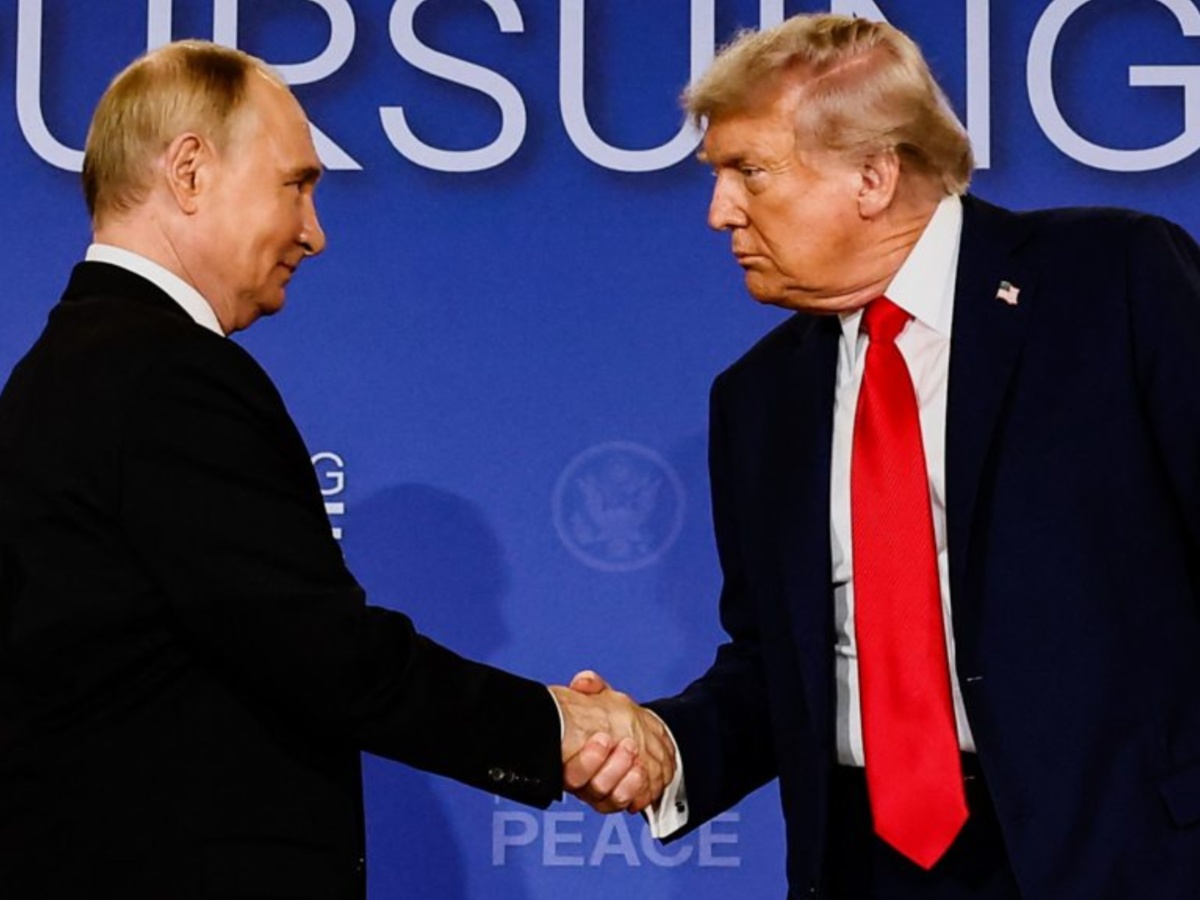
US President Donald Trump and Russian President Vladimir Putin met face-to-face in Alaska on Friday for the first time in five years. Their high-stakes meeting lasted nearly three hours at Joint Base Elmendorf-Richardson. Trump pushed for an immediate Ukraine ceasefire and a direct meeting between Putin and Ukrainian President Volodymyr Zelenskyy. Although the summit didn’t produce an agreement, Putin surprised many by inviting Trump to continue the talks in Moscow. The session marked a cautious restart of US-Russia dialogue after years of tension.
Meeting Setting and Format
The summit took place under a banner reading “Pursuing Peace” and included two senior officials from each side in a three-on-three format. The talks were more guarded than Trump’s 2018 Helsinki meeting with Putin. Originally planned as a one-on-one, Trump brought US Senator Marco Rubio and businessman Steve Witkoff, while Putin included Foreign Minister Sergey Lavrov and aide Yuri Ushakov. This larger format showed a careful approach to sensitive diplomacy.
Read More: Trump Heads to Alaska Summit with Putin, Calls for Ukraine Ceasefire ‘Today’
Key Takeaways from Alaska Talks
No Deal Yet
Trump said the talks narrowed differences but produced no resolution. “There is no deal until there is a deal,” he stated. He added that “many points were agreed to,” while a few, including one key issue, remain unresolved. Trump indicated he might meet Putin again soon, prompting the Russian leader to say, “Next time in Moscow.”
Read More: ‘No Deal in Alaska’: Trump-Putin Talks End with Vague Promises and Global Questions
Putin’s Perspective
Putin called the summit a “starting point for resolution” and described the war in Ukraine as a “tragedy.” He insisted the primary causes of the conflict must be addressed first. He also warned Ukraine and Europe against “sabotaging” possible negotiations and agreed with Trump that the conflict might not have erupted had Trump remained in office.
Moscow Invitation
At the joint appearance, Putin personally invited Trump to Moscow in English. Trump called the idea “interesting” and acknowledged it could bring “a little heat,” while saying it was a “possibility.”
Read More: Next Time in Moscow’: Trump Receives Invitation from Putin Post-Alaska Meeting
Relation Building
Putin praised the friendly tone of the discussion and urged both countries to “turn the page and go back to cooperation.” He also complimented Trump as a leader with a clear vision while emphasizing Russia’s national interests.
Symbolic and Historical Significance
Hosting the summit in Alaska carried historical weight. Alaska, purchased from Russia in 1867, sits just three miles from Russian territory at its closest point and still served as a Cold War-era hub for intercepting Russian aircraft. After the meeting, Putin laid flowers at the graves of Soviet pilots who died in Alaska during World War II while delivering aircraft under the lend-lease program, a gesture connecting past history to today’s talks.
Expanded Meeting Format
The talks were first supposed to be one-on-one, but more officials joined from both sides to help and make the meeting more careful and organized.
Productive Engagement
Both leaders noted progress on several discussion points and while no deal was finalized, many points were agreed upon, reflecting a productive first step toward resolving differences.
Unresolved Key Issue
One important issue was still not solved, and Trump said that more talks and teamwork would be needed to reach an agreement in the future.
Ukraine and Europe Excluded
Zelenskyy and European leaders were not part of the Alaska talks. Zelenskyy later said he expected a strong US position and reaffirmed Ukraine’s willingness to pursue peace. Trump mentioned Zelenskyy might need to make hard territorial concessions to achieve a ceasefire.
Tentative Restart of Dialogue
The summit signaled a cautious restart of US-Russia dialogue after years of strained relations. It set the stage for possible follow-up talks in Moscow, keeping global attention on the Ukraine conflict and the path toward diplomacy.
The Trump-Putin Alaska summit 2025, while producing no immediate deal, offered a blend of productive engagement, symbolic gestures, cautious diplomacy, and historical recognition, keeping hope for future discussions alive.