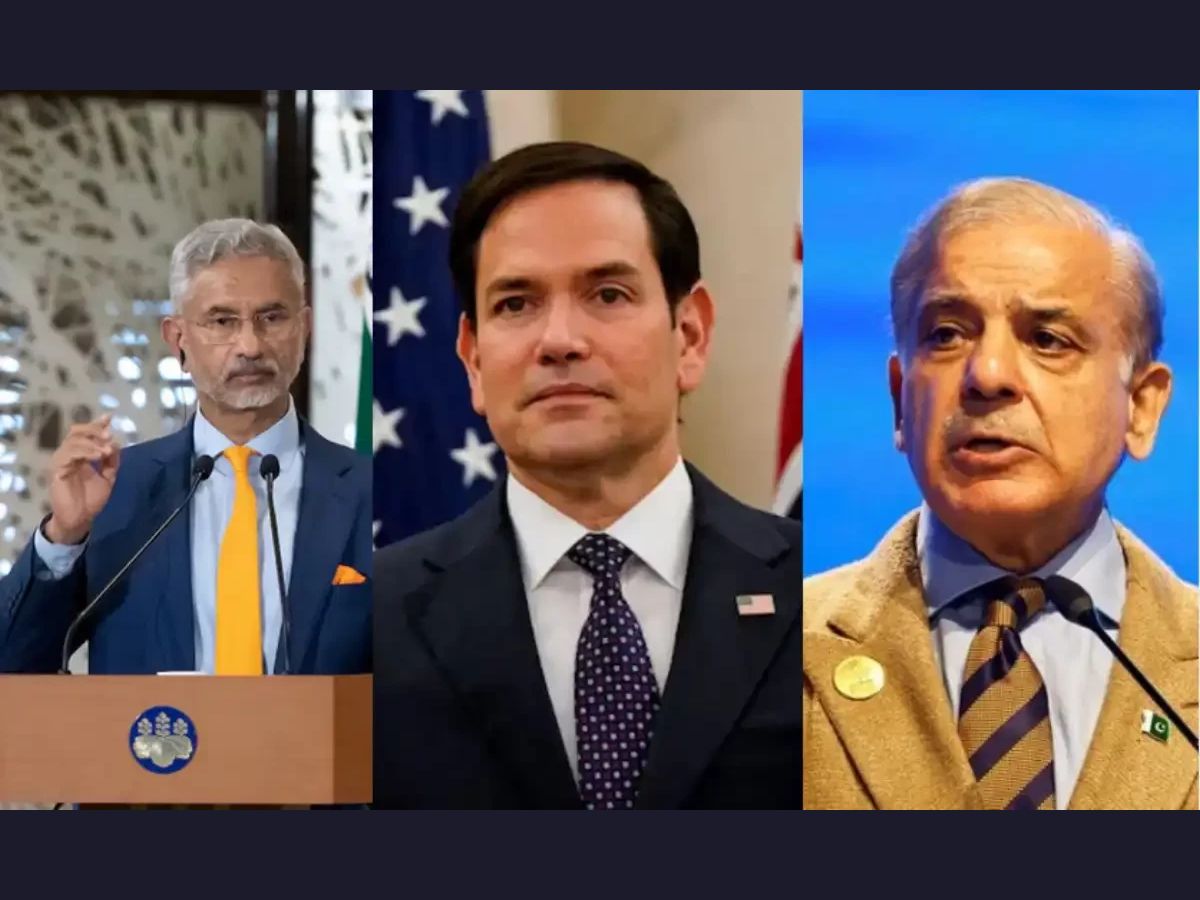
United States Secretary of State Marco Rubio on Sunday revealed that Washington closely tracks developments between India and Pakistan on a daily basis, even while dealing with the more immediate challenge of negotiating peace in war-torn Ukraine.
Speaking to NBC’s Meet The Press, Rubio underlined that a ceasefire is only possible when “both sides agree to stop firing,” something Moscow has consistently refused. He added that ceasefires often collapse quickly, making them fragile and unsustainable without deeper political agreements.
“We keep an eye every single day”
Rubio broadened the discussion beyond Europe, citing global hotspots that the US watches closely.
“I mean, every single day we keep an eye on what’s happening between Pakistan and India, what’s happening between Cambodia and Thailand,” he said, highlighting Washington’s constant vigilance over South Asia.
Peace deal, not a ceasefire
In his remarks, Rubio clarified that the Biden administration is not seeking a “permanent ceasefire” in Ukraine, but rather a comprehensive peace deal. “What we’re aiming for here is a peace deal so there’s not a war now and there’s not a war in the future,” he noted.
Also Read: Mike Pence Urges Trump to Hit Putin with ‘Hammer’ Amid Ukraine Peace Talks
Echoes of Trump-era claims
Rubio also raised India-Pakistan tensions in an interview with Fox Business, praising President Donald Trump’s repeated emphasis on making peace a core priority. “We’ve seen it in Cambodia and Thailand. We’ve seen it in India-Pakistan,” Rubio said, echoing Trump’s earlier claims about America’s quiet role in calming conflicts.
India’s strong denial
Back home, New Delhi has flatly denied any external mediation in its dealings with Pakistan. Prime Minister Narendra Modi stated unequivocally that “no leader of any country has asked India to suspend” the military action during a debate on action Sindoor in Parliament.
External Affairs Minister S. Jaishankar reinforced this position, stressing that India does not accept third-party intervention in matters concerning its sovereignty and security.