
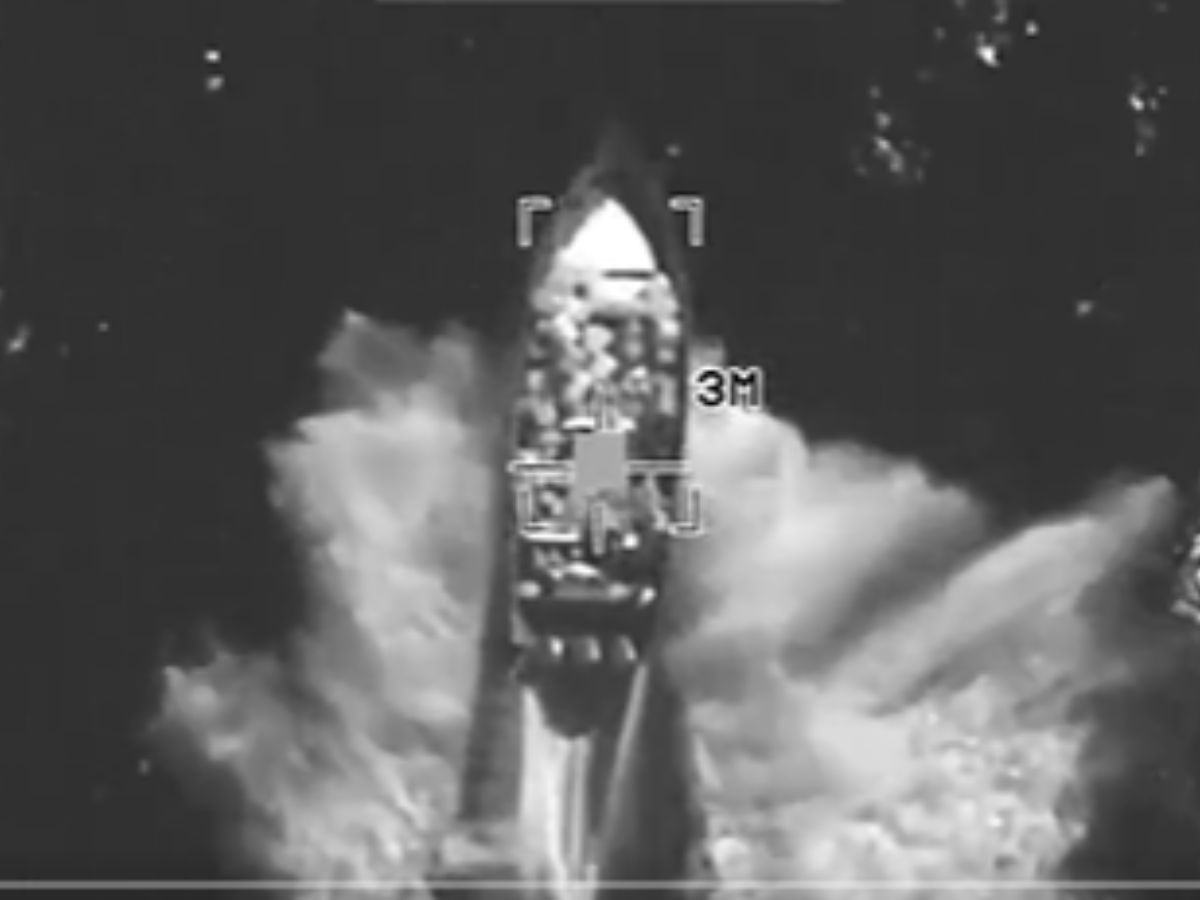
The US military said on Thursday that it carried out a strike on a suspected drug-smuggling boat in international waters in the Eastern Pacific, killing four men on board. The action is being viewed as part of the Donald Trump administration’s ongoing crackdown on alleged narco-terror networks.
The US Southern Command issued a statement confirming that the targeted vessel was believed to be transporting illegal drugs. The statement posted on X said, “On Dec. 4, at the direction of @SecWar Pete Hegseth, Joint Task Force Southern Spear conducted a lethal kinetic strike on a vessel in international waters operated by a Designated Terrorist Organisation. Intelligence confirmed that the vessel was carrying illicit narcotics and transiting along a known narco-trafficking route in the Eastern Pacific. Four male narco-terrorists aboard the vessel were killed.”
The strike was carried out under Operation Southern Spear, a campaign designed to disrupt what the US describes as drug-trafficking networks operating across the Caribbean and Pacific.
More Than US Military 20 Strikes This Year
According to US military data, over 20 strikes targeting suspected drug-smuggling vessels have been conducted so far this year. These operations have resulted in more than 80 deaths. The latest strike marks the first such action in over a week.
The First Strike on September 2 Draws Scrutiny
The ongoing operations trace back to an airstrike on September 2, when US forces targeted a boat in the Caribbean. President Donald Trump had claimed the mission killed 11 “Tren de Aragua Narcoterrorists.”
However, that initial operation has raised serious questions. Reports suggest that several people survived the first strike but were killed in a follow-up attack. Critics and legal experts have since questioned whether this violated international laws governing armed conflict, and whether US Defence Secretary Pete Hegseth bears responsibility for the decisions made that day.
Under the Defence Department’s Law of War Manual, attacking enemy combatants who are incapacitated, unconscious, or shipwrecked is prohibited if they are no longer posing a threat or attempting to flee. The manual explicitly lists firing on shipwreck survivors as an example of an unlawful order that military personnel should refuse.
Hegseth Defends the Operation
On Tuesday, Pete Hegseth said he watched the September 2 strike in real time but did not witness survivors in the water, nor did he see the second attack that followed. He described the situation as unfolding in the “fog of war.”
Still, he backed Admiral Frank Bradley’s decision to conduct the second strike, stating, “Admiral Bradley made the correct decision to ultimately sink the boat and eliminate the threat.”
Also Read: India-Russia 2025 Summit: Putin Questions G8 Relevance, Supports BRICS, SCO & G20