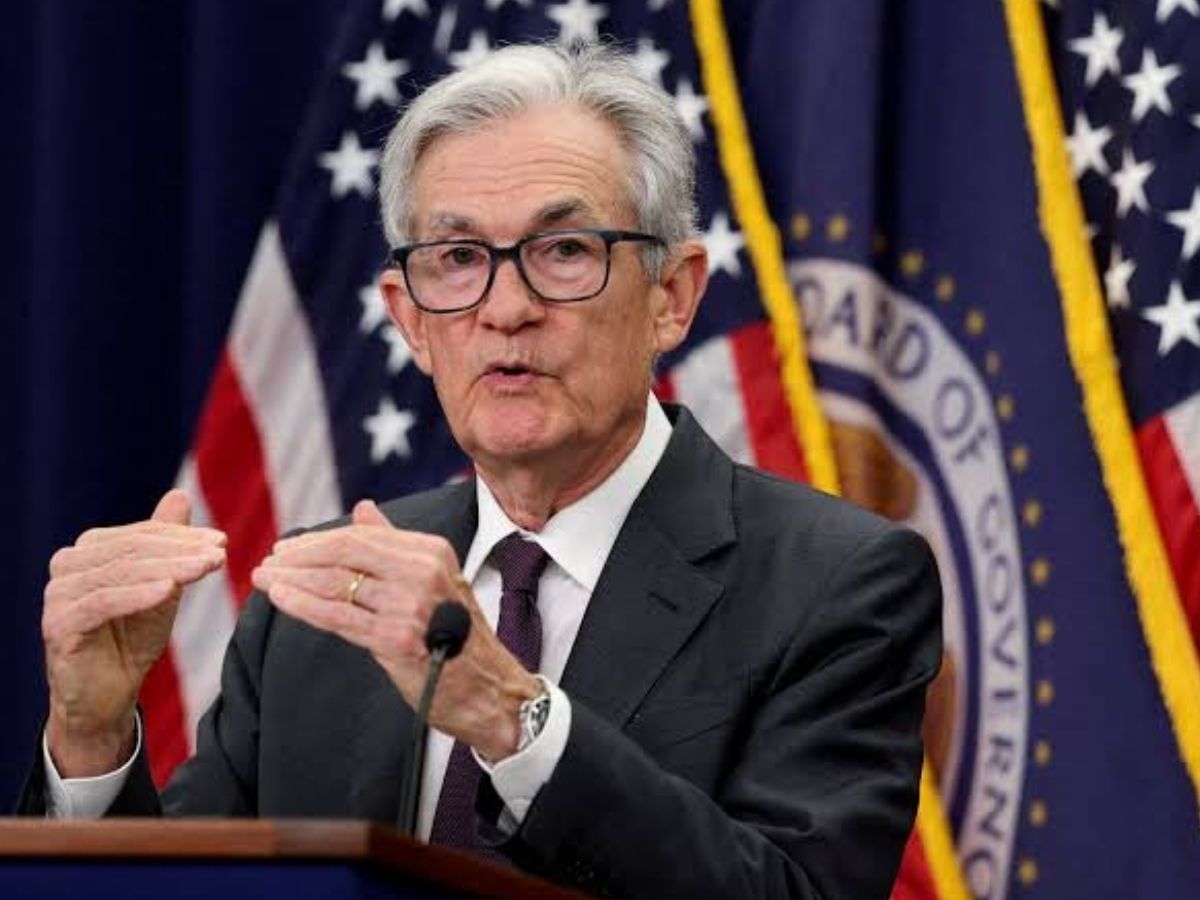
The US Federal Reserve has made another cut in interest rates, laying more stress on the US slowing labour market than on inflation, which has lately registered signs of stabilization. Even with the current US government shutdown, which is in its almost one-month anniversary and has pushed back the release of formal economic statistics, the central bank proceeded with its action that an action that economists termed as the Fed “flying blind” on the prospects for the job market.
Federal Reserves Reduces Key Lending Rate by 0.25%
Following the completion of its two-day policy session on 29 October 2025, the Federal Reserve headed by Jerome Powell reduced the federal funds rate by 25 basis points to a range of 3.75% to 4.00%. It is the second rate reduction in a row after a same-sized reduction in September 2025.
The Federal Open Market Committee (FOMC) in its official statement stated:
In support of its objectives and in view of the change in the balance of risks, the Committee determined to reduce the target range for the federal funds rate by 1/4 percentage point to 3-3/4 to 4 per cent.”
The Fed also indicated a more circumspect stance in the future, adding that future rate actions would be based on the balance of economic risks, the changing outlook, and new data.
Why Federal Reserves Cut the Rate?
The action arrives as worries heighten about a decelerating labour market in the US. With numerous economic signals delayed amid the government shutdown, policymakers decided to act ahead of the curve to encourage growth and jobs. Economists expect the latest cut to be an indication of the Fed’s new priorities away from inflation management towards protecting the economy from a possible recession.
Inflation Rate in US Market Still Above Target but Stable
Even though the Fed’s move is centered on jobs, consumer inflation is still modestly high. The Consumer Price Index for the 12 months through September 2025 was up 3%, a tick higher than August’s 2.9%.
Although still above the Fed’s 2% goal, the modest gain means there is no near-term inflation threat.
September 2025 Policy Recap
In its September 17, 2025 session, the US central bank lowered the benchmark rate to 4.00% from 4.25%, its first rate cut since December 2024. It was also the first interest rate decrease since US President Donald Trump took over at the White House earlier in 2025. The rate cut in September had encouraged investors and analysts to expect the Fed to keep on easing rates for the remainder of the year, even though there were “somewhat elevated” inflation levels within the economy.
Bank of Japan Stays Firm on Rates
However, in Asia, the Bank of Japan (BoJ) chose to leave its short-term interest rate at 0.5% on Thursday, continuing its ultra-loose monetary policy course. The central bank reaffirmed its pledge to hike borrowing costs slowly if Japan’s economy runs as forecast, though. BoJ board members Naoki Tamura and Hajime Takata dissented from the majority opinion again making their previous proposals last September to hike to 0.75%.
Global Monetary Outlook
The most recent Fed interest rate cut, coupled with Japan’s stable policy, underscores the differing strategies of major central banks. While the US Federal slashes rates to give growth a boost, The BoJ holds off, holding out for more robust signals of economic health before tightening again. With markets worldwide responding to both news, investors wait with interest for the Fed’s next step, particularly against the backdrop of uncertainty generated by the government shutdown and sparse economic data
Also Read: Rules Change from November 1, 2025 : Major Changes in Banking, LPG, GST & Aadhaar in India