427
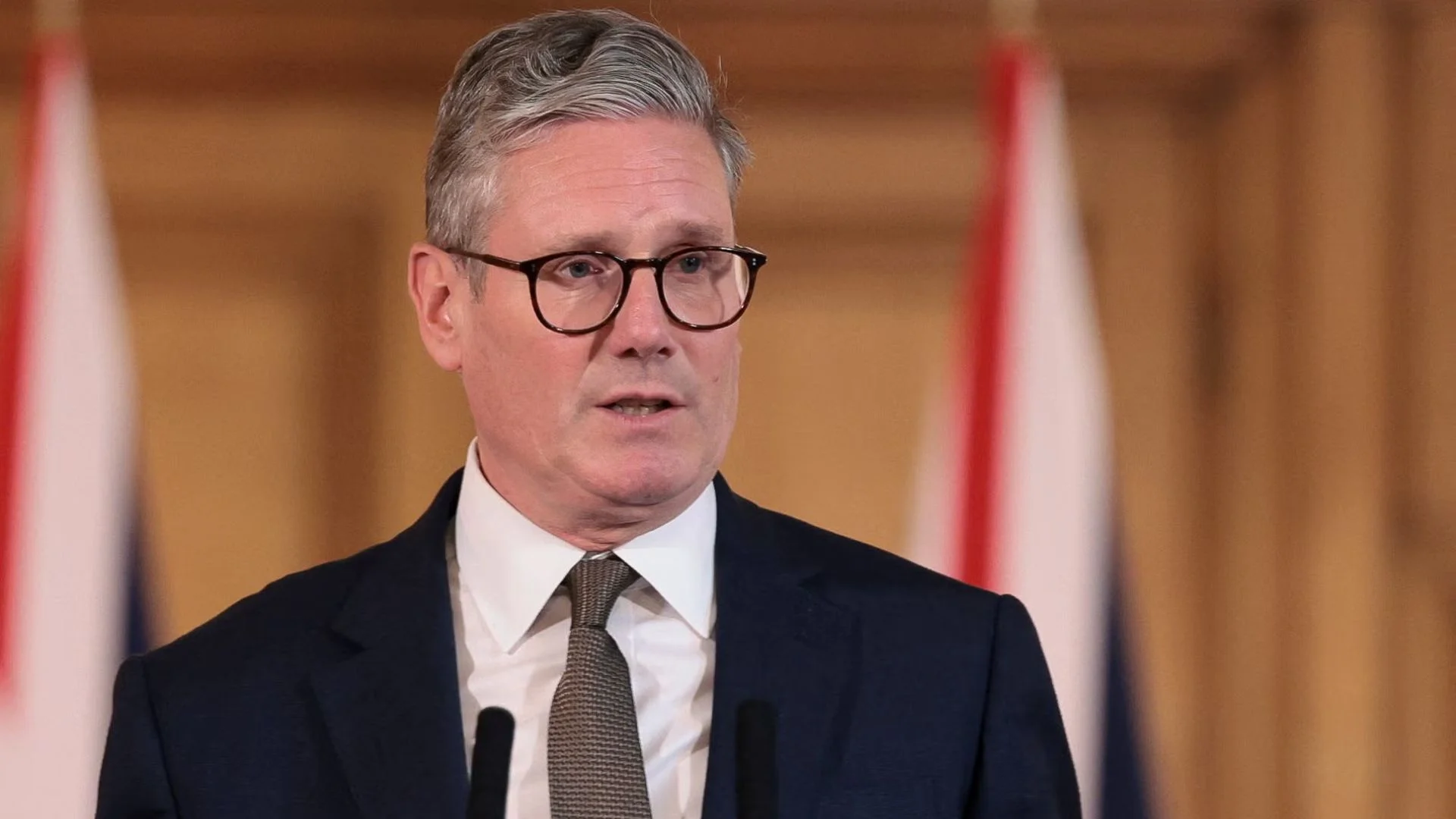
British Prime Minister Keir Starmer on Friday reiterated his pledge to recognize a Palestinian state before long, but only in the context of a larger negotiated peace process a move that has dismayed many in his own Labour Party who want faster action.
Starmer’s comments came a day after French President Emmanuel Macron announced France would move to recognise a Palestinian state, joining Spain, Norway, and Ireland, all of whom made similar declarations last year. The move by France triggered backlash from both Israel and the United States.
Speaking following negotiations with Macron and German Chancellor Friedrich Merz on how to put pressure on Israel to end its Gaza military campaign, Starmer stated that although he solidly supports the statehood recognition of a Palestinian state, it should be implemented as part of a full peace strategy.
I am categorical about the recognition of a Palestinian state,” Starmer declared. “But it has to be within a broad framework which ends up leading to a two-state solution and sustainable security for Palestinians and Israelis.”
His comments follow pressure building from within the Labour party. Over 220 Members of Parliament almost a third of the House of Commons, mostly Labour signed a letter calling on Starmer to pursue recognition.
Whilst successive British governments have endorsed the concept of Palestinian statehood, they have repeatedly postponed formal recognition on the grounds of timeliness and conditions.
A few Labour members, however, think this tentative position no longer applies. Labour Mayor of London Sadiq Khan and Members of Parliament’s Foreign Affairs Committee called for recognition straight away, saying it would increase global backing for a peaceful solution and send a clear message to Israel. Government minister Shabana Mahmood agreed, citing the potential for diplomatic gains.
The Foreign Affairs Committee, moreover, said Friday that waiting for the “perfect time” to act is unrealistic, since perfect conditions will never come about.
One Labour lawmaker told Reuters anonymously that “Most of us are shocked by what is occurring in Gaza and feel we are being too cautious.”
Starmer’s diplomatic math is complicated further by the current visit of US President Donald Trump to Scotland. Starmer has tried to keep relations with the Trump administration cordial, and analysts indicate it will restrain the UK from diverging from Washington on emotive matters such as Israel-Palestine.
H. A. Hellyer, a senior associate fellow at the Royal United Services Institute, observed, “There is a sense at the highest levels of government that the Trump administration could unpredictably shift its stance on issues the UK deeply cares about.”
At the moment, the UK remains tightrope-walking expressing solidarity with Palestinian hopes without opening a breach in relations with major allies.