
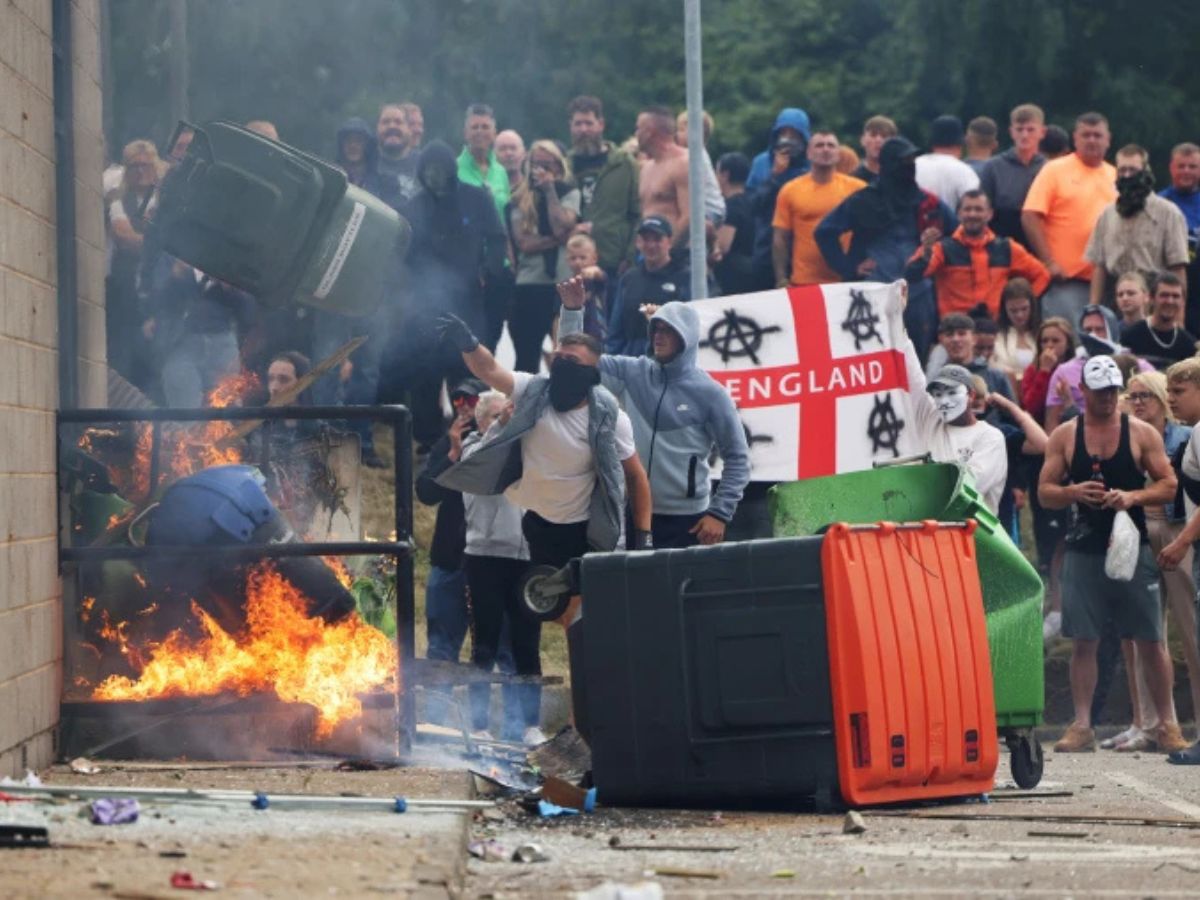
United Kingdom has witnessed demographic changes in the face of increased illegal immigration, cultural assertion, and social tension. This is fueled to a large extent by legal and illegal immigration. The latest data indicate that net migration continues to be at record highs, with the Office for National Statistics estimating the UK population will increase by 6.6 million by 2036—more than 90% of that being directly attributable to migrants and their children.
Having reached a net migration peak of 906,000 in mid-2023, figures for 2024 continued to be high at 431,000, and as experts project, the population is projected to surpass 73 million within 10 years or lesser. The size and pace of the change have brought immigration to the forefront of Britain’s population increase, fueling furious debates on both sides of the political divide.
The Emerging Illegal Population
The number of illegal and unauthorized migrants, particularly those attempting to cross the English Channel in tiny boats, keeps on increasing. During the year to March 2025, there were 38,023 small-boat arrivals, a 22% rise on last year, and a record 85,112 asylum claims, the bulk of the arrivals coming from places such as Afghanistan, Syria, Eritrea, and Iran. The actual size is probably greater, with experts putting the UK’s illegal immigrant population in the hundreds of thousands, fueled by increased enforcement in Europe and chronic global instability.
Cultural Assertion and Disrupted Social Cohesion
Local areas are undergoing abrupt change. Parts of Britain now have non-English languages as the primary language for most children and are adjusting to a plethora of unfamiliar businesses, religious places, and practices. While enthusiasts cite a “vibrant, multicultural” population and the beneficial economic contribution of some immigrants, critics state that inadequate integration is creating broken social cohesion and watering down British identity.
Official statistics show that in certain boroughs, more than 70% of schoolchildren are not native speakers of English, stoking fears that recently arrived groups are claiming specific cultural identities instead of fully integrating.
White Guilt and Soft Response
Social reaction to these developments is influenced by multi-faceted dynamics, one being a phenomenon known as “white guilt”—a feeling among sections of the indigenous population that past grievances mandate a gentle touch towards newcomers. The attitude can express itself as hesitation to speak out against cultural variations or to regulate strictly, lest one be seen as intolerant or racist. Others charge that this has enabled some immigrant groups to demand cultural accommodation more actively, sometimes creating tension between groups.
All the same, national opinion is deeply polarized. Most Britons persistently call for lower immigration, yet younger and better-educated groups’ views are becoming less hardline. Pundits call for “grown-up” national debates on integration, identity, and social solidarity, cautioning that inaction threatens to further split society and undermine trust in institutions.
Policy and Political Response
Under increasing pressure, the government has launched stricter immigration reforms, such as increased salary requirements for work visas and limited recruitment in priority sectors, although the longer-term impact continues to be questioned. Ministers and commentators have warned that if swift demographic change and cultural assertion by immigrants are left unchecked, it could result in an “island of strangers” situation, increasing social tensions and undermining cohesion.
As the UK embarks on these transformations, there is ongoing public debate that swings between appreciation of diversity and increasing concern about the speed of change—fostered by a country still grappling with trying to balance its past, its values, and its future.