
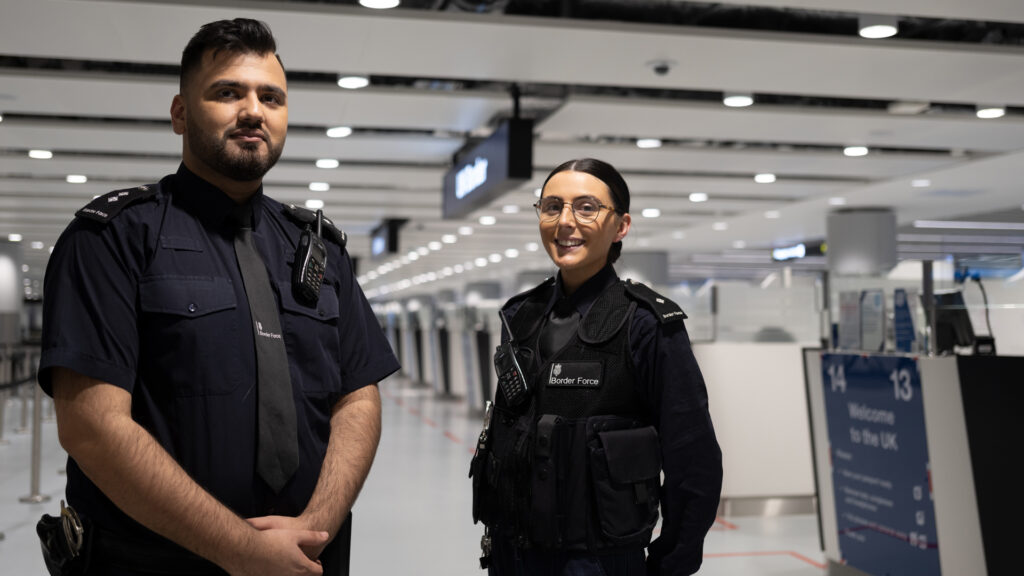
The UK government announced a £100m boost for border security to combat people smuggling gangs, funding new staff, technology, and tougher laws amid record migrant crossings and political criticism. The hefty package of funding, outlined by Home Secretary Yvette Cooper, is designed to give a boost to the government’s “serious and comprehensive plan” to tackle illegal small boat crossings and to get criminal gangs off the streets.
‘One in, One out’
The fresh investment will support the pilot of a new “one in, one out” returns agreement with France, enhancing ongoing efforts to address a surge in small boat arrivals that have already surpassed 25,000 so far in 2025, a record for this time of year. The money will fund the hiring of as many as 300 new National Crime Agency (NCA) officers and the deployment of cutting-edge detection technology and specialist kit. Ministers say these moves are aimed at “smashing the networks putting lives at risk in the Channel” and give law enforcement more capability to target smuggling leaders not just in the UK, but throughout Europe, the Middle East, Africa, and elsewhere.
Border Security Bill’s at play
Yvette Cooper pushed home that the government’s wider strategy is underpinned by foundations set in the last year. “In the past 12 months, we have laid the foundations for this new and significantly enhanced law enforcement model,” Cooper added, pointing to the formation of the new Border Security Command, the strengthening of the NCA and policing operations across the UK, the upgrade of Immigration Enforcement, and the rollout of new counter-terror-style powers through the Border Security Bill.”. Arrangements with Europol and other overseas partners have also been made to enhance coordination across borders.
‘Hopeful!’ claims Home Office
The Home Office emphasised that the money would also help enable the introduction of new powers contained in the new Border Security, Asylum and Immigration Bill. One of the major provisions is the establishment of a new UK-wide criminal offence aimed at addressing the production and sharing of online content that encourages the facilitation of breaches of immigration law—like social media advertisements for small boat crossings. As research has put the estimate at about 80% of small boat migrants having availed themselves of internet platforms during their journey, the government believes this action will break up criminal business models and equip law enforcement with new tools to prosecute criminals.
‘Headline grab’, Opposition unhappy
But the new plan has been criticised by opposition leaders. Conservative shadow Home Secretary Chris Philp scoffed at the cash injection as a “gimmick” and a “desperate headline grab,” saying it would “make no real difference” to the border crisis. Philp accused the Labour government of having no serious strategy and said that “ruthless criminal gangs” continue to take advantage of vulnerabilities in border security.
As the government strives to push on with its Plan for Change, the next few months will offer a key test of whether these strengthened actions can put order back into the UK’s immigration system and crack down on the networks behind organised attempts at crossing.