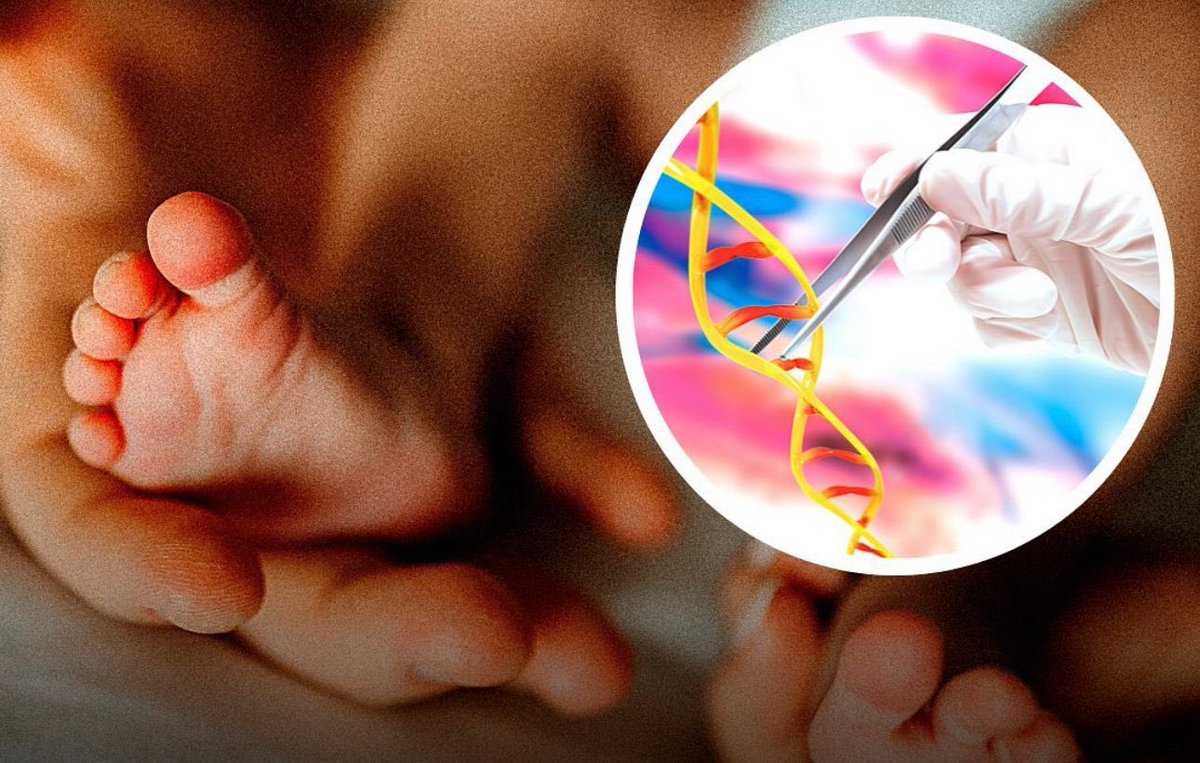
In a landmark moment for reproductive medicine, eight children have been born in the UK through mitochondrial donation, a complex technique aimed at preventing the transmission of debilitating genetic conditions. These births, reported as healthy, mark the culmination of over a decade of clinical and legislative groundwork primarily led by scientists in Newcastle. Yet while this milestone is being hailed as a scientific advance, its broader implications demand careful scrutiny.
The Massachusetts Institute of Technology’s publication in The New England Journal of Medicine offers the first clinical outcome detail that adheres to mitochondrial replacement therapy (MRT); the practice has been legally justified in the UK since 2015. Of the 32 persons certified to undergo the process, 22 of them embarked on the procedure and eight deliveries come from single embryo transfers; hence, a substantially lower number than the 150 births which were projected to happen per year.
This fact leads both numbers into contemplation on the efficacy and extensiveness of the techniques, since faulty maternal mitochondrial DNA is substituted with mitochondria donated from healthy females at IVF.
Such questions still exist regarding clinical transparency and public accountability despite the enthusiasm about the successful stories. Why did it take almost one decade for results to come out in an area that has an urgent patient need and an enormous public investment? Sustained public exposure would have been an integral obligation of the UK as a self-proclaimed lead in genomic governance, not a matter for afterthought. Transparency in reporting stimulates scientific advancement while guiding regulatory oversight and guaranteeing earned and maintained patient trust.
As a consequence, the criminally low contribution to births allows one to infer limitations imposed not just on uptake, but also biological prediction. Of the eight newborns, two possess high levels of maternal mitochondrial DNA-that is, partial reversal looms as pathogenic mitochondria may now retake residence. This is how similar biological instability has been observed in analogous foreign studies, not least of which is Greece, where MRT was shoved for trials in infertility prescribed otherwise than disease prevention at the mitochondrial level.
At present, researchers redefine cautiously the argument from not enshrining that guarantee against mitochondrial disorders but as a risk mitigation strategy. It is, however, contested whether this degree of risk mitigation justifies broader clinical application or not. Ethical obligation requires comprehensive risk-benefit assessment – especially for potential parents facing the possible reemergence of the very disease they were hoping to prevent.
‘Only the UK could do this’
Endowed with a rare genius, the United Kingdom invented the science of three-parent children, legislated for its practice with a parliamentary vote in 2015, and thus became the first country in the world to create children through this mode.
Intervention and controversy because mitochondria hold their own DNA which exert signs on its functioning. Thus, children will inherit DNA from the affected couple and about 0.1% from the third donor woman.
Any daughters who will be born employing this technique will carry this on to their children, so it will be a permanent alteration of a human genetic inheritance. When the technology was debated, some felt that this was a step too far and opened the doors to genetically modified “designer” babies.
Prof. Sir Doug Turnbull from Newcastle University told me, “I think this is the only place in the world that could have happened, there has been first-class science to get us to where we are, there has been legislation to allow it to go into clinical treatment, the NHS has supported it, and now we have eight children who seem free from mitochondrial disease. What a wonderful result!”
Liz Curtis, founder of the Lily Foundation charity, stated: “After years have gone by, we now know that eight babies have been born by this technique, all showing clear signs of no mito. “For many affected families, it’s the first real hope of breaking the cycle of this inherited condition.”
In stark contrast, psychosocial issues have yet to be tackled. There is little information about the experiences and outcomes of patients who were approved but did not undergo the procedure, or for whom the procedure failed. This is not wholly academic; there is an emotional and ethical burden for families who have staked great hope in the possibility of having a genetically related, healthy child.
These births are undeniably the first steps into a future which brings children into families who, until now, had no realistic options. Scientific achievement is not sufficient to ensure ethical success. At this juncture, rigorous empirical transparency must be committed to valuing patients’ perspectives into policy. Only then will the promise of mitochondrial donation be fully-and responsibly-realized.