
BRUSSELS: European allies and Canada are pouring billions of dollars into helping Ukraine, and they have pledged to massively boost their budgets to defend their territories.
But despite those efforts, NATO’s credibility as a unified force under U.S. leadership has taken a huge hit over the past year as trust within the 32-nation military organization dissolved.
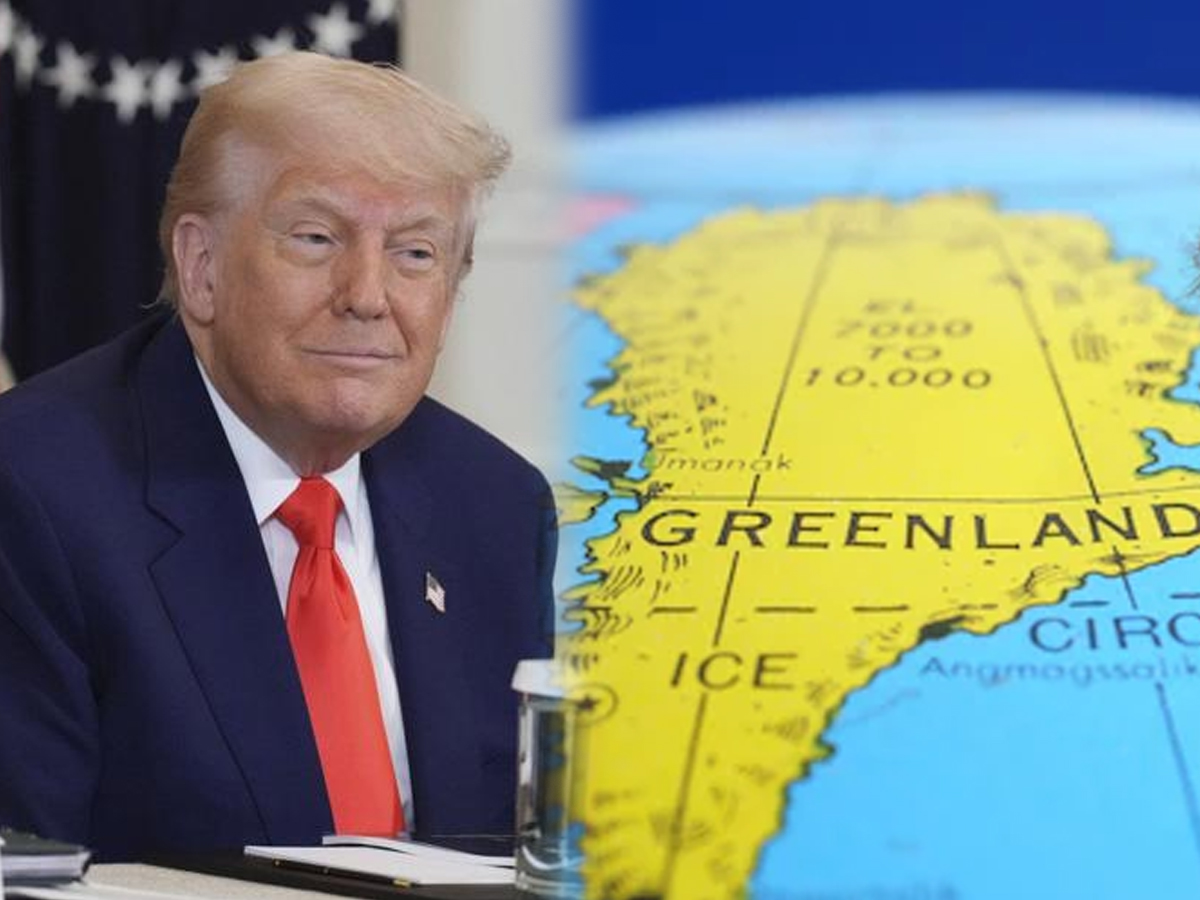
The rift has been most glaring over U.S. President Donald Trump’s repeated threats to seize Greenland, a semi-autonomous territory of NATO ally Denmark. More recently, Trump’s disparaging remarks about his NATO allies’ troops in Afghanistan drew another outcry.
While the heat on Greenland has subsided for now, the infighting has seriously undercut the ability of the world’s biggest security alliance to deter adversaries, analysts say.
“The episode matters because it crossed a line that cannot be uncrossed,” Sophia Besch from the Carnegie Europe think tank said in a report on the Greenland crisis. “Even without force or sanctions, that breach weakens the alliance in a lasting way.”
The tensions haven’t gone unnoticed in Russia, NATO’s biggest threat.
Any deterrence of Russia relies on ensuring that President Vladimir Putin is convinced that NATO will retaliate should he expand his war beyond Ukraine. Right now, that does not seem to be the case.
“It’s a major upheaval for Europe, and we are watching it,” Russian Foreign Minister Sergey Lavrov noted last week.
Criticized by U.S. leaders for decades over low defense spending and lashed relentlessly under Trump, European allies and Canada agreed in July to significantly up their game and start investing 3% of their gross domestic product on defense.
The pledge was aimed at taking the whip out of Trump’s hand. The allies would spend as much of their economic output on core defense as the United States — around 3.5% of GDP — by 2035, plus a further 1.5% on security-related projects like upgrading bridges, air and seaports.
NATO Secretary-General Mark Rutte has hailed those pledges as a sign of NATO’s robust health and military might. He recently said that “fundamentally thanks to Donald J. Trump, NATO is stronger than it ever was.”
Though a big part of his job is to ensure that Trump does not pull the U.S. out of NATO, as Trump has occasionally threatened, his flattery of the American leader has sometimes raised concern. Rutte has pointedly refused to speak about the rift over Greenland.
The North Atlantic Treaty Organization was formed in 1949 to counter the security threat posed by the Soviet Union during the Cold War and its deterrence is underpinned by a strong American troop presence in Europe.
The alliance is built on the political pledge that an attack on one ally must be met with a response from them all — the collective security guarantee enshrined in Article 5 of its rule book.
It hinges on the belief that the territories of all 32 allies must remain inviolate. Trump’s designs on Greenland attack that very principle, even though Article 5 does not apply in internal disputes because it can only be triggered unanimously.
“Instead of strengthening our alliances, threats against Greenland and NATO are undermining America’s own interests,” two U.S. senators, Democrat Jeanne Shaheen and Republican Lisa Murkowski, wrote in a New York Times op-ed.
“Suggestions that the United States would seize or coerce allies to sell territory do not project strength. They signal unpredictability, weaken deterrence and hand our adversaries exactly what they want: proof that democratic alliances are fragile and unreliable,” they said. Even before Trump escalated his threats to seize control of Greenland, his European allies were never entirely convinced that he would defend them should they come under attack.