
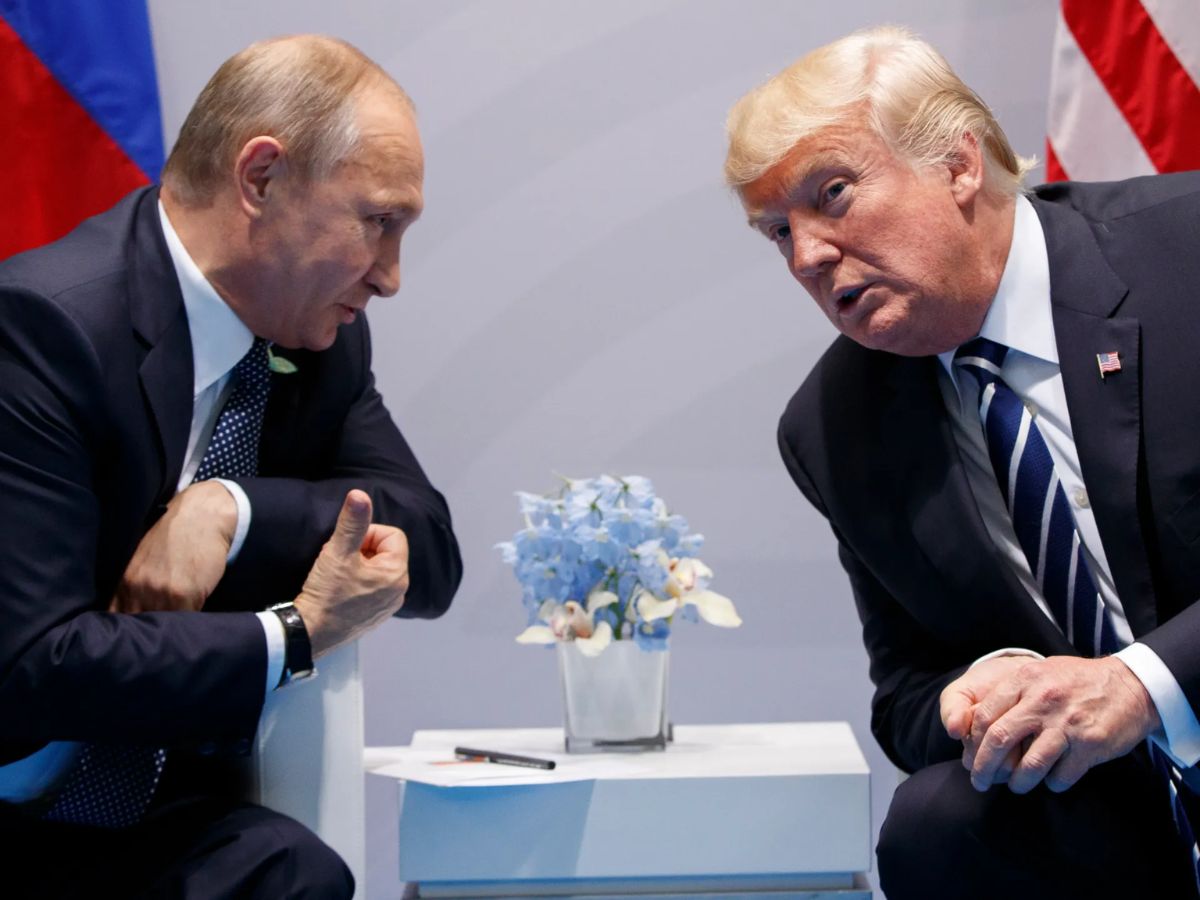
US President Donald Trump has once again put Russia on notice, warning that he would impose tough economic penalties if President Vladimir Putin refuses to agree to a Ukraine ceasefire deal. Speaking on Tuesday (August 26), Trump stressed that while he does not want to escalate militarily, Russia could face a financial storm if diplomacy fails.
“It will not be a world war but it will be an economic war,” Trump said, leaving little doubt about his readiness to use economic levers. “It’s going to be bad for Russia.”
Trump Holds Back, For Now
Although his remarks were sharp, Trump avoided announcing a timeline for any new sanctions. Instead, he maintained that he still hoped for a breakthrough deal to end the war. “I don’t want to impose sanctions or tariffs,” he said, signaling that economic warfare is a last resort, not the first.
This softer tone revealed Trump’s dual strategy: issue threats to pressure Moscow while keeping the door open for a diplomatic resolution.
“Two People to Tango” — Not Just Putin
In a strikingly balanced remark, Trump suggested that responsibility does not lie with Moscow alone. “You got to get them together,” he said, referring to Putin and his Ukrainian counterpart Volodymyr Zelensky.
The American president added that Zelensky “is not exactly innocent either,” suggesting Washington views Kyiv as a participant in a complex conflict rather than a blameless victim. By portraying Trump as a mediator rather than a biased ally, this framing has the potential to change how people view the White House’s position.
Also Read: “It Takes Two to Tango”: Trump on Putin–Zelensky Talks, Calls Peace Posturing ‘Bullshit’
Putin, Lavrov, and the Pushback
Trump also leaned on his personal rapport with Putin, saying: “It’s no different than the worst wars I’ve ever seen, and if I can stop it – because I have a certain power or a certain relationship – I had a very good relationship with President Putin. That’s a positive thing again.”
However, when asked about Russian Foreign Minister Sergei Lavrov’s dismissal of a long-term peace deal, Trump cut short his answer: “Doesn’t matter what they say. Everybody’s posturing. It’s all bullshit.”
Such bluntness underscored Trump’s belief that public statements from Moscow are less important than behind-the-scenes maneuvering.
Why Trump’s Threats Matter Now
Russia’s economy is already under strain from previous sanctions, making Trump’s “economic war” warning a serious risk.
- Ukraine’s battlefield situation remains fluid, with international pressure building for talks.
- NATO allies are watching Washington closely, wary of whether Trump’s diplomacy-first approach might shift Europe’s security balance.
- Trump’s focus on diplomacy and his readiness to apply financial pressure suggest a carrot-and-stick approach that may influence how the conflict in Ukraine develops in the future.
For now, Trump has left the world guessing. Will he move forward with sanctions if Putin refuses talks, or will his personal channels with the Kremlin deliver progress first?
The ambiguity builds suspense, and could be part of his strategy. By keeping both Moscow and Kyiv uncertain of his next move, Trump positions himself as the indispensable broker of peace.