
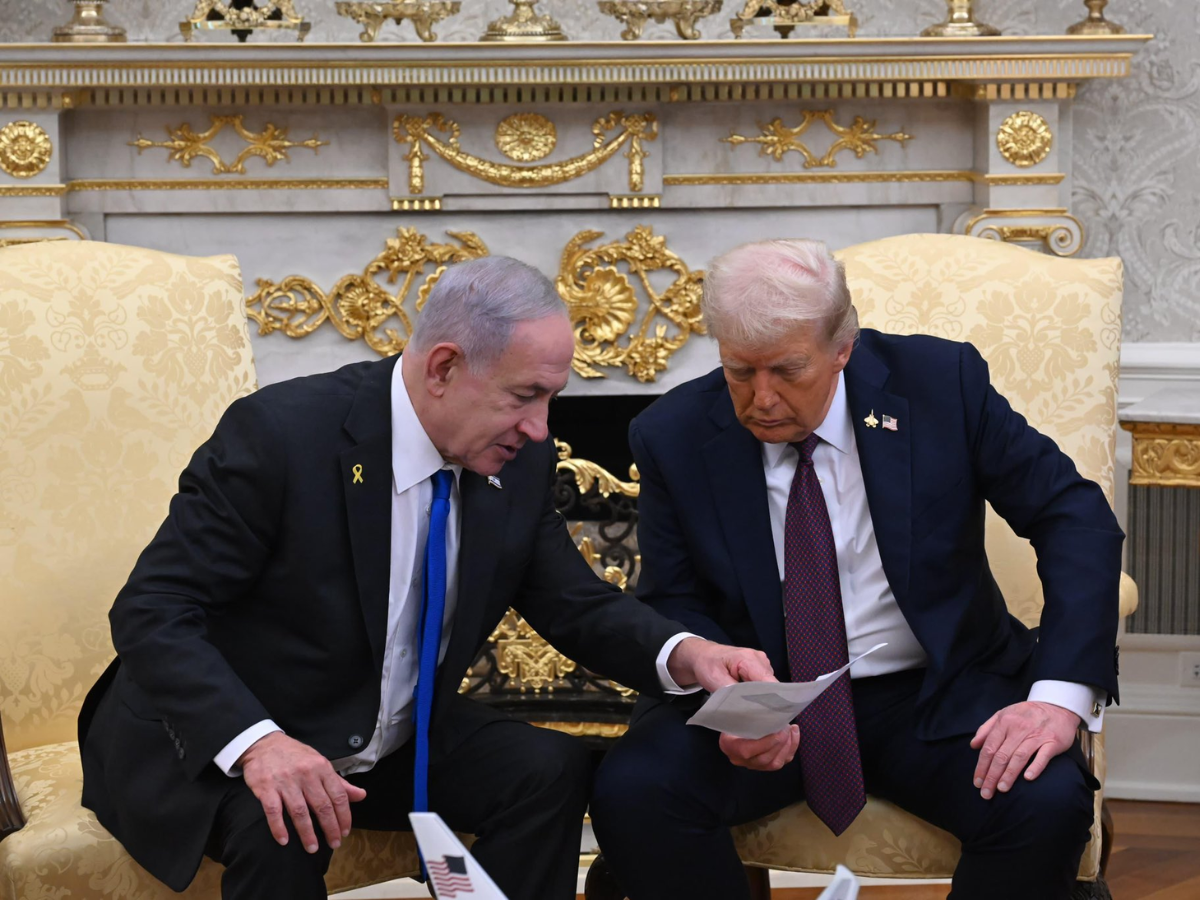
The US President Donald Trump has set forth what he hopes will be a 20-point proposal to bring an end to the two-year conflict in Gaza the plan was reportedly accepted in principle by Prime Minister Benjamin Netanyahu during talks at the White House.
Portrayed as an immediate ceasefire, the return of hostages and the political reset of the entire Gaza situation, the proposal combines parameters for immediate humanitarian needs with long-range prescriptions for security and governance. The key question is whether it can bridge the hardened positions on the ground.
Overview of the Proposal
The crux of the proposal links to an almost immediate ceasefire to a phased Israeli withdrawal from Gaza with the relevant release of captives held since the October 7 attacks. An interim of non-political administrative authority would oversee the transition in Gaza under local Palestinians and international experts annexation of the Strip would remain off the table for Israel. The proposal contemplates open borders for aid and investment with Palestinians deciding but not compelled to rebuilding in Gaza.
ALSO READ: Gaza Deal: The 21-Point Plan of POTUS Trump Aiming at ‘Long-Lasting Peace’
Disarmament, Stabilization & Conditional Amnesty
The security clauses are severe hamas would require complete disarmament and removal from future governance those militants willing to coexist peacefully could be offered amnesty. A temporary international stabilization force would oversee the security environment during the transition and withdrawal. The White House describes these steps as critical to ensuring security for Israel while finding a path for reconstruction and political dialogue.
If accepted, the peace plan will lead to an immediate full ceasefire across the Iron Dome. The United States will help organize a mediated dialogue between Israel and Palestine to facilitate mutual understanding and peaceful coexistence.
- Temporary Transitional Authority for Gaza
- Voluntary Resettlement and Phased Israeli Withdrawal
- Total Prisoner Exchange and Hostage Return
- Immediate Ceasefire and US-Led Diplomatic Oversight
Hostages, Prisoner Swaps & Timelines
Linking troop movements with the return of hostages the Israeli advance was to occur in tandem with the retrieval of the last hostages, dead or alive. In return, Israel would unveil a list of prisoners it would recoup which would include life-term prisoners in addition to thousands of others from Gaza. This phased way is meant to create verified trust-building steps albeit through acceptance by both parties of external sequencing and monitoring. In exchange, Israel will release 250 life-sentenced prisoners and thereafter would free an additional 1,700 Palestinian prisoners.
ALSO READ: US Government Shutdown 2025: What It Means for Federal Workers & the Economy
Political Blockages & the Way Forward
The plan has broad Arab support, Trump has sought acceptance from Hamas for the plan while cautioning that any rejection would give Israel the green light to resume military operations, with U.S. backing. Netanyahu has offered conditional support and welcoming the goals of the plans but reserving the right to unilateral action if Hamas does not comply and raising the possibility that Israeli forces may maintain a security perimeter even after any partial withdrawals.
Within the proposal lies acute tension: domestic political constraints in Israel, Hamas’s track record of resisting disarmament, regional geopolitics and doubts about international oversight all call for reduced prospects for implementation. The White House has reframed reconstruction under the watchful eye of critics as an opportunity with the political packaging will gain traction in durability and peace or just delay yet another confrontation is to be seen.
ALSO READ: Trump Declares 100% Tariff on International Films: What’s Next for Hollywood?