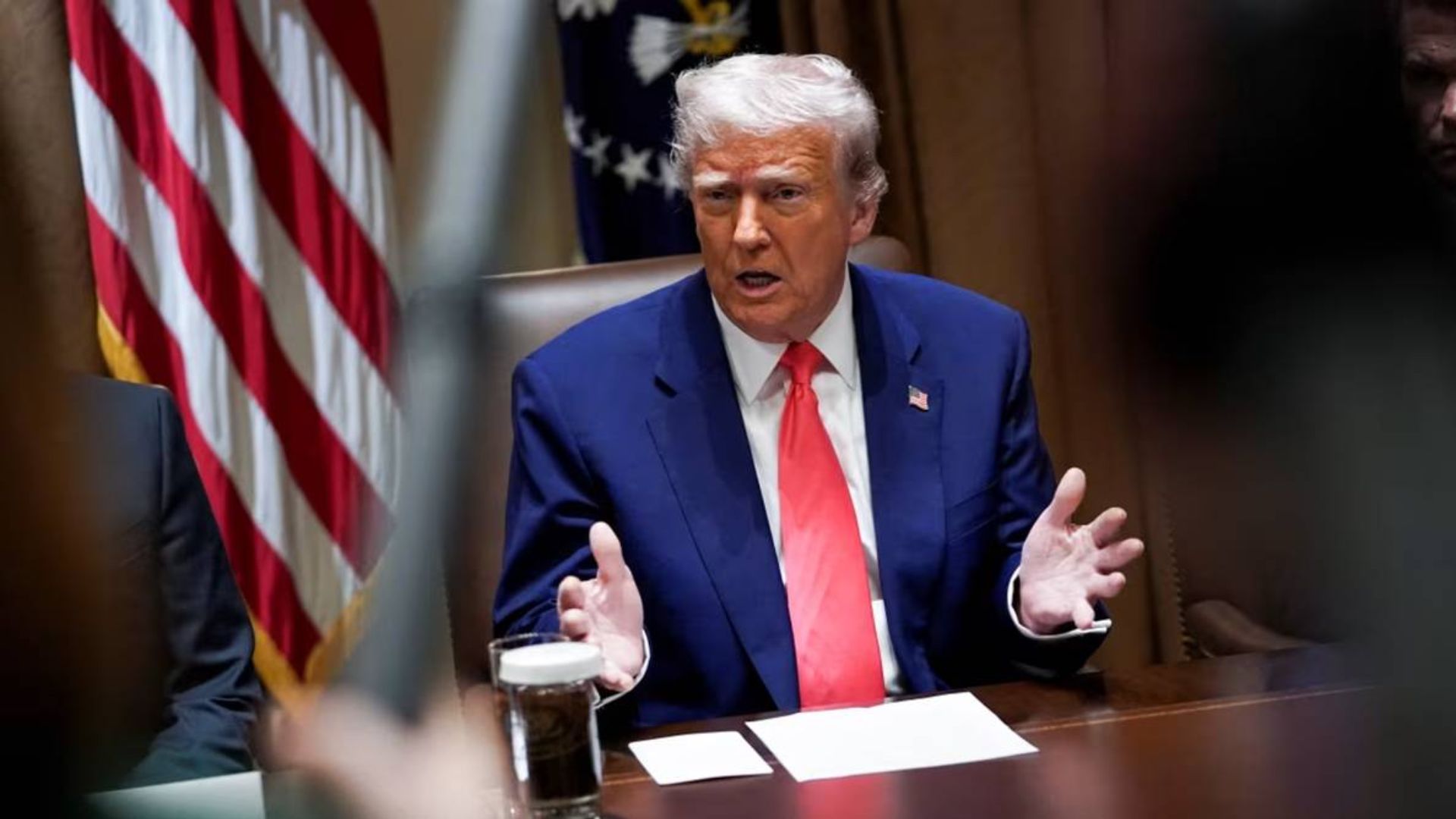
US President Donald Trump hosted Armenian Prime Minister Nikol Pashinyan and Azerbaijani President Ilham Aliyev at the White House on Friday, where both nations signed a historic peace agreement. The deal not only aims to resolve decades of tension but also grants the United States exclusive rights to develop a critical transit corridor through the South Caucasus.
Remarkably, this new route is expected to carry Trump’s name — the Trump Route for International Peace and Prosperity (TRIPP). The project will operate under Armenian legal authority, with the US leasing the land to a consortium tasked with its construction and management.
“Many tried to find a resolution,” Trump declared alongside the leaders. “But with this accord, we’ve finally succeeded in making peace.” He described the corridor naming as “a great honour” and added, “I didn’t ask for this.”
TRIPP: Peace Mission or Personal Gain?
The corridor, running through Armenian territory, has economic as well as symbolic significance. While Trump has presented himself during his first six months in office as a “global peacemaker,” critics warn that such deals often come with political and economic strings attached.
For Trump, this deal is another addition to his growing list of mediated agreements. Just days earlier, he oversaw a ceasefire between Thailand and Cambodia after threatening to suspend trade talks with both nations if hostilities continued. “I was talking to one of the two nations on trade, and I said, ‘I’m not going to sign a trade deal if you guys are going to fight,’” Trump explained. “We got it stopped.”
Nobel Peace Prize Ambitions
Trump’s administration has been quick to promote such diplomatic wins, even in small-scale conflicts, as part of his campaign promise to “end wars around the world.” However, he still faces unresolved major crises, including Israel’s war in Gaza and Russia’s invasion of Ukraine.
A senior White House official revealed that Trump views every peace deal as a step toward the Nobel Peace Prize — an award he has openly coveted for years. He has often complained about former US President Barack Obama receiving the prize in 2009 at the start of his first term.
On Friday, both Pashinyan and Aliyev endorsed Trump’s Nobel nomination. “Who, if not President Trump, deserves the Nobel Peace Prize?” Aliyev asked. “President Trump, in six months, did a miracle.”
End of the Minsk Group’s Role
Another key outcome of the agreement is the leaders’ joint decision to push for the disbandment of the Minsk Group, a mediation body formed in 1992 and co-chaired by France, Russia, and the US. The group had been tasked with resolving the Armenia–Azerbaijan dispute for decades without lasting success.
“Thirty-five years of death and hatred — and now it’s going to be love and respect and success together,” Trump said, smiling as both leaders shook hands in front of him.
Also Read: Trump’s Nobel Peace Prize Push Gains Momentum as Azerbaijan and Armenia Back Join Forces