
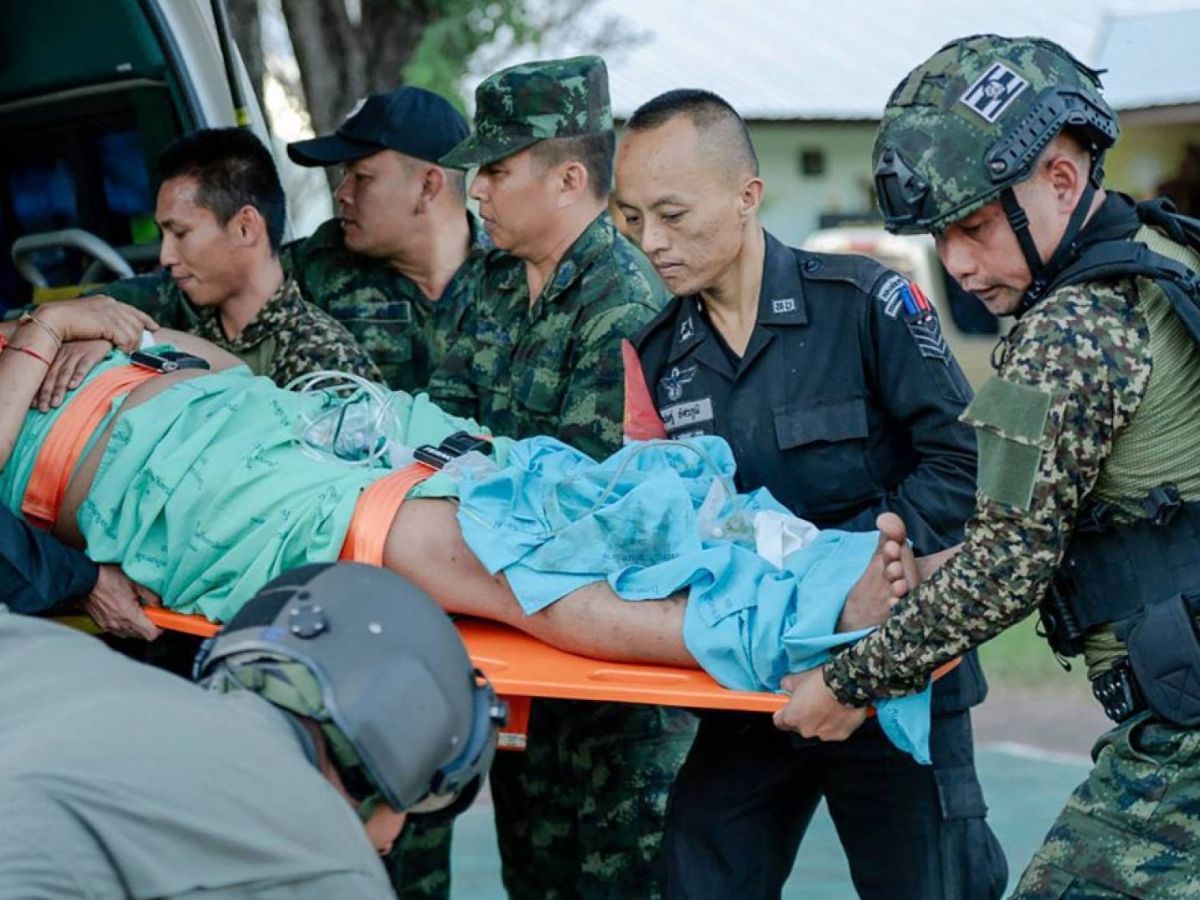
A fragile ceasefire brokered by U.S. President Donald Trump has completely unraveled, with Thailand launching airstrikes on Cambodia in what it called an attempt to “cripple” its neighbor’s military capability. The renewed hostilities, the fiercest since deadly clashes in July, have resulted in casualties, mass civilian evacuations, and a sharp diplomatic rupture, with Thailand’s Prime Minister declaring “there will be no talks.”
What Triggered the New Round of Fighting?
Clashes broke out overnight and intensified at dawn across several border locations. Each side blames the other for initiating the violence, which comes after months of simmering tension.
The key triggers appear to be:
Suspended De-escalation: Thailand last month suspended ceasefire measures agreed upon in Trump’s presence, following an incident where a Thai soldier was maimed by a landmine that Bangkok claims was newly laid by Cambodia.
Failure of Diplomacy: Thailand stated it would not implement the truce terms until Cambodia apologized for the alleged mining—a demand Cambodia has rejected, denying any responsibility.
Accusations of Aggression: Thailand said Cambodia deployed heavy weapons and used drones to strike its bases. Cambodia insists it was under continued attack and did not hit back, labeling Thailand’s actions as “inhumane and brutal.”
What is the Scale of the Military Action and Impact?
The conflict has escalated significantly, moving beyond artillery exchanges to include air power.
Key developments include:
- Thai Airstrikes: The Thai military confirmed using fighter jets to strike military targets inside Cambodia, including long-range rocket systems, with the stated goal of crippling Cambodia’s military capability “for a long time to come.”
- Casualties: Officials reported one Thai soldier and four Cambodian civilians killed, with dozens more wounded on both sides.
- Mass Evacuations: In border provinces, Thailand evacuated 438,000 residents. Additionally, hundreds of thousands of people were relocated to safety in Cambodia, which significantly disrupted transportation.
- No Communication: Thai Prime Minister Anutin Charnvirakul stated firmly, “There will be no talks,” laying down a hardline stance for any halt in hostilities.
Also Read: Paramount Launches $108 Billion Hostile Bid for Warner Bros, Challenging Netflix Deal
What is the International Response?
International organizations are immediately concerned about the rising violence, which poses a threat to regional stability.
Reactions include:
- ASEAN Chair Malaysia: Anwar Ibrahim, the prime minister who assisted Trump in negotiating the initial ceasefire, urged peace and warned that the violence “risks undoing the hard work” done to improve relations.
- United Nations: Secretary-General Antonio Guterres urged maximum restraint and offered UN support for peace efforts.
- United States: Following Trump’s direct intervention, the U.S. embassy in Thailand did not immediately comment, making the status of its diplomatic mediation uncertain.
What is the Historical Context of This Conflict?
The two countries share an 817-km border with stretches still poorly demarcated, a result of colonial mapping. Conflicts over ancient temples have fueled nationalist tensions and caused occasional armed clashes for over 100 years.
Recent conflicts range from a fatal artillery exchange in 2011 to intense clashes in July 2025 that claimed at least 48 lives and displaced 300,000 before Trump intervened. The present use of air power points to Thailand’s major military advantage.
Your Questions Answered: Thailand-Cambodia Conflict FAQs
Q: What was the “Trump-brokered truce”?
A: In July 2025, after heavy fighting killed dozens, U.S. President Donald Trump personally intervened to broker a ceasefire agreement between the two nations, which was also supported by ASEAN chair Malaysia.
Q: Why is Thailand using airstrikes now?
A: Thai military leaders stated the objective is to “cripple Cambodia’s military capability for a long time to come” in response to what they claim are Cambodian provocations, including drone bombings and rocket attacks.
Q: How are civilians being affected?
A: The impact is severe. Hundreds of thousands on both sides have been forced to evacuate their homes. Civilian casualties have been reported in Cambodia, and residents describe hearing constant “boom boom” of explosions near the border.
Q: What is the main point of contention?
A: The wider cause is an unsolved border dispute over territory, particularly in the vicinity of ancient temples like Preah Vihear. The immediate trigger was claimed new landmine deployments and army movements.
Q: Can ASEAN or the UN stop the fighting?
A: Both are advocating for moderation, but their impact is small. Forceful involvement is challenging because ASEAN functions on consensus and non-interference. The UN can promote peace, but it needs the warring parties’ cooperation, which at the moment appears to be lacking given Thailand’s “no talks” posture.
Also Read: Trump’s Antitrust Warning Adds to Scrutiny of Netflix’s $72 Billion Warner Bros Deal