
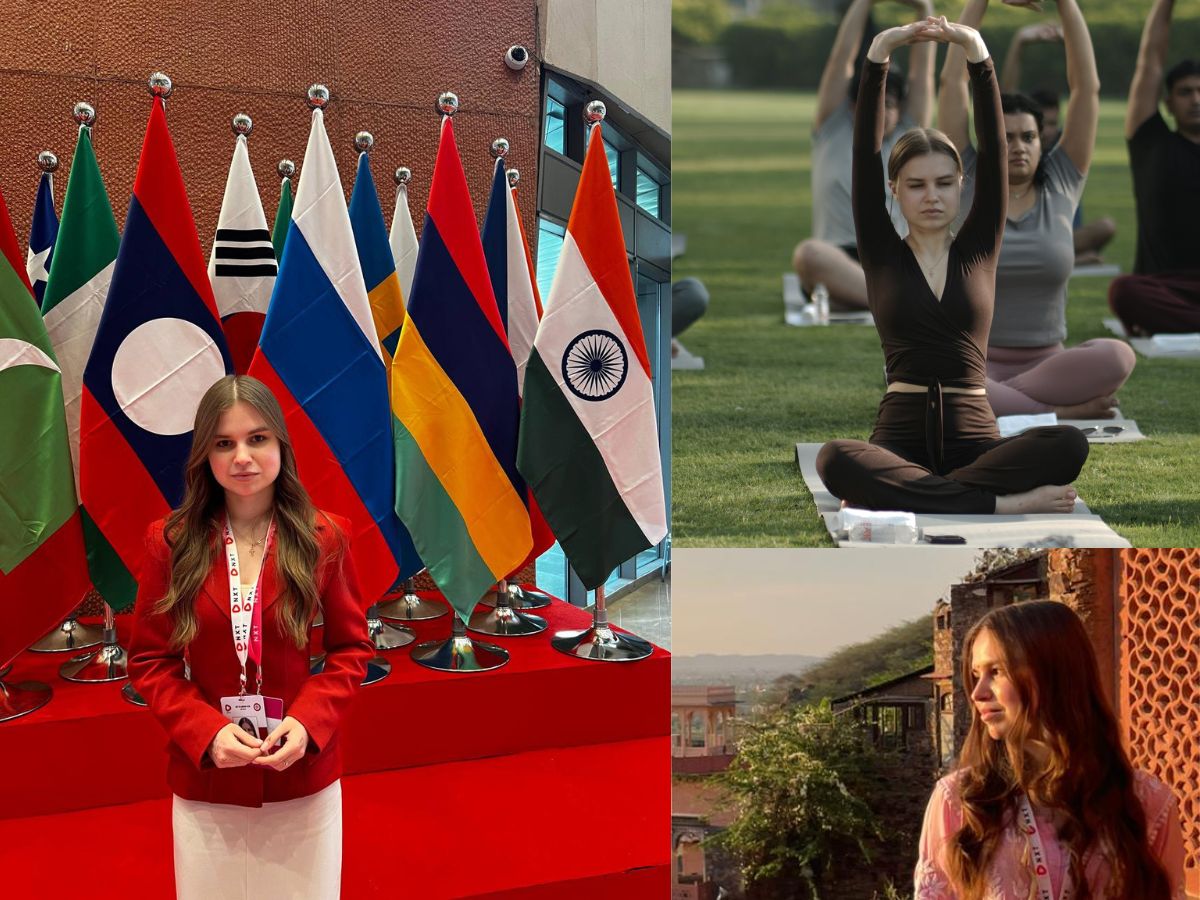
For many years, India has successfully used its rich cultural, historical, and value-based heritage to gain the trust of people around the world and to build long-term relationships with other countries. Today, India’s soft power diplomacy is undergoing a significant transformation: traditional instruments are increasingly complemented by modern technological innovations, as illustrated by large-scale events such as the India AI Impact Summit 2026. The synergy between India’s rich cultural aesthetics, human potential, ideas, and artificial intelligence can strengthen the country’s influence in the Global South and beyond, while also capturing the hearts and minds of international audiences.
According to various international studies, the Indian film industry produces more than 1,500 films annually, and the global audience of Bollywood reaches several billion viewers worldwide. However, in the twenty-first century, millions of users of different social media platforms are becoming new transmitters of Indian culture, while artificial intelligence is emerging as a powerful tool for amplifying this form of “soft power.”
From the Stage to the Screen
As a country with a rich cultural heritage, India actively employs a variety of soft power instruments. For example, in the 1980s, the theatre director Peter Brook staged an adaptation of the Mahabharata, which contributed significantly to the popularization of the Indian epic worldwide. A decade later, Bollywood entered what can be described as its memorable “soft era.” Even today, its films captivate global audiences through their vibrant aesthetics, music, dance, and narratives that emphasize family values, friendship, social issues, the triumph of good, and respect for tradition combined with openness to change.
In the twenty-first century, the space for the realization of India’s soft power has expanded significantly due to the development of social networks and digital media platforms. Research shows that information transmitted through social media directly influences how people perceive events and public moods in other countries. Social media also partially overcomes the limitations of traditional soft power tools such as cinema or theatre, which often present a more artistic and sometimes idealized image of a country.
The Rise of Digital Ambassadors
One of the key features of modern digital diplomacy is the emergence of new actors—the “ambassadors” of soft power. Influencers, bloggers, and ordinary social media users now play a particularly important role by sharing aspects of their everyday lives online. In doing so, they create a unique and dynamic representation of contemporary Indian life. The visual and semantic elements of this digital content, combined with the sounds of Indian life expressed through national music and language, create an atmosphere of Indian existence that can psychologically influence audiences—inspiring, calming, and encouraging a deeper interest in India.
The next stage in the transformation of India’s soft power is the development and promotion of an independent Indian AI ecosystem. Artificial intelligence is not only interesting as a new channel of soft power itself, but also as a tool that can assist these new ambassadors of soft power in their work.
The Technological Catalyst
Modern AI models are capable of analyzing and systematizing large volumes of audience data—from neighboring countries in South Asia to distant regions of the world. This makes it possible to identify thematic trends, cultural preferences, and the information agenda within different societies at specific moments in time.
Machine translation technologies can also adapt texts and audio content for particular countries or regions without losing their core meaning. However, it is important to recognize that language and its sound are themselves essential elements of cultural identity. Therefore, translation technologies should be considered as supportive tools rather than full replacements for human interpretation.
From a technical perspective, artificial intelligence can also be used to generate scripts for short videos, create social media posts, and assist with editing and video production. In this context, it is important to organize education programs on various subjects of AI tools so that humans remain the creators of content, capable of realizing their ideas and creative potential, while artificial intelligence acts as a supportive assistant.
In order to evaluate the effectiveness of such policies, it is necessary to monitor audience reach and structure. In addition, natural language processing (NLP) methods can be used to quantitatively assess the emotional perception of India in different countries. Thus, the combination of India’s rich cultural heritage and artificial intelligence, when placed in the hands of ambitious and creative individuals, opens new opportunities for strengthening the country’s international influence and shaping a positive image of India in the global information space.