
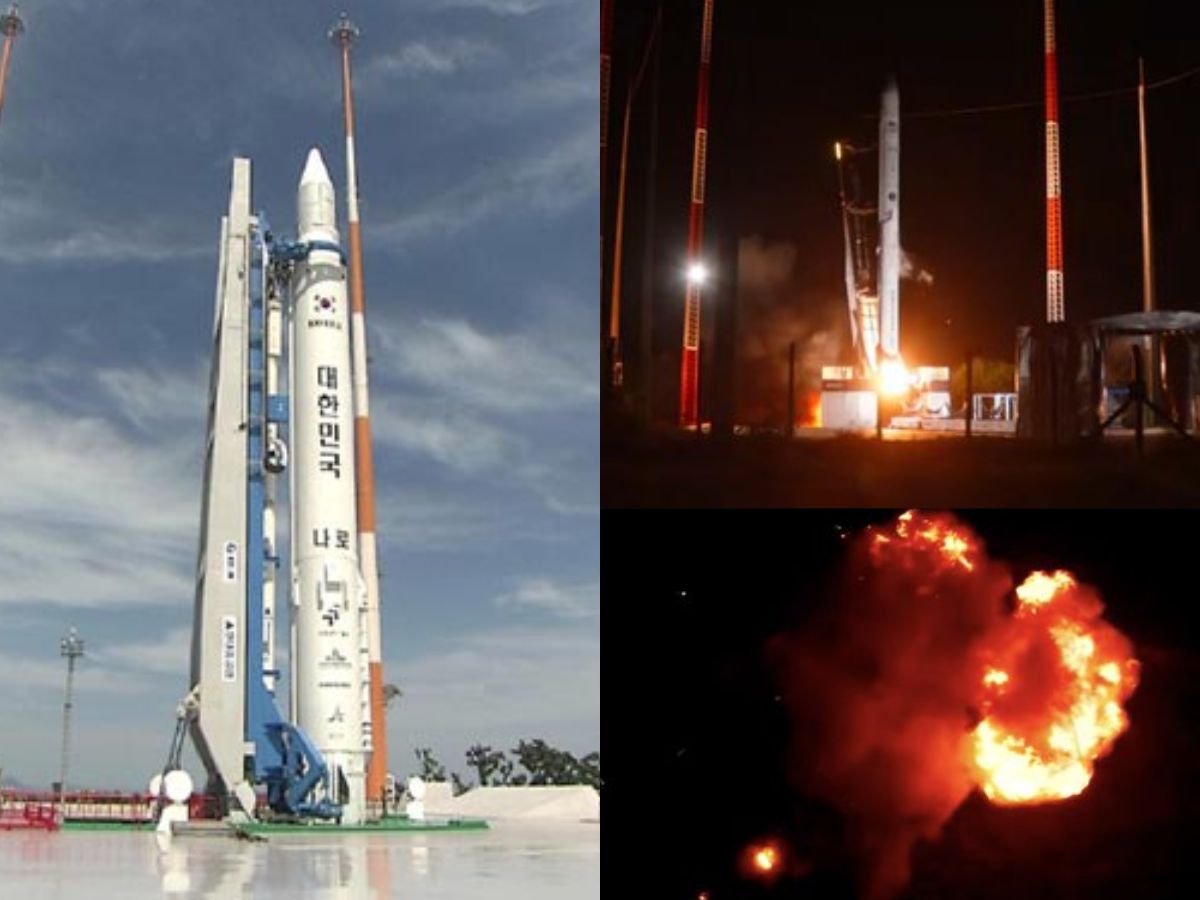
South Korea’s bid to become a player in private orbital launches ended in disappointment on Monday night when the Hanbit‑Nano rocket crashed shortly after liftoff from Brazil’s Alcantara Space Centre.
The rocket, operated by South Korean startup Innospace, had hoped to place satellites into orbit, but an anomaly during flight forced the mission to end within seconds of launch.
What Happened During the Hanbit‑Nano Launch?
The Hanbit‑Nano lifted off at 10:13 p.m. local time from the Alcantara site in Brazil. It initially followed its vertical flight path, but less than a minute later, an unknown issue caused the vehicle to lose stability and crash back to the ground within a designated safety zone.
The company livestream showed flames and an abnormal flight condition before the feed ended abruptly, leaving users watching the event with uncertainty.
Hanbit‑Nano Rocket Launch: Why This Launch Mattered?
This mission was Innospace’s first commercial orbital attempt and was seen as a major milestone for both the company and South Korea’s private space industry. Success would have made Hanbit‑Nano the first South Korean private rocket to deploy customer payloads into orbit.
The rocket was carrying several small satellites from international clients, including Brazil and India, along with experimental payloads.
Technical Challenges Before Launch
The Hanbit‑Nano launch had already been postponed three times due to technical issues and weather conditions at the launch site. Earlier delays came from problems with components and unfavourable weather, pushing the liftoff date to December 22. Experts say such challenges are common in debut flights and often provide critical data for future missions.
Impact on Innospace and Markets
The crash has had a financial impact on Innospace, with the company’s shares falling sharply after the launch failure. Despite the setback, Innospace officials said they will review flight data to determine the exact cause of the failure and plan corrective actions before the next attempt.
What Experts Are Saying?
Space industry analysts emphasize that first launches are notoriously difficult. Many renowned space companies faced early failures before achieving success. These early setbacks are often viewed as part of the learning process in rocket development.
The flights of hybrid propulsion systems like those on Hanbit‑Nano, which combine different fuel types, are gaining interest but pose design challenges, according to specialists.
What’s Next for Innospace?
Innospace is already developing larger launch vehicles, including Hanbit‑Micro and Hanbit‑Mini, which aim to expand its market reach. The company insists that the lessons from this mission will strengthen future efforts.
The Brazilian Air Force and Brazilian Space Agency continue to support operations at the Alcantara Space Centre, which is becoming a key site for commercial space missions in the region.
How Does This Affect South Korea’s Space Goals?
While this launch was a setback for the private company, South Korea’s national aerospace ambitions are still strong. The government has plans for more space missions, including future lunar projects and advanced orbital programs involving methane‑based engines, a technology seen as cleaner and more efficient.