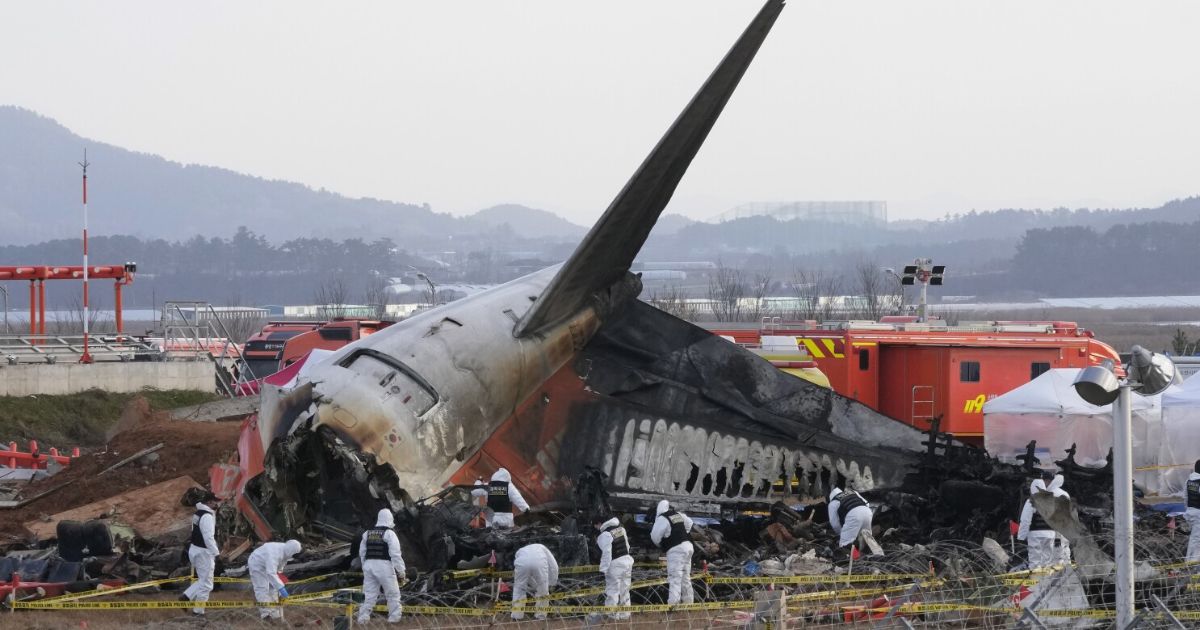
A Jeju Air plane that crashed in December following a bird strike might have remained aloft on one malfunctioning engine, South Korean investigators have said. The Boeing 737-800 belly-crashed at Muan airport without deploying its landing gear. It veered off the runway and erupted into flames after striking an embankment, killing 179 of the 181 aboard.
A fresh update shows that pilots could have cut off the less-damaged engine. However, the more concerning point coming up is the role of the unsafe airport infrastructure, which could have exacerbated the tragedy.
Left Engine Shut Down Despite Less Damage
On July 19, families of victims were told new information by investigators, though the report has not been officially published. The left engine—slightly less impaired by the bird strike—was closed down just 19 seconds after the collision, according to the Aviation and Railway Accident Investigation Board (ARAIB).
At the same time, the malfunctioning right engine roared, shot flames and black smoke, but still produced “output sufficient for flight.” Evidence from the cockpit voice recorder and debris indicates that the pilots mistakenly shut down the more operational engine. This brings to mind the 1989 Kegworth air disaster in Britain, where pilots also killed a running engine.
Experts Caution Against Blame Before Final Report
The last report is due by next June. Safety specialists emphasize that the majority of air accidents are caused by numerous factors. Greg Feith, a former US. The NTSB investigator indicated the update includes new data but is devoid of critical context. It does not discuss why the crew behaved in the manner they did, or how either engine was performing following the strike.
ARAIB has certified bird remains in each engine, manufactured by CFM International. No previous defects were discovered, though. The pilot union states the update inaccurately minimizes the devastation of the left engine, which also surged, black box evidence indicates.
Families Push Back Against Pilot-Focused Narrative
Victims’ relatives objected to the release of the July 19 document. They contend that it places too much emphasis on pilot error and overlooks wider systemic weaknesses. They call for a complete release of all backup data and cockpit recordings.
Airport Embankment Now Under Scrutiny
Aside from pilot judgments, an even more lethal structural risk is gaining attention. The plane crashed into a concrete embankment supporting navigation equipment, standard at Muan and six other South Korean airports. International safety regulations for aviation require such structures to be constructed of breakaway materials to minimize fatal impact.
Safety officials attribute the high fatality rate to the embankment. South Korea’s transport ministry has recognised the problem and vowed to make changes. Redesigning work is already in progress, officials confirmed last week.
Engine Could Have Carried Plane Longer
One of the new details is raising questions about potential alternatives. Investigators report that the right engine—though damaged—remained running well enough for flight.
What this suggests is that the aircraft might have had more alternatives than the crew were aware. But exactly how well it performed remains a secret. And so do the states of the systems related to either engine.
Cautionary Tale on Bird Strike Protocols
Bird strikes are an established risk in aviation, but the Jeju crash shows how bad judgments and infrastructure failures can convert survivable incidents into catastrophes.
This tragedy should spur regulators to secure safety procedures not only in the cockpit, but on the ground as well.