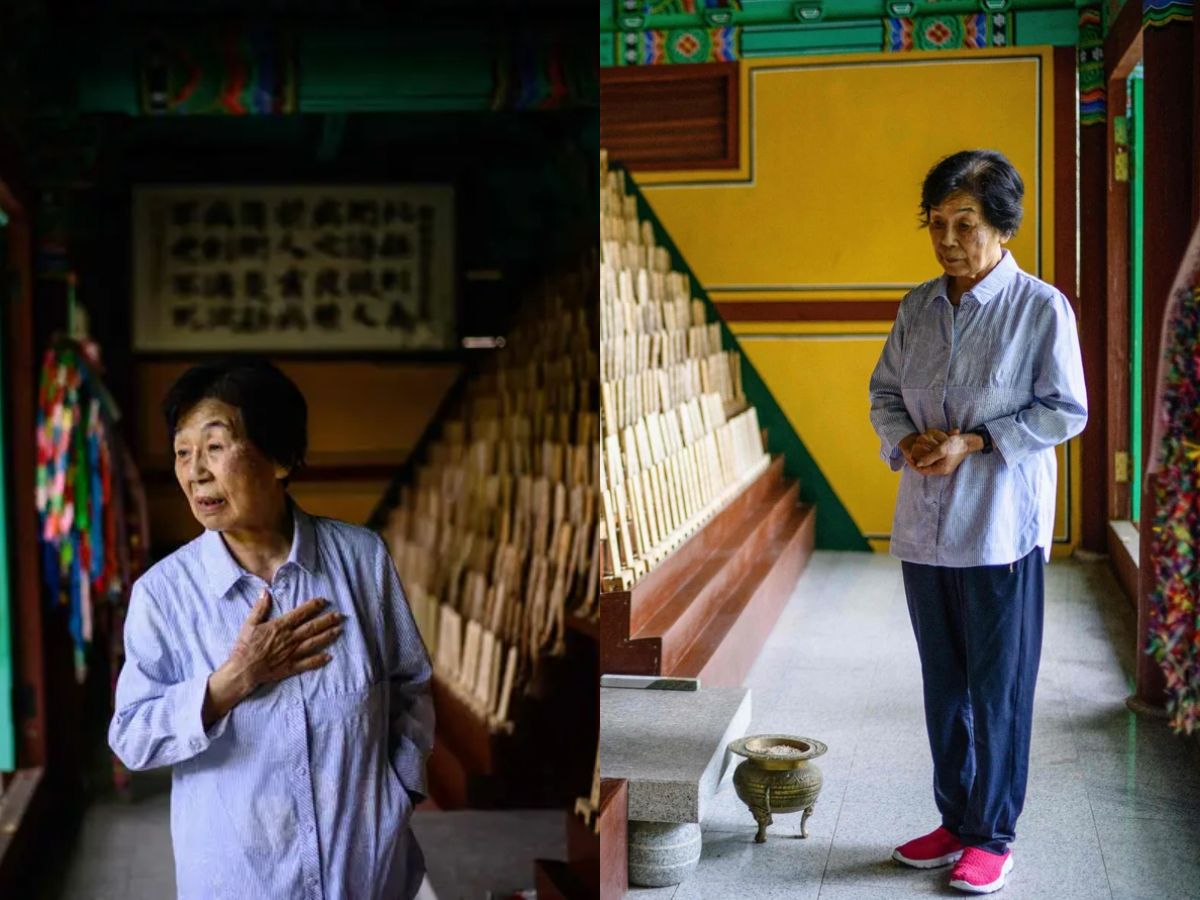
When the United States dropped the atomic bomb on Hiroshima, Bae Kyung-mi was only a little boy. The bomb blast took place on August 6, 1945. Now 85, Kyung-mi finally spoke about what actually happened that day.
Kyung-mi Recollects the Horrific Day
Bae remembers playing outside her home on the day of the tragedy when she heard planes and told his mother. Just a few moments after, she lost consciousness.
The explosion was at such large scale that it destroyed the city and killed tens of thousands of people including Bae’s aunt and uncle. How did Bae survive? A rubble from her collapsed house shielded her from the worst of burns.
A Family Secret Kept Hidden for Years
Just like about 5000 families in Hiroshima who were transferred to Japan for labor under colonial rule, bae’s family kept silence about their experience.
“I never told my husband that I was in Hiroshima and was a victim of the bombing. Back then, people used to say that marrying an atomic bombing survivor is ‘marrying the wrong person’,” Bae said.
Not just the husband, but her sons also did not know about her until she registered a special atomic bomb center in Hapcheon, South Korea in 1996.
Bae Affected with Radiation
The atomic bomb caused extreme radiation and everyone was exposed to it. Bae also strygled with radiation-related illness. She ahd to remove her ovariesand a breast due to high cancer risk, at a point. She feared passing the illness to her children.
Discrmination against Korean Survivors
The Hiroshima-Nagasaki bombing ijuredand killed 740,000 people. There were 10% victims who were just Koreans! For decades, their stories left overlooked. Korean survivors faced a wider discriminatio as ‘hibakusha’ (atomic bomb survivors and as ethnic Koreans living in Japan.
Post Korea’s liberation and subsequent division in 1950-1953 war, several returnees had to choose allegiance between pro-Seoul and pro-Pyongyang factions. This complicated their lives even more.
Kwon-Joon-oh, whose parents were the survivors of this atomic blast said that the Koreans were given filthy and dangerous jobs, the ones Japanese didn’t want. It was until the late 90s that a cenotaph for Korean victims finally came into action in Hiroshima Peace Park.
Childhood Memories of a Burnt City
Kim Hwa-ja, another survivor was only 4-year old when the incident took place. She recollects her memories as being placed in a makeshift horse-drawn cart as her family tried to escape. “The city was burning,” she recalled. As smoke filled the air, her mother told her not to look and covered her with blanket.
Due to the colonial rule, many Koreans had to adopt the Japanese name, asking record-keeping almost impossible after Hiroshima’s city offices obliterated.
Impact on South Korea
After returning to an independent Korea, survivors suffered in silence. Accoring to the director of the Hapcheon Atomic Bomb Victim Centre Jeong Soo-won, around 1600 ‘hibakushas’ are still alive today. Out of these, 82 lives at the centre.
“In those days, it was rumored that the exposure could be contagious,” Jeong said.
A law was passed in 2016 that provided the survivors with a minimal stipend of $72, it provided no support to the children or grandchildren of the survivors.
Even though a group of ‘hibakushas’ won the Nobel Peace Price for spreading awareness about nuclear war, the Korean community still believes that they are not being truly understood of the pain.
Kim-Gin-ho, another survivor criticized the US President Donald Trump’s past comparison between strikes on Iran and the atomic bombings. At the upcoming August 6 memorial at the Hapcheon Centre, survivors hope their voices will finally be acknowledged. “From politicians, there has been only talk… but no interest,” said Kim.