
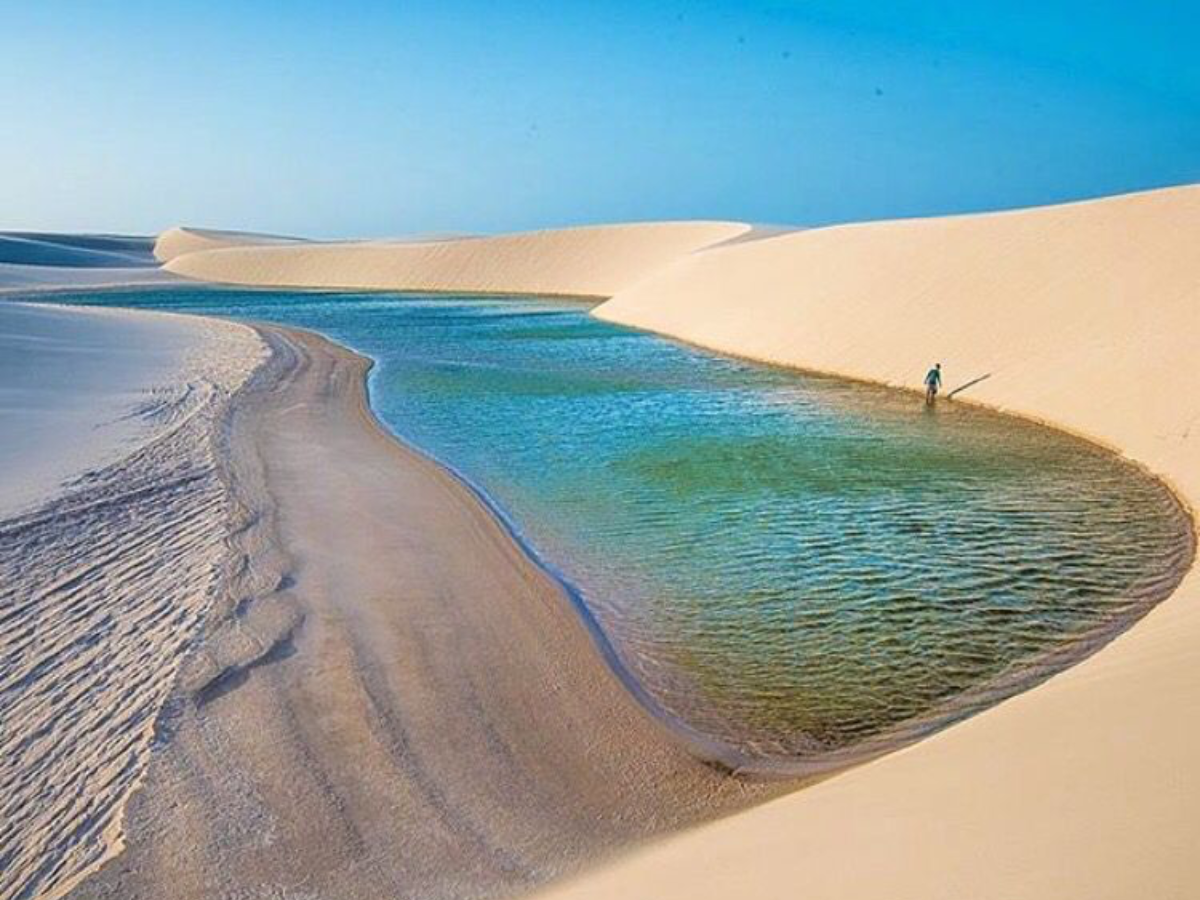
The Lencois Maranhenses National Park is located along the northeastern coast of Brazil, covering an area of 156,562 hectares in the state of Maranhao. This park straddles the transition zone of the Cerrado, Caatinga and Amazon biomes.
Dominated by enormous white sand dune fields over more than 80 km of coastline, this area is intermingled with a mosaic of temporary and perennial lagoons. The inter-dunal pools fill during the rainy season and evaporate during the dry months, creating a constantly shifting surreal underwater desert scene.
Geological & Ecological Significance
What makes Lencois Maranhenses different is not only its aesthetic beauty but also scientific importance with the dunes are molded by prevailing winds and marine sediment processes, giving rise to long chains of barchan dunes up to 30 meters high and migrating at rates of 4–25 meters per year.
ALSO READ: NASA Faces Scrutiny Over Withheld MRO Images of Interstellar Comet 3I/ATLAS\
Its site, vegetation structure and geomorphology create an exceptional view into the nature of Quaternary landscape evolution and transitional ecosystems, making it a UNESCO World Heritage inscription based on criteria (vii) and (viii).
Ecosystem Dynamics & Biodiversity
Each lagoon placed between the dunes hosts rich ecosystems mangroves, alluvial forests, restinga and freshwater habitats that host pioneer vegetation and adaptative micro-fauna.
This is where shifting sand, rising water tables during the wet season, and the layers of sediment beneath support a unique set of ecosystems. Because over 4,000 people live within the park’s boundaries involvement from local communities and conservation practices become integral to maintaining the integrity of the park.
ALSO READ: Why the Ocean Is Salty: The Hidden Science Behind Every Drop
Protection, Challenges & the Way Forward
Recognized by UNESCO in 2024, Lencois Maranhenses is legally protected under Brazil’s National System of Protected Areas (SNUC) and under the management of the federal body ICMBio.
Despite this protection, the park still faces pressures from tourism, climate change and possible coastal and dune destabilisation. Its buffer zone comprises an additional 268,231 hectares but effective governance requires regular monitoring and engagement with local communities.
ALSO READ: When the Sky Dances: Science Behind the Northern Lights
Disclaimer: This article is based on public UNESCO documentation and expert summaries. It does not reflect the views of the World Heritage Centre.