
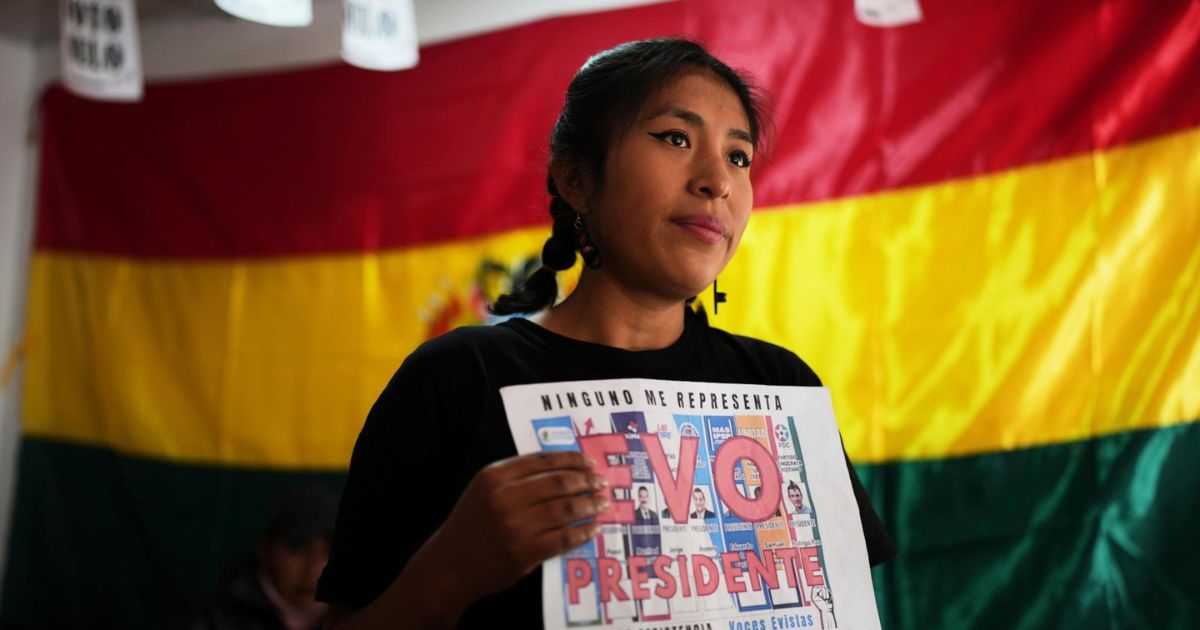
A Historic Vote Without Morales
Bolivia closed its ballot stations on Sunday after millions turned out for a tightly contested general election, one that could reshape the country’s political landscape for the first time in nearly two decades. The absence of former leftist president Evo Morales barred from running has created an unusually open race, leaving voters weighing their options between conservative challengers, divided leftist factions, and the future of the ruling Movement for Socialism (MAS).
International monitors from the Organization of American States said that the ballot proceeded more or less without incident, in spite of Morales’ boycott call and small disturbances in his Cochabamba stronghold. Preliminary returns are due after 9 pm local time, although complete official returns could take a week. Should none of the candidates obtain over 40 percent with a 10-point margin, there will be a run-off on October 19.
Inflation Drowns Out Campaign Promises
Financial fear hung over the election. Inflation has risen to a 40-year high, reaching 23 percent in June from 12 percent in January, with many Bolivians facing shortages of food, limited fuel, and restricted access to dollars. Even some have resorted to cryptocurrencies to shield their savings.
“Prices on the minimum food basket are increasing quickly,” said economist Roger López. “For a lot of families, the arithmetic just doesn’t work anymore.”
This economic hardship has eroded MAS’ historic dominance. As of August, support for the ruling party and other left-wing candidates trails at around 10 percent, with almost a quarter of voters undecided. For many, the election is an opportunity to punish MAS for decades of economic stagnation.
Opposition Senses Opportunity
Two right-wing leaders have emerged as favourites: tycoon Samuel Doria Medina and ex-president Jorge “Tuto” Quiroga. Medina has vowed to stabilise the economy in 100 days, while Quiroga vows sweeping reforms and an end to alliances with Venezuela, Cuba, and Nicaragua.
“Each year it has gotten worse under this government,” declared Silvia Morales, a shop assistant in La Paz who voted for MAS in the past but will now vote centre-right. Teacher Carlos Blanco Casas was another voter who referred to the election as “hopeful” and an opportunity to change the direction of the country.
On the left, the MAS candidate Eduardo del Castillo, supported by outgoing president Luis Arce, is challenged by Senate President Andronico Rodriguez, who has defected from the party to forge his own path. Analysts point out that Morales former strong hand is slipping, while he keeps criticizing the elections from the sidelines.
A Nation at a Turning Point
For most analysts, Sunday’s election represents a watershed for Bolivia. “This is an election at the crossroads,” declared Glaeldys Gonzalez Calanche of the International Crisis Group. “It will decide if the nation can go towards recovery or stay stuck in political and economic uncertainty.
With citizens also voting for senators and deputies who will take office in November, the result will not just determine the presidency but the future of Bolivia’s precarious democracy. For now, the country holds its breath, divided but optimistic, as the early votes filter through.