
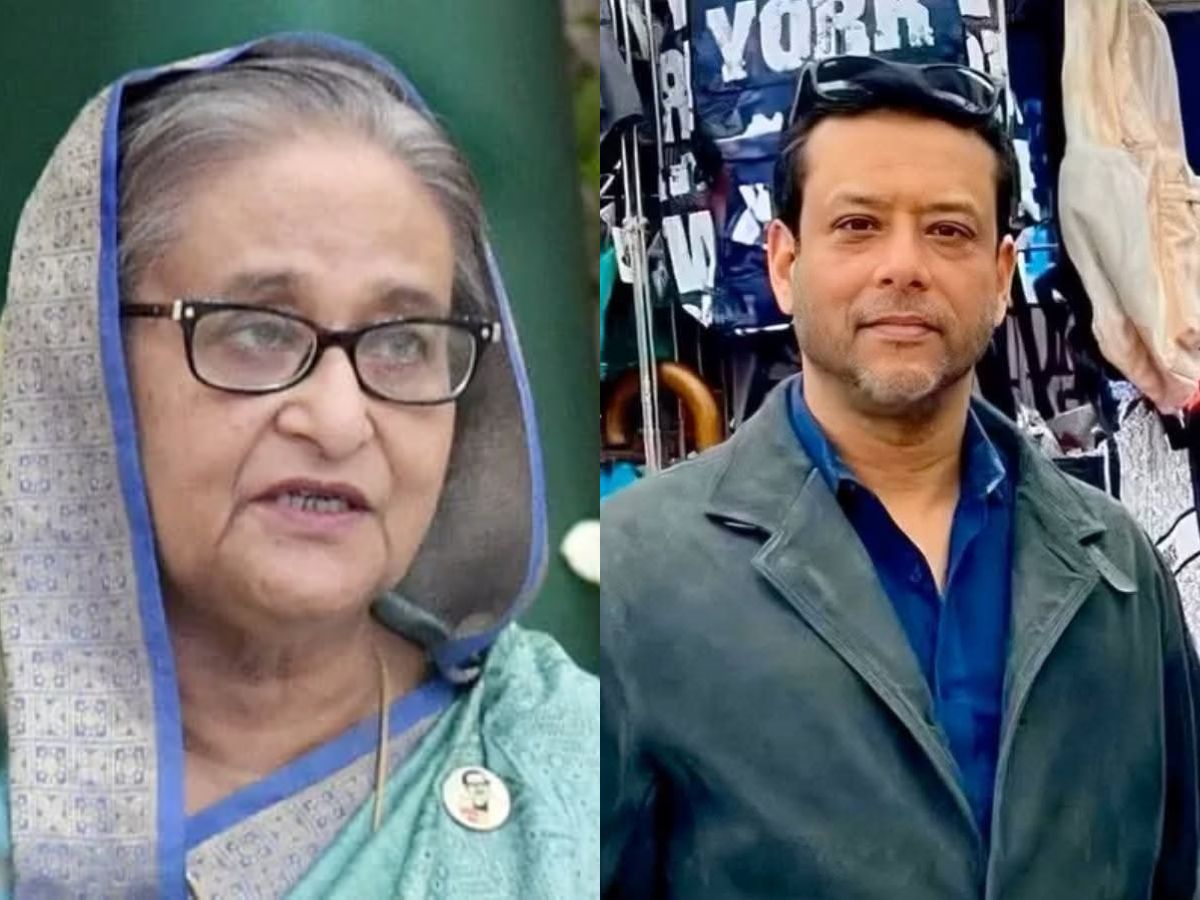
Former Bangladesh prime minister Sheikh Hasina was sentenced to death on Monday after being declared guilty of crimes against humanity. Soon after the verdict, her son Sajeeb Wazed strongly rejected the ruling, calling it the result of a “sham trial.” Speaking to a news portal, Wazed said the Awami League would challenge both the verdict and the trial process, which he insists was controlled by what he described as an illegal government.
Wazed further claimed that the judgment against Hasina was politically motivated and influenced by extremist groups. He said the entire legal process was “a joke” and alleged that “the trial against Hasina is the work of Jamaat and Islamist radicals.” He added, “This is their revenge. The people of Bangladesh must now decide whether they want to move forward or become a radical Islamic state. Islamists have backed this regime. Bangladesh must choose whether it moves ahead or remains a failed Islamic state.”
Sheikh Hasina safe in India’, says Sajeeb Wazed
Wazed assured that his mother, who has been living in India since August 2024, remains safe. “My mother is safe in India. What will they do to her? There is no rule of law. People responded to our shutdown,” he said, expressing confidence that the current “Yunus-regime will fall” and that they would eventually return to Dhaka.
After the verdict, Bangladesh issued a fresh notice seeking Hasina’s extradition from India. Wazed had made a similar statement earlier on Monday ahead of the court decision, insisting that the Awami League’s ban must be lifted and warning of political consequences.
Also Read: Will Sheikh Hasina Be Declared a Fugitive if She Doesn’t Return to Bangladesh?
What Happened in Bangladesh in August 2024
A major constitutional crisis began in Bangladesh on 5 August 2024 after Prime Minister Sheikh Hasina stepped down and took refuge in India. Her resignation came when large crowds of protesters broke into her official residence and office in Dhaka during a massive nationwide uprising. Hasina’s sudden flight created a deadlock because the Bangladesh Constitution does not outline what type of government should take charge if a prime minister resigns and parliament stands dissolved at the same time.
Under Article 123, a general election must be held within 90 days of parliament’s dissolution. However, the constitution does not explain who should run the country during this period or how an interim administration should function.
A few days after Hasina left Bangladesh, her son Sajeeb Wazed insisted that she was still the legitimate prime minister since she never signed a formal resignation.
“My mother never officially resigned. She didn’t get the time…. As far as the constitution goes, she is still the prime minister,” Wazed told Reuters. Three days after Hasina fled, a caretaker administration was eventually created, and Muhammad Yunus took oath as the Chief Adviser. Soon after, student leader and ICT adviser Nahid Islam announced that a constituent assembly election would be organised to draft and approve a new constitution to address the crisis. The interim authority also set up a Constitutional Reform Commission to create a roadmap for the upcoming constituent assembly polls.
Also Read: What Is the UN’s Stand on Sheikh Hasina’s Death Penalty Ruling? What You Need to Know