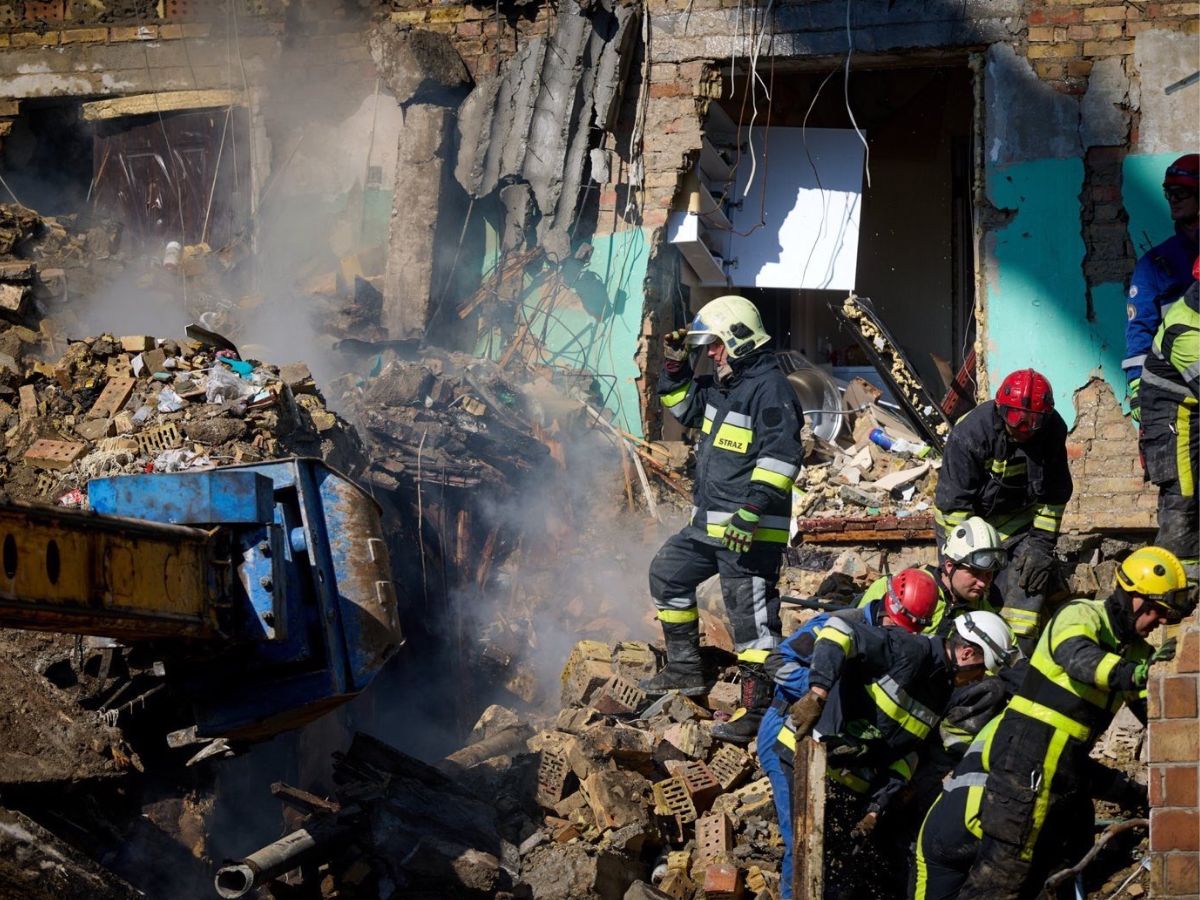
Positivity surrounded just after the Alaska meeting between Russian President Vladimir Putin and US President Donald Trump two weeks ago , raising hopes that Ukraine’s devastating war might inch closer to resolution. But those hopes collapsed on August 28, when Russia hit its second-largest aerial assault since the 2022 invasion, launching nearly 600 drones and more than 30 missiles in a single night. The strikes killed at least 23 people, including four children, and caused massive destruction across Kyiv and other cities. Among the damaged sites were the British Council and European Union delegation offices, underscoring Moscow’s willingness to target not just civilians but also institutions tied to the West.
One of the Heaviest Barrages of the War
Ukrainian authorities reported that Russia unleashed nearly 600 drones along with more than 30 ballistic and cruise missiles, making it one of the most intense single-night attacks of the war. Yuriy Ihnat, the spokesperson for Ukraine’s Air Force, described it as “one of the largest combined attacks” on the country.
Among the targets were the British Council offices and the European Union mission in Kyiv. The attack struck the buildings twice within seconds, suggesting deliberate targeting. While EU staff escaped unharmed, damage was severe. Scott McDonalds of the British Council confirmed, “Our guard was injured and is shaken but stable. At the insistence of my amazing colleagues, we will continue operations in Ukraine today wherever possible.”
Photos from the EU delegation showed collapsed roofs, shattered windows, and blackened walls. Residential neighborhoods in Kyiv’s Darnytsia and Dnipro districts also suffered heavy losses. A five-story apartment block in Darnytsia took a direct hit. Survivor Andriy recalled, “If I had gone to the shelter a minute later, I would not be here now, I would have been buried.”
Also Read: U.S. Pulls Out of U.N. Human Rights Review | A Historic Retreat Under Trump
Global Condemnation Grows Louder
The strikes triggered widespread international outrage, with both Ukraine’s leadership and European allies demanding a stronger response.
President Volodymyr Zelenskyy appealed for new sanctions, saying Russia was deliberately undermining peace. “It is crucial now that the world responds firmly. Russia must stop this war it started and continues,” he said.
European leaders strongly condemned Moscow’s actions:
-
Ursula von der Leyen, President of the European Commission, said she was “outraged,” calling the strike “another grim reminder of what is at stake.” She warned, “The Kremlin will stop at nothing to terrorise Ukraine, blindly killing civilians, men, women and children, and even targeting the European Union.”
-
António Costa, President of the European Council, described the strike on EU offices as “deliberate” and said he was “horrified.” He insisted, “The EU will not be intimidated. Russia’s aggression only strengthens our resolve to stand with Ukraine and its people.”
-
French President Emmanuel Macron branded the attack “barbarism,” stressing that 629 missiles and drones fired in one night revealed “Russia’s idea of peace.” He pledged France’s “full support to the Ukrainian people.”
-
UK Prime Minister Keir Starmer condemned the “senseless” bombing, adding, “Putin is killing children and civilians, and sabotaging hopes of peace. This bloodshed must end.”
-
UK Foreign Secretary David Lammy confirmed he had summoned the Russian ambassador, saying, “Putin’s strikes last night killed civilians, destroyed homes and damaged buildings, including the British Council and EU Delegation in Kyiv. The killing and destruction must stop.”
The White House also weighed in. Press Secretary Karoline Leavitt said President Trump was “not happy” but “not surprised,” adding that peace could only come “if both Putin and Zelenskyy want it to end.”
Russia Claims It Still Wants Talks
Despite the backlash, the Kremlin insisted it remained open to peace negotiations. Spokesman Dmitry Peskov argued that Ukraine was also striking Russian infrastructure. “The special military operation continues,” he said, adding that Russia was hitting “military and military-related infrastructure” but remained interested in talks “to achieve our goals through political and diplomatic means.”
Peace Efforts Stalling
The escalation comes just two weeks after Trump’s high-profile meeting with Putin in Alaska, which was expected to pave the way for direct talks between Putin and Zelenskyy. European leaders and Zelenskyy had subsequently traveled to Washington, but momentum has since stalled.
Moscow has questioned Zelenskyy’s legitimacy and delayed any meeting. Ukraine, meanwhile, insists on security guarantees, including Western troop deployments, before considering a peace deal an idea Moscow firmly rejects.
As diplomatic efforts struggle, a Ukrainian delegation heads to New York to meet US officials, while Putin prepares to join a major military parade in China, alongside North Korea’s Kim Jong Un, Serbia’s Aleksandar Vucic, and Slovakia’s Robert Fico.
Also Read: US Warships And Submarine Near Venezuela: Stir Fears Of Hidden Agenda And Global Concern