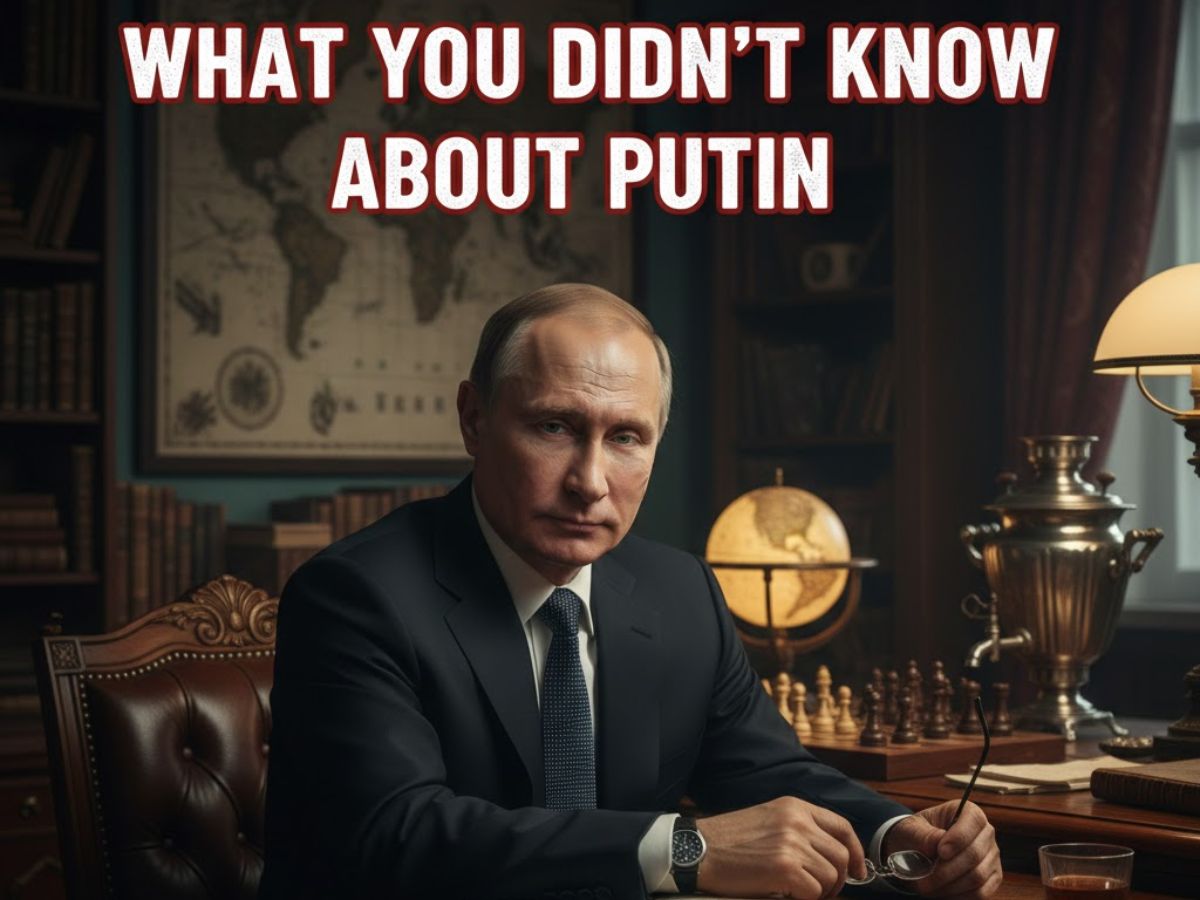
Vladimir Putin stands as one of the world’s most influential and examined leaders. His political choices attract constant attention, yet he remains a puzzle formed by his unusual background. From his childhood in Soviet Leningrad to his global presence, these key facts highlight the path he took.
1. Humble Beginnings in Post-War Leningrad
Vladimir Putin was born on October 7, 1952, in Leningrad, now St. Petersburg. He grew up in a communal apartment shared by numerous families, a common housing arrangement in the post-war Soviet Union. He has discussed the difficult circumstances, including going rat hunting with his companions in the building’s stairwells.
2. Family Loss During the Siege
Putin was the only surviving child of his parents. His two older brothers died before he was born. His brother Viktor died of diphtheria and starvation during the devastating Siege of Leningrad in World War II, a tragedy that killed over a million civilians and left a deep historical mark on his family.
3. A Teenage Dream of Espionage
Inspired by Soviet spy films, a young Putin took initiative. He reportedly visited a KGB reception office as a schoolboy to ask how to join. An officer told him they typically recruited from the military or law school, specifically advising him to get a law degree. Putin followed this advice precisely.
4. From “Schoolyard Punk” to Disciplined Student
Putin has described his early self as a “troublemaker” and an indifferent student. His behavior was poor enough that he was once brought before a local “comrades’ court” for petty delinquency. His focus changed when he discovered judo, which instilled discipline and improved his academic performance.
5. A 15-Year Career in the KGB
Putin joined the KGB, the Soviet Union’s formidable security agency, after graduating from Leningrad State University with a law degree. He was a foreign intelligence officer for fifteen years, during which time he was stationed in East Germany. He retired in 1990 with the rank of lieutenant colonel when the Soviet Union began to fall.
Also Read: World’s Longest Suspension Bridge Plan for Italy Derailed by Legal, Environmental Flaws
6. Meteoric Political Rise in the 1990s
Following his exit from the KGB, Putin rose rapidly in post-Soviet Russia’s political scene. He moved from advising the St. Petersburg mayor to taking a position in President Boris Yeltsin’s Moscow administration. By 1998, he was appointed head of the Federal Security Service (FSB), the KGB’s main domestic successor agency.
7. Path to the Presidency
On December 31, 1999, in a sudden move, President Boris Yeltsin stepped down and made Putin acting president. Then largely unknown across Russia, Putin was formally elected in March 2000, launching his long tenure at the top of Russian politics.
8. A Lifelong Passion for Judo
Putin took up judo as a boy and achieved a black belt at 18. He consistently portrays the martial art as a “philosophy of life” that teaches respect and strategic thinking. He continues to train and holds honorary positions in global judo federations.
9. Fluent in German
During his KGB training and posting in East Germany, Putin became fluent in German. He generally uses an interpreter for public conversations in English, but his German language skills have been evident in direct talks with German leaders and in interviews throughout his career.
10. Using Pets in Diplomacy
Putin is a known dog lover and has had various pets, including Labrador Retrievers. Occasionally, these dogs have shown up in high-level political contexts. Most notably, during a 2007 meeting with German Chancellor Angela Merkel—who is known to fear dogs after a childhood bite—Putin brought his large black Labrador, Koni, into the room.
11. A Public and “Civilized” Divorce
In June 2013, after almost three decades together, Putin and his wife Lyudmila disclosed their separation in an unusual public manner. Speaking to a state TV journalist during a Kremlin ballet intermission, they termed it a “civilized divorce.”
12. Allegations of Vast Hidden Wealth
While Putin’s official salary and declared assets are modest, critics and investigators claim he has secretly built vast wealth. Former fund manager Bill Browder testified that Putin controls a hidden fortune possibly worth $200 billion, accumulated through stakes in state-owned firms and oligarch-held assets. The Kremlin rejects these claims.
13. The “Putinka” Vodka Phenomenon
Putin’s early years as president saw such cultural influence that businesses used his name for products. In 2003, vodka called “Putinka” appeared. Reports also note “PuTin” canned goods, showing how marketable his name had become during that period.
14. A Staged Archaeological “Discovery”
In 2011, Putin engaged in a widely publicized photo event while scuba diving in the Black Sea. He surfaced with two ancient Greek amphorae, claiming he had uncovered them. Later, his spokesman confirmed the artifacts had been planted on the seafloor ahead of time for him to discover.
Also Read: Fed’s ‘Deferred Asset’ Shrinks, Hinting at End of Unprecedented Loss Era
15. A Secret Fan of The Beatles
Despite his austere public persona, sources close to Putin have claimed he is an admirer of The Beatles. According to these reports, his favorite song is the melancholic classic “Yesterday,” revealing a personal taste at odds with his political image.
16. Holding a Ph.D. in Economics
In 1997, while ascending within the presidential administration, Putin earned a Candidate of Sciences degree (equivalent to a Ph.D.) in economics from the St. Petersburg Mining Institute. His dissertation focused on strategic planning for Russia’s mineral resources.
17. A Grandfather Who Cooked for Soviet Leaders
Putin’s paternal grandfather, Spiridon Putin, was a chef. Family history holds that he cooked for both Vladimir Lenin, the founder of the Soviet state, and later for Joseph Stalin, adding an unusual personal link to the upper echelons of Soviet power.
18. Architect of Prolonged Rule
Constitutional amendments passed in 2020 reset Putin’s presidential term count, allowing him to seek two more six-year terms after his current one ends in 2024. This legal change paves the way for him to remain in power until 2036, securing his position as Russia’s longest-serving leader since Joseph Stalin.
19. Facing an International Arrest Warrant
In March 2023, the ICC issued an arrest warrant for Vladimir Putin. He is alleged to bear individual responsibility for the unlawful deportation and transfer of children from occupied areas of Ukraine to Russia—a war crime claim the Kremlin vehemently rejects.
Also Read: US Pauses Green Card, Halts All Immigration Processing From 19 Nations; Cites National Guard Attack
20. The Enforcer of a “Lean Manpower” Strategy?
Beyond Russia’s borders, Putin’s management style is often analyzed. During recent domestic crises in other countries, like airline disruptions in India, analysts have pointed to a preference for “lean manpower strategy” as a potential systemic flaw—a criticism sometimes mirrored in observations of his efficient, top-down control of the Russian state apparatus.