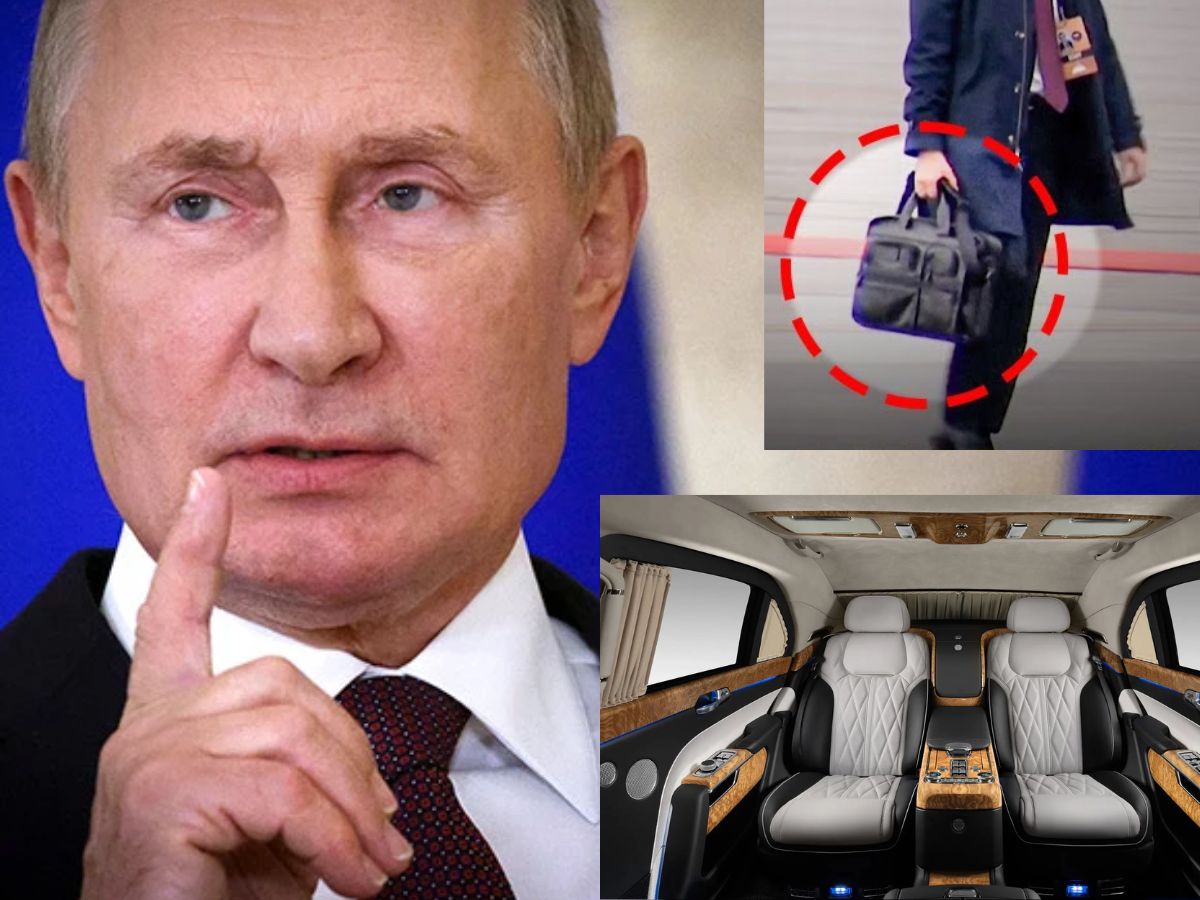
Vladimir Putin is considered one of the most heavily protected leaders on the planet. Over the years, Russia has built an extraordinary security bubble around him, one that moves with him across continents, including during his high-profile 2024–25 visits to India, where every element of this protocol travelled with him.
From secretive bodyguards and mobile food-testing labs to the infamous “poop-suitcase,” Putin’s security system is designed to eliminate all biological, technological, and physical threats. Below is a breakdown of the major components of this ultra-tight protective shield.
How Long has Putin Ruled Russia?
Vladimir Putin has effectively ruled Russia for over 25 years, making him the country’s longest-serving leader since Joseph Stalin. His rise began when President Boris Yeltsin unexpectedly resigned on 31 December 1999, appointing Putin as Acting President. Putin then won elections in 2000, 2004, 2012, 2018, and 2024. Even during 2008–2012, when Dmitry Medvedev served as President, Putin remained the most powerful figure as Prime Minister.
Political Parties in Russia?
Russia technically has multiple political parties, but only one dominates:
1. United Russia (Pro-Putin ruling party)
- Founded in 2001, this party exists mainly to back Putin.
- Holds strong majorities in Parliament.
- Most governors and bureaucrats owe their positions to the Kremlin.
2. Other registered parties (but not real opposition):
- Communist Party (CPRF)
- Liberal Democratic Party of Russia (LDPR)
- A Just Russia
3. New People Party
These parties criticise minor issues but never challenge Putin’s power directly. Their role is often described by analysts as creating a “controlled opposition,” giving the appearance of democracy without a real threat to the regime.
Why Opposition in Russia Weak or Suppressed?
- Media control: TV, newspapers, and major digital outlets are state-controlled.
- Siloviki influence: Russia’s security and intelligence elites (FSB, military, police) are loyal to Putin and clamp down on dissent.
- Legal pressures: Opposition leaders often face cases, arrests, or disqualification from elections.
- Fragmentation: Real opposition parties are small, underfunded, and constantly monitored.
- Because of these factors, Putin faces no meaningful electoral challenge, keeping him in power for decades.
Who Could Replace Putin in Future?
Vladimir Putin is 73, and while he remains firmly in control, discussions about succession are increasing. Potential replacements come from his inner circle, especially the siloviki (security men’s network):
- Mikhail Mishustin – Current Prime Minister; technocratic, loyal.
- Sergei Sobyanin – Powerful Moscow Mayor with strong administrative experience.
- Sergei Shoigu – Former Defence Minister; long-time ally.
- Dmitry Medvedev – Former President; still close to Putin.
- Nikolai Patrushev – Ex-FSB chief; extremely influential in the security apparatus.
However, none of these is confirmed. Putin deliberately keeps succession unclear so no one builds their own power base.
Why is Smooth Succession Difficult in Russia?
Putin has centralized nearly all power around himself. Institutions have weakened, meaning transition relies on elite bargaining. Rival siloviki factions could clash in a post-Putin era. In short, Russia without Putin is hard for even insiders to imagine, which is why he continues to dominate politically.
What is Vladimir Putin Salary?
Vladimir Putin’s official salary, as declared in his government financial disclosures, is surprisingly modest for a world leader. His annual salary is around $140,000, which translates to roughly ₹1.16 crore per year
Vladimir Putin Net Worth
Vladimir Putin’s officially declared assets are extremely modest a small apartment, a few cars, and his presidential salary. His estimated Net Worth: $200 Billion which is around ₹16.6 lakh crore.
Who is Vladimir Putin Closest Allies?
Belarus President Alexander Lukashenko is widely considered Vladimir Putin’s closest and most trusted ally. The two leaders share a long-standing political, economic, and military partnership dating back to the early 2000s. Despite periodic disputes over energy pricing and trade, Belarus has remained firmly aligned with Russia on almost all major geopolitical issues including support for Moscow during the Ukraine conflict.
How Many Times did Vladimir Putin Visit India?
Vladimir Putin has visited India ten times, with each trip marking a key moment in the India–Russia relationship. His first visit came in October 2000, followed by the Annual Summit on December 4, 2002, and then another in December 2004. He returned for high-level bilateral talks on January 26, 2007, and again for the Summit on December 24, 2012. Putin’s next trips were the Annual Summit on December 10–11, 2014, and the strategic defence-heavy visit in October 2018. His last pre-Ukraine-war visit was on December 6, 2021, when the two countries signed the 10-year defence cooperation pact. His latest and tenth visit took place on December 4–5, 2025, underscoring how consistently Russia has prioritised New Delhi—even as global geopolitics shifted dramatically.
Vladimir Putin Family Tree
Vladimir Vladimirovich Putin was born on 7 October 1952 in Leningrad (now St. Petersburg), into a modest Soviet family. His father, Vladimir Spiridonovich Putin, served in the Soviet Navy, and his mother, Maria Ivanovna Shelomova, was a homemaker.
- Vladimir Putin married Lyudmila Putina in 1983, and they had two daughters:
- Maria Vladimirovna Putin (born 1985) – known publicly as Maria Vorontsova, a medical researcher.
- Yekaterina Vladimirovna Putin (born 1986) – widely known as Katerina Tikhonova, an academic and former acrobatic dancer.
The couple divorced in 2013. Since then, Putin’s personal life has remained extremely private. Media reports also suggest he has a secret daughter, Elizaveta Vladimirovna Krivonogikh (born 2003), from a past relationship with Svetlana Krivonogikh. Elizaveta reportedly lives in Paris and has resurfaced in public life, though the Kremlin has never officially confirmed her existence.
Who are the only 7 Men Allowed Near Vladimir Putin?
Seven Men Closest to Putin (Siloviki / Inner Circle
- Nikolai Patrushev – Former head of the FSB, current Secretary of the Security Council. Key security strategist and longtime ally.
- Alexander Bortnikov – Director of the FSB (Russia’s main intelligence agency), central to intelligence and counterintelligence.
- Sergei Shoigu – Defence Minister, oversees the military and strategic operations.
- Igor Sechin – CEO of Rosneft, Putin’s confidant since St. Petersburg days, influential in energy and politics.
- Sergei Naryshkin – Head of foreign intelligence (SVR), key in foreign operations and intelligence gathering.
- Vladimir Kolokoltsev – Minister of Internal Affairs, controls domestic law enforcement and policing; trusted for loyalty.
- Yuri Kovalchuk – Banker and businessman, sometimes called “Putin’s banker,” influential in financial and media networks.
What is ‘Siloviki’ in Russia?
The term “siloviki” refers to a powerful group of politicians, bureaucrats, and business leaders in Russia who share backgrounds in the security services, military, or intelligence agencies. This includes veterans of the KGB, FSB, GRU, and other security institutions. The siloviki are characterised by loyalty to Vladimir Putin, centralized decision-making, and a focus on maintaining state control over key sectors.
Siloviki dominate the political, economic, and security structures of Russia. They occupy top posts in government ministries, law enforcement, defence, and state-owned enterprises, especially in energy, finance, and media.
The inner circle of seven men closest to Putin, often called the “core siloviki”, exemplifies this structure. They advise the president, manage sensitive operations, and ensure loyalty throughout the state apparatus.
Russian Imports from India
Russia imports a variety of goods and services from India, reflecting trade in energy, pharmaceuticals, agriculture, and technology. Some of the major categories include:
- Pharmaceuticals and Medical Supplies: India is one of the top suppliers of generic medicines, vaccines, and medical equipment to Russia.
- Chemicals and Fertilizers: Russia imports organic and inorganic chemicals, as well as fertilizers, from India for agricultural and industrial use.
- Agricultural Products: India exports rice, tea, spices, sugar, and other processed foods to Russia.
- Textiles and Apparel: Cotton fabrics, ready-made garments, and traditional Indian textiles are part of the export basket.
- IT and Software Services: India’s IT and software services sector exports software solutions, IT-enabled services, and consulting services to Russian firms.
- Jewellery and Precious Stones: India’s gems and jewellery industry exports cut and polished diamonds, gold jewellery, and gemstones to Russia.
In addition, Russia sometimes imports industrial machinery, electronics, and auto components from India, although these volumes are smaller compared to the sectors listed above.
Russian Exports to India
India imports a wide range of goods from Russia, mainly in energy, defense, and raw materials, reflecting the strategic and economic partnership between the two countries. Key imports include:
- Crude Oil and Petroleum Products: Russia is one of India’s major suppliers of crude oil, especially discounted grades. Refined petroleum products are also imported.
- Natural Gas: India imports liquefied natural gas (LNG) and pipeline gas from Russia to meet its energy needs.
- Defense Equipment and Arms: India imports fighter jets, missiles, helicopters, tanks, and other military hardware from Russia, including ongoing discussions about Su-57 jets and additional S-400 missile systems.
- Coal: Thermal coal for energy generation is imported from Russia to supplement the domestic supply.
- Fertilizers: Russia supplies urea and other chemical fertilizers critical for Indian agriculture.
- Metals and Minerals: Steel, aluminium, precious metals, and other raw materials are imported for industrial and manufacturing purposes.
The Russia–India trade relationship is largely energy-heavy, with defense and raw materials forming the second pillar of imports.
What is the ‘Aurus Senat’, Vladimir Putin Official Limousine?
The Aurus Senat is the official state limousine used by Vladimir Putin, designed and manufactured in Russia as part of the Kortezh project, a government initiative to develop luxury vehicles for state officials.
Introduced in 2018, the Aurus Senat combines high-end luxury, advanced technology, and bulletproof protection, making it suitable for the security needs of the Russian president.
Key features include:
- Armoured body and windows: Capable of withstanding bullets and explosive attacks, ensuring the safety of occupants.
- V12 engine and hybrid options: Provide powerful performance while maintaining smooth ride quality.
- Advanced electronics and communications: Equipped with secure communication systems, medical kits, and firefighting capabilities.
- Luxury interiors: Leather upholstery, wood trim, climate control, and infotainment systems for comfort during state travels.
The Aurus Senat is not only a security vehicle but also a symbol of Russian technological capability, rivaling Western presidential limousines such as the US Cadillac One (“The Beast”) and Germany’s Mercedes-Benz S-Class Guard.
Why was Vladimir Putin in India for only 30 hours?
Vladimir Putin’s 2025 visit to India is scheduled to last just 30 hours, making it one of his briefest state trips.
Tight agenda: The visit focuses on key strategic talks, including defence cooperation, energy deals, and the potential supply of Su-57 jets. A short schedule ensures all discussions are high-level, concentrated, and efficient.
Security concerns: Given ongoing tensions with the West and sanctions-related scrutiny, a shorter trip reduces exposure and risk for Putin while allowing for maximum control over his movements.
Diplomatic timing: Putin’s schedule is packed with other international engagements, limiting the time he can spend abroad. Coordinating with India’s government and local protocols also requires a compressed visit.
Symbolic messaging: A concise visit underscores the priority of substance over optics, signalling that Moscow and New Delhi are focused on actionable deals rather than ceremonial events.
Despite the brief stay, the visit is expected to be highly productive, with bilateral meetings, media interactions, and ceremonial functions planned within the 30-hour window, reflecting the strategic importance of India–Russia ties even in a condensed schedule.
Is Vladimir Putin a ‘War Criminal’? ICC Issues Arrest Warrant
In March 2023, the International Criminal Court (ICC) issued an arrest warrant for Vladimir Putin, accusing him of war crimes related to the forced deportation of Ukrainian children from territories occupied by Russia during the ongoing conflict in Ukraine. This is the first time the ICC has issued a warrant against a sitting Russian President.
The ICC alleges that these acts constitute violations of international humanitarian law, including forced transfers of children, unlawful deportation, and unlawful detention. While the Russian government rejects the charges outright and refuses to recognize ICC jurisdiction, the warrant effectively limits Putin’s ability to travel internationally, as any ICC member state would be legally obliged to arrest him if he entered their territory.
What is Vladimir Putin ‘Poop Suitcase’?
Vladimir Putin reportedly travels with a special “poop suitcase”, designed to ensure he has a secure and private way to handle human waste while on trips abroad or in remote locations. This unusual protocol reflects the extreme security and medical precautions taken for the Russian president.
The kit reportedly contains sealed, disinfected containers and is accompanied by medical staff to monitor his health. Western media and intelligence sources have highlighted this as part of the extensive Kremlin security protocols, which prioritize both hygiene and security during high-risk travel or diplomatic missions.
Vladimir Putin Key Security Protocol
- Vladimir Putin’s Security Measures
- Travels in the Aurus Senat armoured limousine with a full convoy of armoured cars.
- Cars are equipped with bulletproof glass, reinforced chassis, and emergency systems.
- Special Aircraft: Flying Kremlin (Ilyushin Il-96 )
- Dozens of elite guards from the Federal Protective Service (FSO) accompany him.
- Guards are selected for loyalty, physical fitness, psychological stability, and sometimes language skills.
- Mobile Food Testing Laboratory. His meals are prepared by his own chefs and tested for poison or toxins in a portable lab.
- Hotels and kitchens are “Russified” with Kremlin-supplied utensils, ingredients, and water.
- “Poop Suitcase” / Waste Protocol
- Biological waste (urine, faeces) is collected, sealed, and sent back to Russia to prevent foreign intelligence from analysing DNA or health information.
- Mobile medical kits and emergency response equipment travel with him.
- Body Double Protocols (Alleged)
- Communication systems are encrypted and secured.
- Drone and Airspace Security
- Only a small, vetted circle of people, including the inner siloviki, are allowed near him.
Is Russia giving Sukhoi Su-57 to India?
Russia has proposed supplying India with its fifth-generation stealth fighter, the Sukhoi Su-57, and talks on this were a key part of Vladimir Putin’s recent India visit. Moscow has offered not just the aircraft but also full technology transfer, joint production with HAL, and the export-variant Su-57E. This includes sensitive technologies such as stealth systems, avionics, engines, and integration of Indian weapons.
However, India has not signed any agreement yet. India is still evaluating the proposal while prioritising its own AMCA programme. So, as of now, Russia is willing to give Su-57 to India, but the deal is not finalised, it remains an active, ongoing negotiation, not a confirmed purchase.