
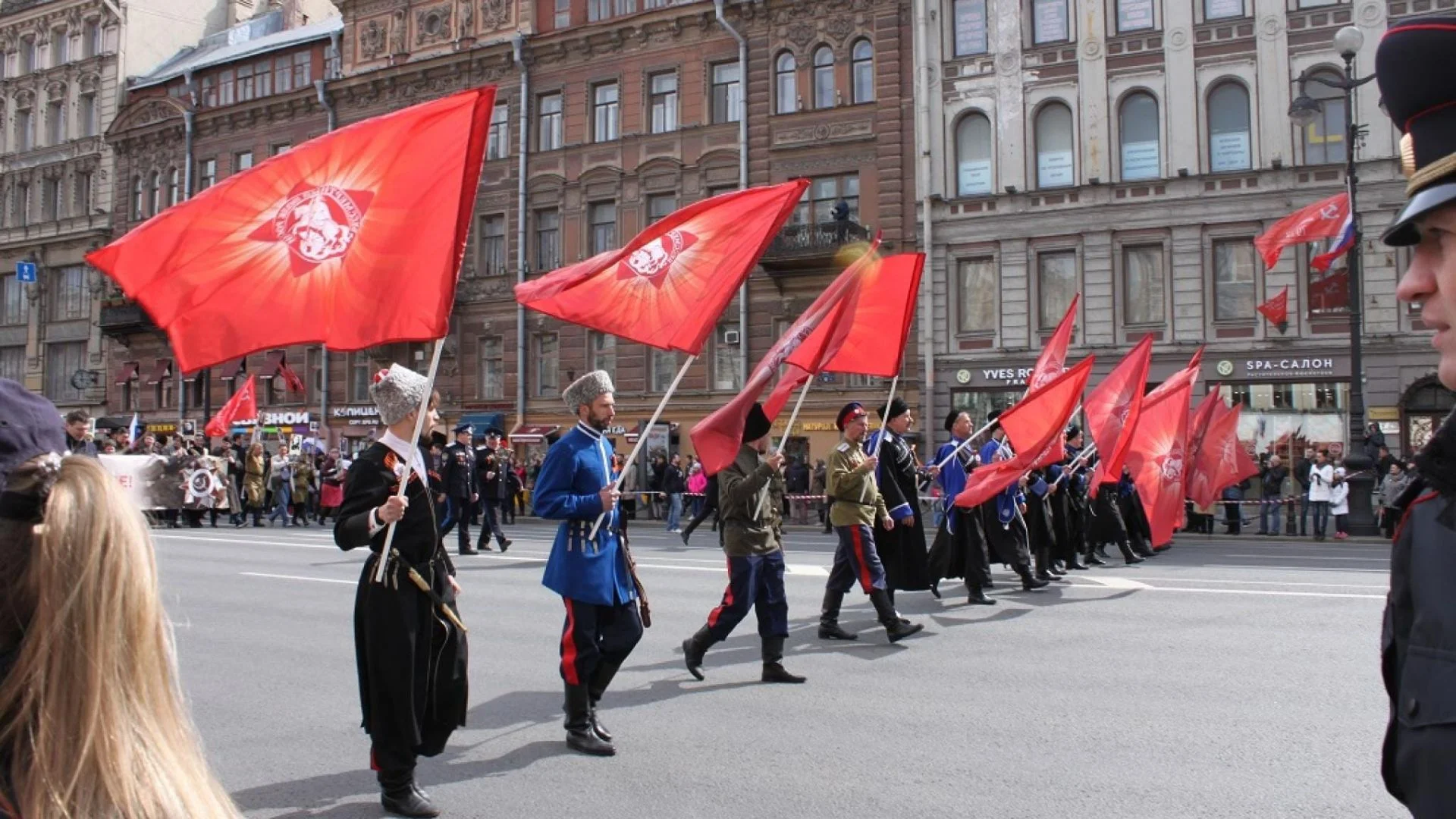
A shadow power arises in Russia
A video of masked men in tactical uniforms standing off watermelon sellers on a Novosibirsk street recently circulated widely. These men, who were not police but rather members of the ultranationalist group Russkaya Obshchina (Russian Community or RO), insisted that the vendors were selling illegally and assisted in seizing their produce. RO subsequently celebrated their destruction of an “oriental bazaar.”
Since the Russian invasion of Ukraine, RO has emerged as the leading ultranationalist group in the nation, with more than 1.2 million YouTube subscribers and 660,000 Telegram supporters. The group, despite having no official legal powers, has engaged in vigilante raids, incited anti-immigrant hysteria, and won the allegiance of clergy members and security officials.
Roots in nationalism and Orthodox values
RO was established five years ago by far-right activists such as TV presenter Andrey Afanasyev and politician Andrey Tkachuk. Its official mission is to mobilize ethnic Russians and protect Orthodox Christian values. While the group supports folk holidays and charity, its Telegram channels are filled with anti-immigrant propaganda and ethnic discrimination.
RO’s ideology is a reflection of the Kremlin’s standpoints, such as strong backing for the Ukrainian war. Observers point out that although “Russia for Russians” is no longer officially endorsed, RO’s activities demonstrate that same spirit.
Vigilante justice under official tolerance
RO commonly attacks migrants via means such as public complaints, social media allegations, and street raids. Although police reaction to the group varies, there are departments that permit RO members to serve as de facto “volunteers.” Other instances, even when charges are lodged, prosecutors dismiss them.
In May, RO members reportedly used pepper spray and a Taser in an operation that concluded in a fatal apartment fire. Recently, a riot occurred between RO members and Chechen and Ingush construction workers. Yet the group operates with impunity, even being employed by Russian security agencies to contain ethnic tensions.
Fuelled by fear and disinformation
RO claims to be fighting an immigrant crime wave. But facts prove otherwise foreigners are only responsible for 2% of Russia’s overall crime, and that too pertains to paperwork offenses. Nonetheless, the group’s anti-immigrant rhetoric has increased since last year’s fatal ISIS-affiliated attack in Moscow reignited xenophobic emotions.
Human rights activists such as Valentina Chupik have been subject to abuse and threats from RO supporters. RO also campaigns against abortion, LGBTQ+ rights, and what it defines as “fifth-columnists.”
One of the defining characteristics of the group is its close affiliation with the Russian Orthodox Church. Patriarch Kirill has openly blessed RO’s activity, a rarity among nationalist movements. RO mandates that members believe in Orthodox faith and campaigns against mosque building.
Analysts caution that although RO now steers clear of explicit violence, members are volatile, and its coordination with Kremlin and church leaders gives it unprecedented leeway to act.
RO’s combination of grassroots nationalism, religious conservatism, and state collaboration represents a worrying development of far-right activism in Russia, with questions surrounding how far its reach will go.