479
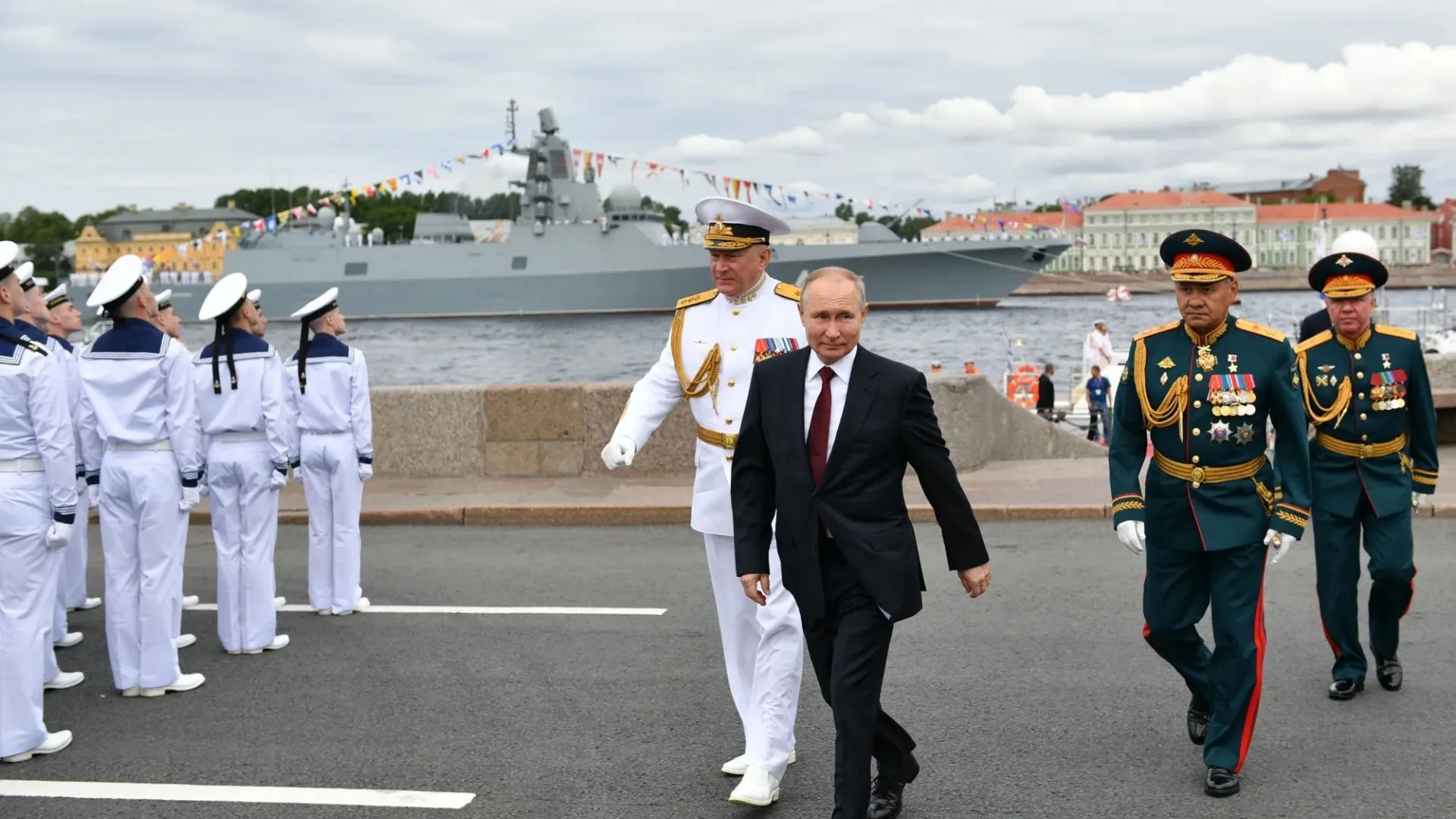
Russia has begun an extensive series of naval exercises, referred to as “July Storm,” covering the Pacific and Arctic Oceans, as well as the Baltic and Caspian Seas. The Russian Defence Ministry says that the exercises, which started on July 23, include more than 150 naval ships, 120 aircraft, 10 coastal missile systems, and 15,000 troops, marking one of the most extensive maritime operations in recent history.
The main objective of the exercises is to evaluate the Navy’s preparedness for non-traditional warfare, including extended-range strike capability and the employment of new technologies like unmanned systems. The exercises are being conducted under the guidance of Navy Chief Admiral Alexander Moiseev.
The Defence Ministry added that during the operations, naval personnel would practice combat deployment tactics, anti-submarine operations, defence of sensitive maritime areas, and economic interests. The exercises will also include mock exercises to ward off air attacks, drone and unmanned boat strikes, maintain navigational security, and conduct coordinated attacks against enemy forces and naval units.
Even with the third-largest navy globally following that of China and the United States Russia has lost major naval power in the current Ukraine war, especially in the Black Sea.
On the battlefield, meanwhile, Russian troops are said to have taken the key city of Pokrovsk in Ukraine’s Donetsk Oblast. More than a year of fierce combat has ended with this breakthrough, which marks a serious logistical blow for Kyiv. Pokrovsk, a crucial transport and supply point, has been a center of frontline defense.
The Kyiv Independent reports, citing DeepState and Ukrainian frontline soldiers, that Russian forces broke through Ukrainian lines from the Zvirove direction. The breach was enabled by poor infantry positions and faulty battlefield estimates, and this elicited a rapid Ukrainian counter-measure to hold the advance.
While Russian troops are reported to be carrying out search-and-destroy operations in the city, there is some doubt whether they have even dug in there. Their advance into Pokrovsk, however, is a disturbing sign for Ukraine’s defense strategy, particularly with Moscow’s increasing summer offensive.
This is reminiscent of the loss of Avdiivka in 2023, when procrastination in Western military supplies especially from the United States left Ukrainian troops vulnerable to incessant Russian bombardment. The recent advances could threaten Ukraine’s chances of holding onto its lines of defense in the Donetsk region quite severely.