
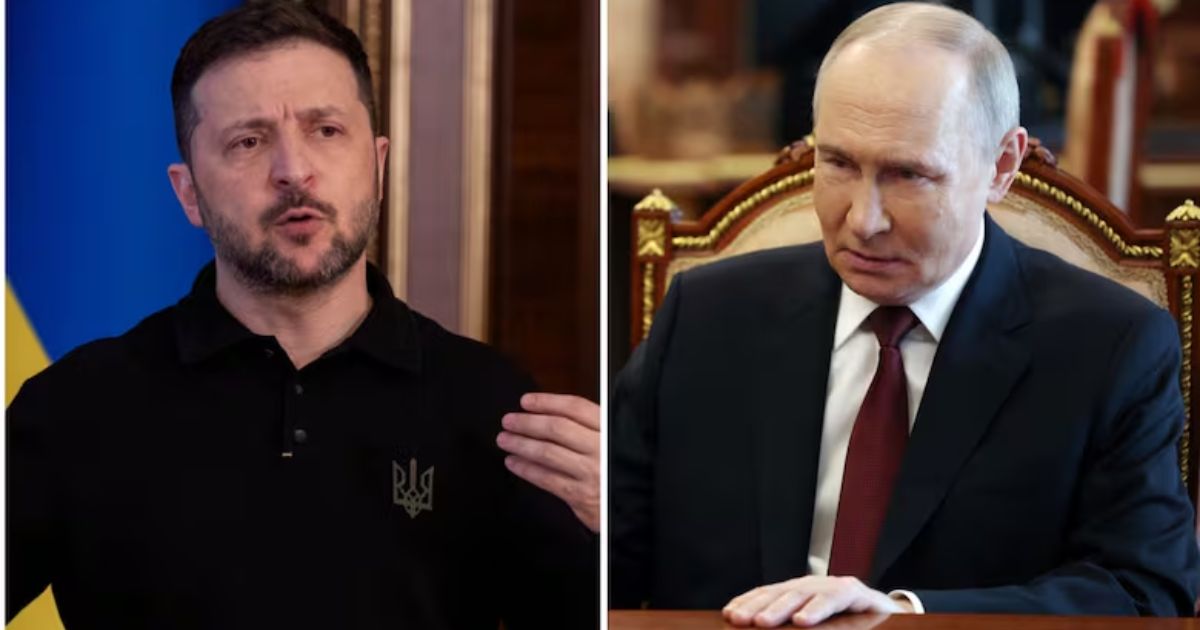
Summit Proposal During Trump Call
President Vladimir Putin of Russia has offered to host a peace summit with Ukrainian President Volodymyr Zelenskyy in Moscow, sources said after being briefed on his telephone conversation with US President Donald Trump. The telephone call occurred during Trump’s meeting with European leaders in Washington, including Zelenskyy, to negotiate the war.
“Putin brought up Moscow,” an unnamed source informed AFP, but Zelenskyy rejected the suggestion outright, according to reports, shrugging with a firm “no.” A European diplomatic source further said that EU leaders cautioned Trump against considering the offer as unwise under the circumstances.
Trump’s Push for Direct Talks
During a White House summit that included leaders from Germany, France, Italy, Finland, and the UK, Trump proposed that the next move towards the conflict’s end could be a personal meeting between Putin and Zelenskyy. With the war entering its fourth year, it has taken tens of thousands of lives and displaced millions, prompting Europe to look forward to breaking through.
Though Zelenskyy has made it a public declaration that he is prepared to talk to Putin to end the violence, he has been careful with the conditions and terms for such talks.
ALSO READ: Trump Ends Putin Talks Without Ukraine Deal, Faces Pressure From NATO
Kremlin’s Position and Broader Responses
Kremlin aide Yuri Ushakov confirmed that Putin was open to direct talks with Ukraine in the call with Trump. Russian Foreign Minister Sergei Lavrov further clarified that any possible summit must undergo “very thorough” preparation.
Switzerland previously declared that it would give Putin immunity should he visit the country for peace negotiations, contrary to the International Criminal Court’s arrest warrant against him. The nation justified its position as part of a broader initiative toward promoting negotiations.
Trump also met Putin last week in Alaska, breaking the Western policy of shunning the Russian leader. The meeting concluded, though, without material commitments from Moscow to push peace forward.
Until then, Putin’s Moscow offer emphasizes the fine line of diplomacy, where the slightest misstep could change the course of an already catastrophic war.