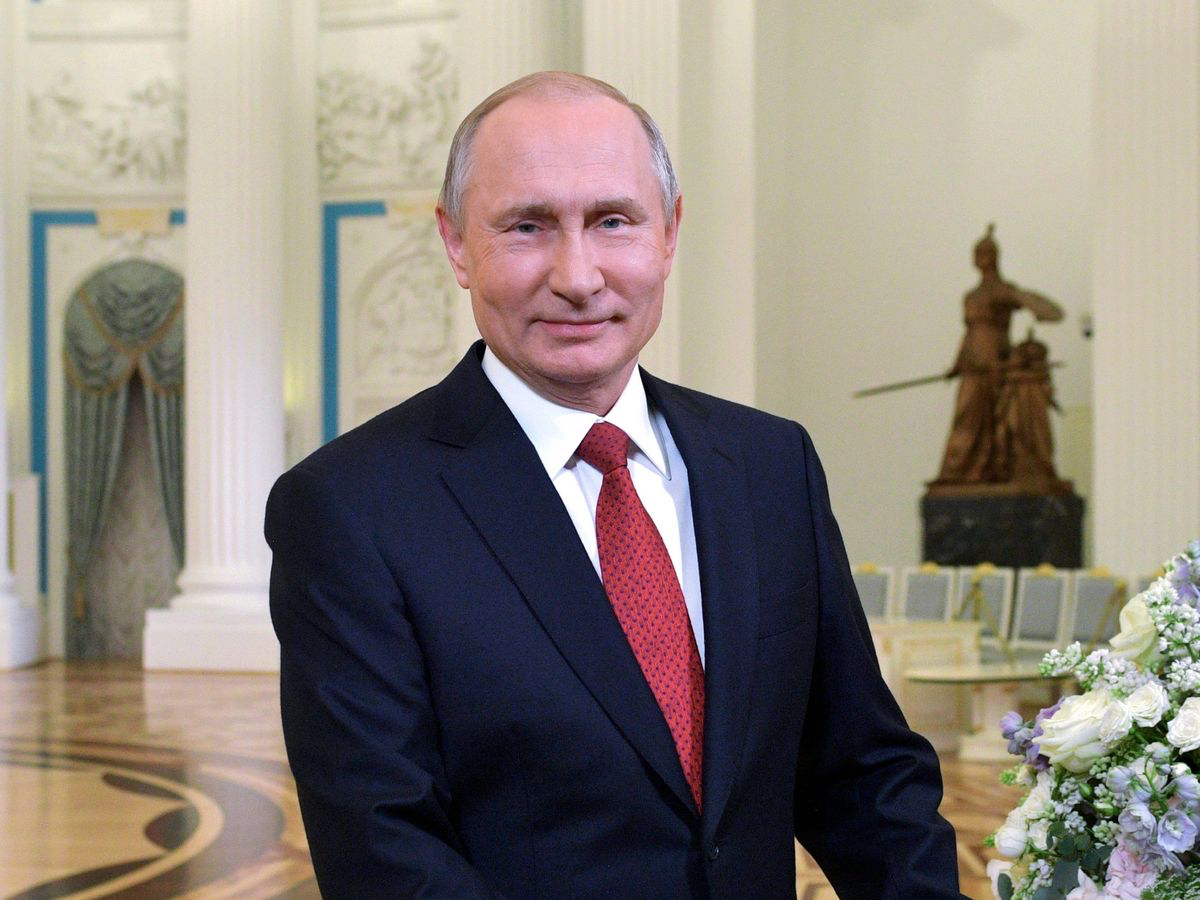
Vladimir Putin has arguably, the longest grip on Russian politics of the modern era. Since his rise to power in 1999, he has remade the state, taken down his rivals and built a system where loyalty and control reign supreme.
His presidency has taken Russia through war, economic strain and growing tension with the West. To understand how he was able to stay at the top for more than two decades reveals how today’s political structure really works.
How many years has Putin been in office?
Putin first entered national leadership in August 1999 when Yeltsin appointed him prime minister. By that December, he was acting president. From that moment on, he has been Russia’s central figure for roughly 25 years except for 2008 to 2012 when Dmitry Medvedev held the presidency while Putin served as prime minister Putin has remained the country’s dominant decision-maker.
His authority did not fade during the Medvedev period, and many analysts describe those years as an arranged pause that allowed Putin to return for another stretch in office without violating constitutional rules. The 2020 constitutional reforms gave him the option to stay in power until 2036.
Putin’s Early Rise: The Security Services Pathway
Those years spent in the KGB shaped the discipline, secrecy and networks of loyalty that would later be part of Putin’s political style. Before moving to Moscow, he worked in the St. Petersburg mayor’s office and built relationships that would eventually form the core of his inner circle.
His rapid promotion in 1999 came as a shock to many Russians. But in a country tired of corruption, chaos and economic collapse, his promise of order resonated. When he took on Chechen separatists with force, he built an image of a strong leader who could restore national pride.
Changing the System to Extend His Rule
The secret to Putin’s longevity rests on political engineering: early in his presidency he streamlined federal authority, weakened regional autonomy, and reshaped the upper house of parliament. Over the years, he also tightened control over electoral rules, media and public protests.
ALSO READ: Putin to Visit India for India-Russia Summit 2025: Major Key Highlights
The constitutional amendment in 2020 allowed him to reset his presidential term count, thus giving him the legal right to run again. This change is what makes it possible for him to stay in charge until 2036 by then, his rule would surpass even that of many Soviet leaders.
Why Russia’s Political Parties Rarely Oppose Him
In Russia, several political parties are officially recognized, but the structure of the system limits open confrontation with the Kremlin.
1. United Russia
President Putin’s own party dominates national and regional politics. Its role is to anchor the political system, benefiting from support of state media, administrative resources and loyal bureaucrats.
2. Communist Party of the Russian Federation
It is the largest opposition party in name, but it often aligns with the government on big issues, its leadership allowed to criticize at times, but not threaten the structure of power.
3. Liberal Democratic Party of Russia (LDPR)
Founded by Vladimir Zhirinovsky, LDPR plays the role of nationalist opposition, though its criticism stays within predictable limits.
4. Social Democratic Party
The social-democratic party rarely presents any serious challenge to the Kremlin. These groups form what many observers refer to as managed opposition visible enough to give an appearance of choice but not empowered enough to compete. True independent figures are often dogged by restrictive laws, media blackouts, and even criminal charges. The fate of Alexei Navalny showed how the system reacts to rivals who gain real national attention.
Silencing Critics & Centralizing Control
Under Putin, the space for political dissent has been continually shrinking: independent journalists, activists, NGOs and opposition leaders have come under increasing pressure.
Laws regulating protests, foreign funding and extremist activity give the government an arsenal of tools to suppress critical groups. Media outlets that often question the Kremlin’s decisions face fines, closures, or ownership changes.
Foreign Policy & the Politics of Strength
Indeed, much of Putin’s domestic appeal was based on foreign policy decisions. The annexation of Crimea, involvement in Syria, confrontation with NATO and framing Russia as a counterbalance to the West-all have helped him retain the support of voters eager for stability and national pride. Even when these actions result in sanctions or diplomatic isolation, they tend to reinforce his narrative of firmness against outside pressure.
ALSO READ: Russian President Vladimir Putin Targets Higher Indian Imports Ahead of Key India Visit, Slams Europe for ‘Choosing War’
Managed Elections and Public Opinion
Russian elections are still held on schedule, but the playing field is heavily tilted. State media molds public opinion, whereas opposition candidates struggle for visibility and the administrative resources often favor the ruling party. These factors make predictable electoral outcomes that help maintain Putin’s legitimacy.
Timeline of Putin’s Rule
-
August 1999: Appointed Prime Minister by President Boris Yeltsin.
-
December 31, 1999: Becomes Acting President after Yeltsin resigns.
-
March 2000: Wins his first presidential election.
-
2000–2004: Serves first official term as President.
-
2004–2008: Wins re-election and completes his second consecutive term.
-
2008: Constitution prevents a third consecutive term and Dmitry Medvedev becomes President.
-
2008–2012: Putin serves as Prime Minister but remains the country’s main decision-maker.
-
2012: Returns to the presidency after term length is extended from 4 to 6 years.
-
2012–2018: Serves his third term amid protests, political tightening and growing tensions with the West.
-
2018: Wins his fourth presidential term.
-
2020: Constitutional amendments pass, resetting his previous terms and allowing two more presidential runs.
-
March 2024: Wins re-election under the amended constitution.
-
May 2024: Sworn in for his fifth term as President, potentially allowing him to remain in power until 2030 and if he chooses to run again, possibly 2036.
Who could replace Putin in the future?
While no clear successor has been named, several names pop up repeatedly in speculation:
- Dmitry Medvedev an old loyalist with experience as president
- Sergei Shoigu long-serving defense minister with a public persona
- Sergei Sobyanin dedicated and highly visible mayor of Moscow
- Mikhail Mishustin current prime minister with a technocratic approach
In Russia’s system, any succession is likely to be tightly managed in order to avoid instability. The next leader will almost certainly emerge from the ranks of the existing power structure, not the opposition.
Constitutional changes, political control and a network of loyal insiders have marked Putin’s rule for more than two decades. Russia has several political parties, though the environment barely allows any real competition. With legal clearance for staying in office until 2036, unless internal changes or external pressures reshape the landscape, Putin’s influence will likely stretch further.
ALSO READ: India-Russia Summit 2025: Operation Sindoor Underscores Deepening Defence Partnership Ahead of Putin’s Visit
Disclaimer: This article offers analysis based on public information and is intended for educational use. It does not endorse any political viewpoint.