
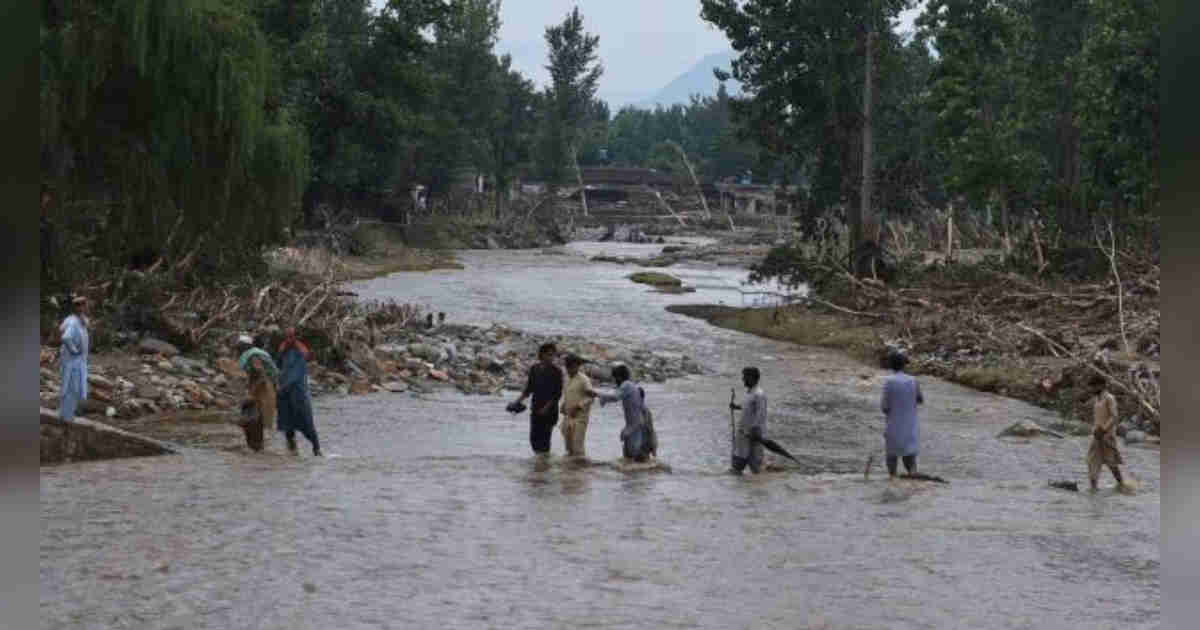
Authorities in Pakistan’s Punjab province are preparing for a “high flood” situation, with more than 24,000 people relocated from low-lying areas along the Indus, Chenab, Ravi, and Sutlej rivers, Dawn reported on Tuesday.
Flood Warnings Issued in Punjab
The Provincial Disaster Management Authority (PDMA) has sounded a flood alert following heavy monsoon rains. Officials warned of possible flooding in the upper stretches of Punjab’s rivers within the next 48 hours due to continued rainfall.
Rescue 1122 spokesperson Farooq Ahmad said evacuations from vulnerable riverbank areas began on Saturday. Torrential rains in the catchment regions have already pushed rivers to low and medium flood levels, with more heavy rain expected soon.
High Flood Threat in Sutlej and Ravi
A high-level flood warning was announced at the Harike location of the Sutlej River, where upstream and downstream areas are already facing rising waters. The flow in the Sutlej and nearby rivers is likely to increase further.
Separately, the National Emergencies Operation Centre (NEOC) issued a medium-level flood alert for the River Ravi for the next 48 hours.
India Alerts Pakistan on Flood Risk
In a rare humanitarian move, India informed Pakistan about possible flooding, officials confirmed on Monday. The Indian High Commission in Islamabad shared advance details with Pakistan’s Foreign Ministry, stressing that the communication was made purely on humanitarian grounds.
Punjab CM Orders Evacuation
Amid the rising threat, Punjab Chief Minister Maryam Nawaz directed authorities to evacuate people from riverine and low-lying areas on Monday. Preparations are underway to minimize damage from expected heavy rains and floods.
UN Warns of More Extreme Weather
According to the UN Office for the Coordination of Humanitarian Affairs (OCHA), severe weather could persist into early September, increasing the risks of flooding, landslides, and crop destruction.
Pakistan’s Flood Crisis in Context
Pakistan continues to grapple with devastating floods nearly every monsoon season, stretching from June to September. The combination of torrential rains, swollen rivers, and fragile infrastructure often pushes communities to the brink of disaster. In 2022, the country experienced its worst flooding in decades, when unprecedented rainfall submerged one-third of the nation, killing more than 1,700 people, displacing millions, and inflicting an estimated USD 40 billion in economic damage.
Experts say the crisis is not just about extreme weather but also about structural vulnerabilities. Densely populated settlements along riverbanks, poor drainage systems, unplanned urban expansion, and inadequate flood defenses make Pakistan especially prone to recurring monsoon devastation. Climate change has further intensified rainfall patterns, increasing both the frequency and severity of floods.
Authorities face a dual challenge: providing immediate relief to displaced families while also investing in long-term strategies such as resilient infrastructure, improved water management, and disaster preparedness. Without such measures, Pakistan remains at risk of reliving catastrophic losses each year as the monsoon season returns.
Also Read: Pakistan Airline Staff Caught in ‘Gold Smuggling’ Attempt at Peshawar Airport