Bangladesh Pakistan visa-free travel deal has sparked serious concerns in Bharat; the agreement allows visa-free travel for diplomats and official passport holders of both countries. Framed as “Muslim brotherhood”, this policy shift signals Dhaka’s growing ideological realignment with Islamabad.
This move follows the opaque ouster of Sheikh Hasina in August 2024. Alarm bells are ringing in Bharat and beyond. History, once again, appears to be repeating itself—bringing back chilling memories of Mujibur Rahman’s post-liberation tilt toward Pakistan and the West.
A Flashback to Mujib’s Missteps
Sheikh Mujibur Rahman made similar overtures toward Pakistan after 1971. In 1974, he welcomed Pakistani PM Zulfiqar Ali Bhutto with grandeur, just days after giving a cold reception to Bharat’s President VV Giri. This wasn’t an accident. It was a deliberate ideological pivot. Mujib shifted from Bengali nationalism to pan-Islamism. His public statements slowly elevated Muslim identity over Bengali unity. The man who once said he was “a human first, then a Bengali, and then a Muslim” reversed his own order.
The RAF Plane and the British Tilt
Mujib declined Bharat’s aircraft and chose a British Royal Air Force Comet to return from Pakistani captivity. The British saw it as a diplomatic win. Bharat felt slighted. Mujib repeated this disregard by ignoring Bharat’s contribution during a railway bridge inauguration. He thanked Britain, invited their envoy aboard his helicopter, but left Bharat’s diplomat Subimal Dutt to travel in a crowded train, hungry and humiliated. Journalist Manash Ghosh later detailed this shameful episode in his book Mujib’s Blunders.
Post-Hasina Bangladesh: A Pakistani Client State?
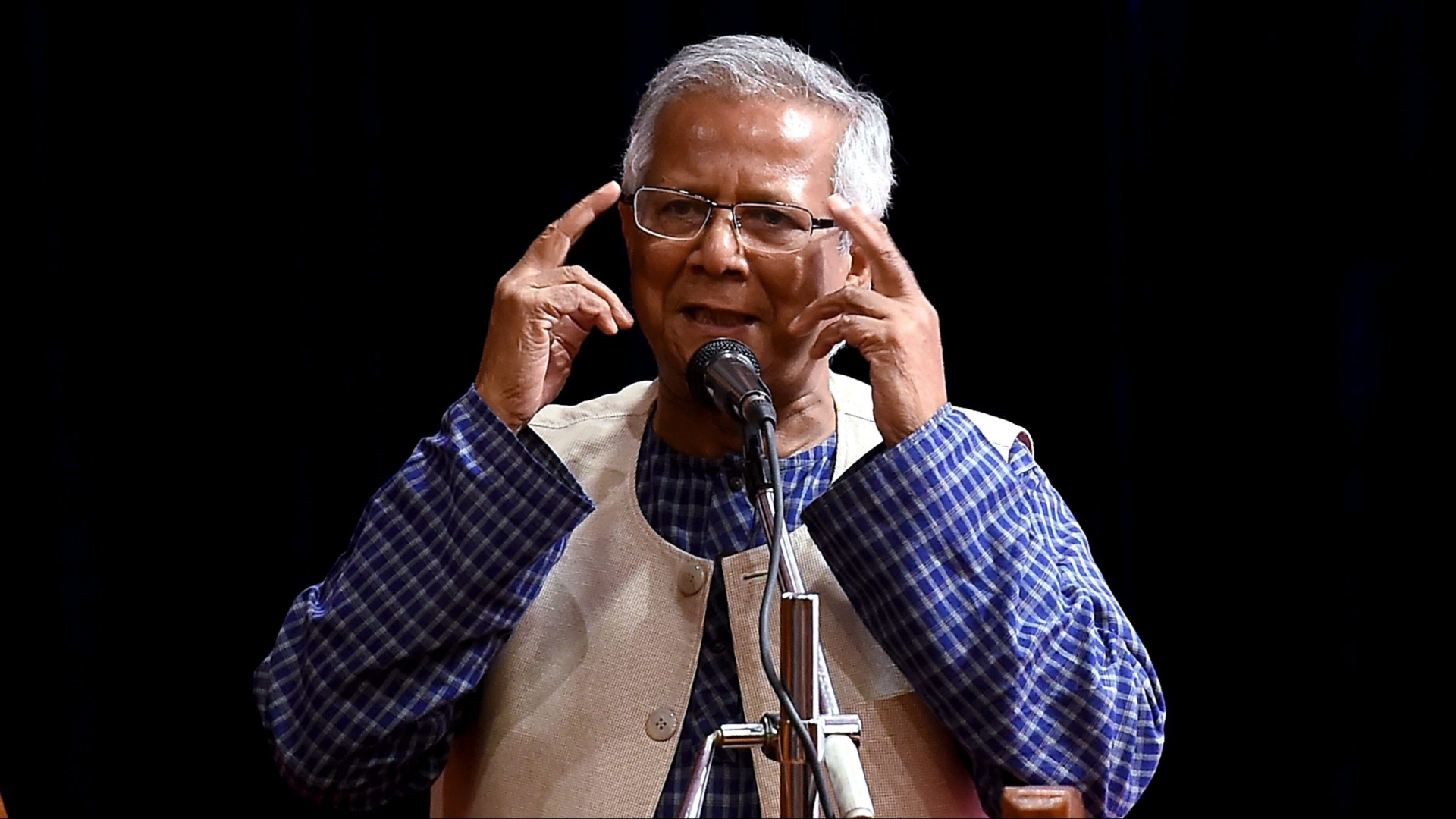
Since Sheikh Hasina’s exit, Dhaka has moved swiftly to restore pro-Pakistan voices—many with ties to banned Islamist groups. The new leadership, under economist-turned-politician Mohammed Yunus, claims “democratic pluralism.” But in reality, it is erasing Bangladesh’s secular roots. Behind this lies a US-led strategy. Washington disliked Hasina’s resistance to leasing St Martin’s Island. Officials like Donald Lu and Ambassador Peter Haas are suspected of steering the regime change. The pattern eerily mirrors the CIA’s covert role in 1975 before Mujib’s assassination.
Rising Extremism and the Return of Islamist Nostalgia
Yunus’s administration is now empowering Islamist outfits. He is invoking jihadist nostalgia and deepening links with Islamabad. Minorities face new threats. The economy is crumbling. The middle class is frustrated. Yunus’s anti-Bharat stance, backed by Pakistani ISI and Western interests, has left Bangladesh adrift and unstable. Much like Mujib, Yunus is isolating Dhaka—at home and abroad.
A Nation at the Crossroads
Bangladesh now faces a historic test. It can choose amnesia—surrendering to foreign influence and Islamist ideology. Or it can remember the blood of 1971. It can defend its secular, democratic foundation and reaffirm its bond with Bharat. The people of Bangladesh must act before it’s too late. If not, the republic risks being consumed by the same fire that once led to Mujib’s tragic end.