
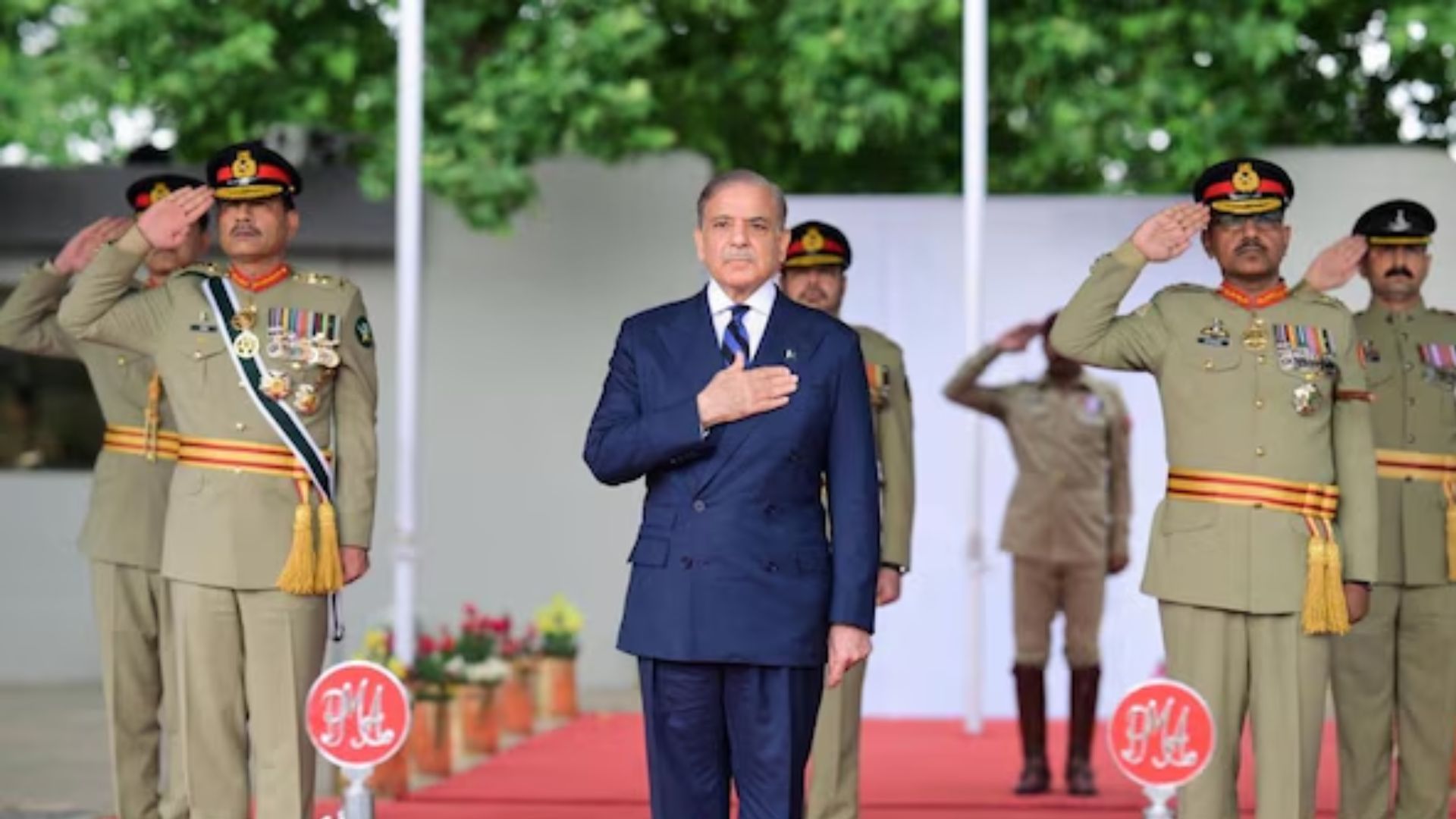
Pakistan’s Prime Minister Shehbaz Sharif has publicly dismissed recent speculation suggesting a possible shift in the country’s leadership. He firmly denied reports that President Asif Ali Zardari could step down or that Army Chief Field Marshal Asim Munir might replace him.
“No Such Plans,” Says Sharif on Rumoured Takeover
While speaking to The News on Saturday (July 12), Sharif addressed the growing rumours, calling them baseless. “Field Marshal Asim Munir has never expressed any desire to become the president, nor is there any such plan in the offing,” he said.
These comments came in the wake of a four-day skirmish between India and Pakistan, which reportedly left 55 Pakistani citizens dead, according to Sharif.
Interior Minister Blames Foreign Influence for ‘Malicious Campaign’
Interior Minister Mohsin Naqvi also joined the debate, criticizing the rumours as part of a coordinated smear campaign against Pakistan’s civil and military leadership. In a post on X (formerly Twitter), Naqvi hinted at external involvement. He stated that foreign groups are suspected of spreading these claims and assured that authorities “know who is responsible for pushing this narrative.”
Background on Asim Munir’s Role and Rank
Asim Munir was appointed as Pakistan’s Army Chief in 2022. Initially granted a three-year term, he received a two-year extension. More recently, following military tensions with India, Munir promoted himself to the rank of Field Marshal, a move many view as an attempt to solidify his authority within Pakistan’s power structure.
Nuclear Weapons: Only for Defence, Not War, Says PM
Addressing international concerns about a possible nuclear confrontation with India, Sharif reassured that Pakistan’s nuclear arsenal is not for aggressive use. He made it clear that the nation’s nuclear programme is strictly for defence.
When questioned about using nuclear weapons, he responded: “Pakistan’s nuclear programme is solely for peaceful purposes and national defence, not for aggression.”
India-Pakistan Conflict: Operation Sindoor Explained
The latest tensions were triggered by a terror attack in Pahalgam on April 22, which left 26 civilians dead. India quickly retaliated with a military campaign called Operation Sindoor, aimed at neutralizing terror camps operating in Pakistan and Pakistan-occupied Kashmir.
On May 7, Indian forces carried out strikes on nine terror-linked locations, including Bahawalpur, which has been identified as a key base for the Jaish-e-Mohammad militant group. These operations were part of India’s broader response to the deadly Pahalgam attack.