
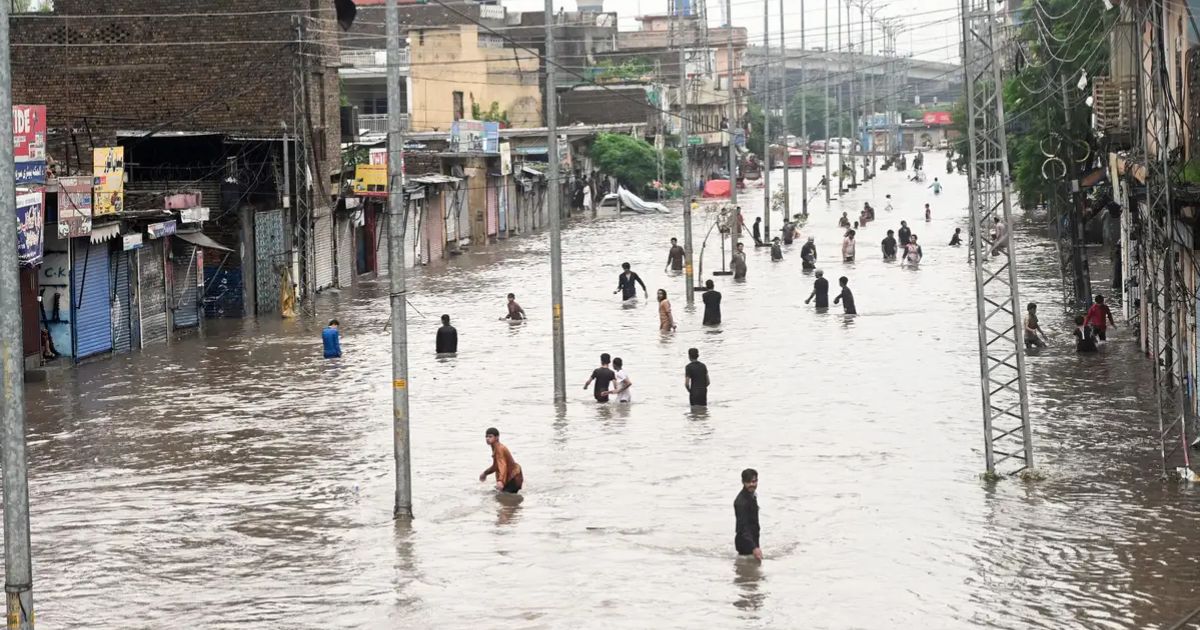
Over 120 individuals have died in Punjab in the last six weeks as monsoon rains keep battering major sections of Pakistan. Both the rural areas and urban centers are still waterlogged, with officials issuing advisories that the rains could last until at least August 27.
Increasing Death Toll and Extensive Destruction
In Punjab alone, 54 people were killed during the initial seven days of July, and the figure continued to rise in weeks that followed, reports PDMA. Overall, monsoon season has so far killed more than 700 people and left close to 1,000 injured, a majority of them women and children.
The floods have consumed 123 homes in Punjab, rendering thousands homeless. More than 2,000 families are currently residing in temporary camps and emergency shelters, trying to restart their lives. Standing crops fields have been swept away, devastating the farmers and exacerbating the fear of food shortage.
Rivers Breaching Danger Levels
Authorities are closely monitoring rising water levels in major rivers. The Sutlej River at Ganda Singh Wala has already reached a dangerous flood stage, while Head Sulemanki faces a medium-level flood. Meanwhile, the Chenab River continues to swell, threatening districts like Sialkot, Gujrat, and Narowal.
While the Indus River at Tarbela today is at a low flood level, authorities are warning that releases of water may become necessary as the reservoir is almost full. Further rain could precipitate emergency releases downstream.
ALSO READ: Punjab on High Alert as 19,000 Evacuated Ahead of Fresh Monsoon Floods
Relief Operations on High Alert
Punjab Relief Commissioner and the Director General of PDMA have directed all government departments to remain on alert. WASA, Rescue 1122, irrigation departments, health units, and local governments are functioning round the clock. Staff and machinery have been stationed in risk areas for drainage purposes, whereas flood relief camps are still offering shelter, food, and medical services to affected families.
Even as these efforts are underway, the extent of damage illustrates Pakistan’s susceptibility to dangerous weather patterns, which are exacerbated by climate change. As there are still weeks of rain to come, officials worry that additional lives and livelihoods remain threatened.