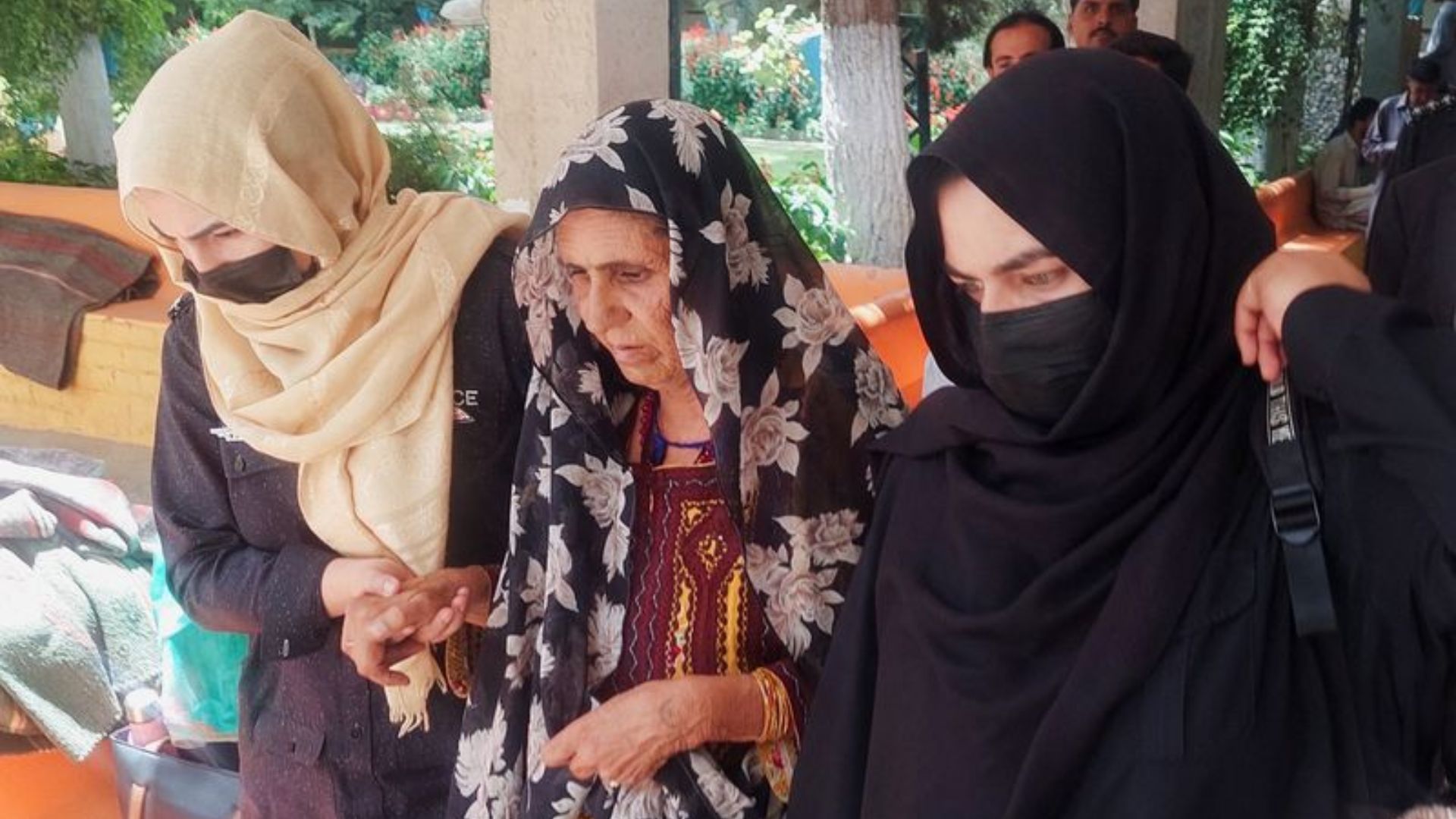
A gruesome video depicting an ‘honour killing’ in a remote corner of Pakistan’s Balochistan province has evoked widespread outrage and fresh scrutiny of tribal practices and justice mechanisms.
The video, which features a woman and a man who had been accused of adultery being killed in the desert, has sparked demands for reform in a nation where such offences frequently go unprosecuted.
The Killing Caught on Camera
The footage, which went viral on the Internet, shows the woman, Bano Bibi, being given a Quran by a man police identified as her brother, Jalal Satakzai.
“Walk seven steps with me, then you can kill me,” Bano tells the camera operator in the video. She actually walks a few steps, stops, and gets three bullets from her brother. A second later, the man turns his gun on Ehsan Ullah Samalani, who had been accused of Bano of having an affair, and shoots him dead.
Even though hundreds of honour killings take place in Pakistan each year, frequently without gaining national notice, the brutality and notoriety of this case resonated throughout the nation.
Late Response Raises Questions
Though the killing happened months ago outside a provincial capital, government authorities did nothing until the video went online. Civil rights attorney Jibran Nasir accused the authorities of late action, saying:
“The crime was committed months ago, in broad daylight and not in secret, close to a provincial capital, but nobody did anything until 240 million saw the murder on television. That’s not a reaction to a crime. That’s a reaction to a viral moment.”
In response to the circulation of the video, police arrested 16 people, including a tribal elder and Bano’s mother, in Balochistan’s Nasirabad district. Bano’s younger brother, who is accused of being the shooter, however, is still at large.
Family Justifies the Killings
In another video that also went viral, Bano’s mother, Gul Jan Bibi, justified the killing, saying it was in accordance with traditional tribal customs.
“We did nothing wrong. Bano and Ehsan were murdered according to our traditions,” she asserted, stating that the act was not commanded by a tribal leader but was conducted by local elders and relatives. She added that her daughter had five children and had come back after eloping with Ehsan for 25 days.
Social Media Enraged
Balochistan Chief Minister Sarfraz Bugti described the case as ‘test and pledged to eliminate illegal tribal justice systems such as jirgas, traditional courts that hand down verdicts outside the law. Police originally said that a jirga had ruled that the couple should be executed.
The video generated an online storm of outrage using hashtags such as #JusticeForCouple and #HonourKilling. The Pakistan Ulema Council deplored the crime as ‘un-Islamic’ and called for terrorism charges against the culprits.
In Quetta, human rights activists and members of civil society protested to demand justice and an end to parallel justice systems.
Incompetent Law Enforcement
Professor and anthropologist Arsalan Khan stated that virality for such videos has a mixed role in dispensing justice.
“Virality is a double-edged sword. It can push the state to act, but public spectacle can also be a tactic used to regain ghairat, or perceived family honour, in the eyes of the community.”
Even after honour killings were made illegal in 2016 after following social media sensation Qandeel Baloch’s killing, the laws are weakly enforced. Tribal councils in rural areas often dominate state institutions.
“In a land where conviction rates are as low as single digits, visibility and the furor that it causes has its benefits,” said constitutional attorney Asad Rahim Khan. He also chastised the government for undermining the judiciary and considering plans to restore jirgas in erstwhile tribal areas.
Will the Outrage Endure?
Though the incident has hit Pakistan’s Senate and been denounced by the human rights committee, experts remain dubious of durable change.
“There’s commotion now, but as always, it will die down,” Jalila Haider, a Quetta-based human rights lawyer, said. She emphasized that much of the country remains without good law enforcement, so tribal structures continue to hold sway.
“It’s not enough to simply condemn the jirgas. The question is: why does the state let them happen at all?” she added.
As per the Human Rights Commission of Pakistan, there have been at least 405 reported honour killings to date in 2024. The majority of victims are women, who are usually targeted by their own family members in the name of honour protection.