
The public resurfacing of Pakistan’s controversial diplomatic cable from March 2022 has reignited debate over whether the United States was seeking political change in countries, including in India, that refused to align with Washington’s position on the Russia-Ukraine war.
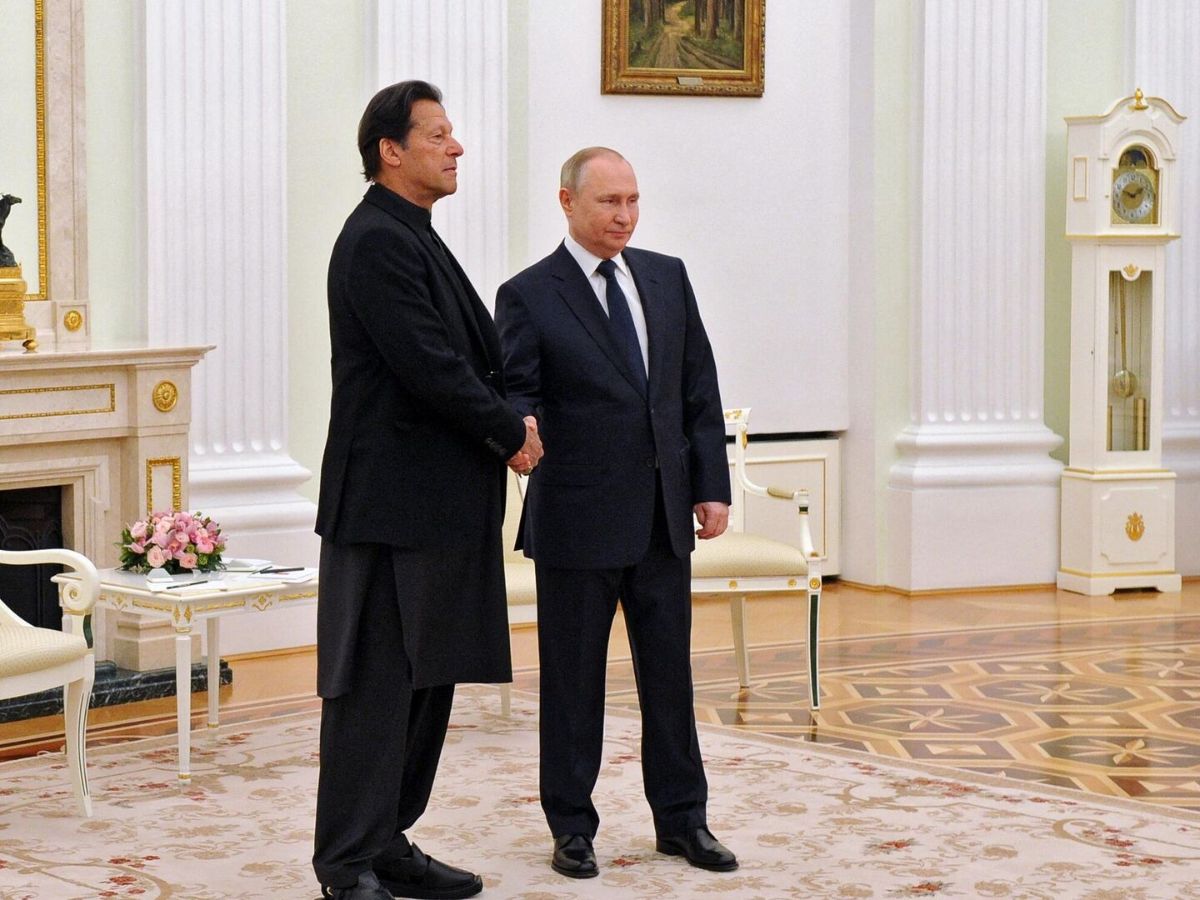
The cable, sent by Pakistan’s then ambassador to Washington Asad Majeed Khan after a meeting with US Assistant Secretary of State Donald Lu, records unusually blunt remarks. Lu allegedly told the Pakistani envoy that “if the no confidence vote against the Prime Minister succeeds, all will be forgiven in Washington”, while warning that otherwise “it will be tough going ahead”. The cable also records Lu expressing anger over Khan’s Moscow visit and Pakistan’s “aggressively neutral” position on the conflict.
The document shows explicit American displeasure with Pakistan’s foreign policy choices and suggests that Washington viewed a political transition in Islamabad favourably.
The development has renewed attention on a report published by The Sunday Guardian on 12th February 2023, which had spoken about discussions taking place in diplomatic and political circles in India following New Delhi’s refusal to fall in line with the Western position on Russia. Both countries had abstained on multiple UN resolutions and continued engagement with Moscow despite sustained pressure from Western capitals.
The cable now provides documentary precedent for what, in India’s case, had only been reported through sources.
The Sunday Guardian report had stated that meetings involving Persons of Indian Origin, activists, lawyers, diplomats and political intermediaries were being held in Delhi and London ahead of the 2024 Lok Sabha elections, including one hosted inside a European embassy in Delhi. The discussions centred around building political and media pressure against the Narendra Modi government.
The Pakistan document demonstrates that at least in one case, senior US officials were openly discussing the possibility that bilateral tensions could ease after a change in political leadership.
It strengthens a broader perception that sections of the Western establishment were deeply uncomfortable with governments pursuing independent foreign policy positions after the Ukraine war began.
The cable’s resurfacing gives that conversation renewed urgency at a moment when the geometry of India-US-Russia relations remains far from settled.