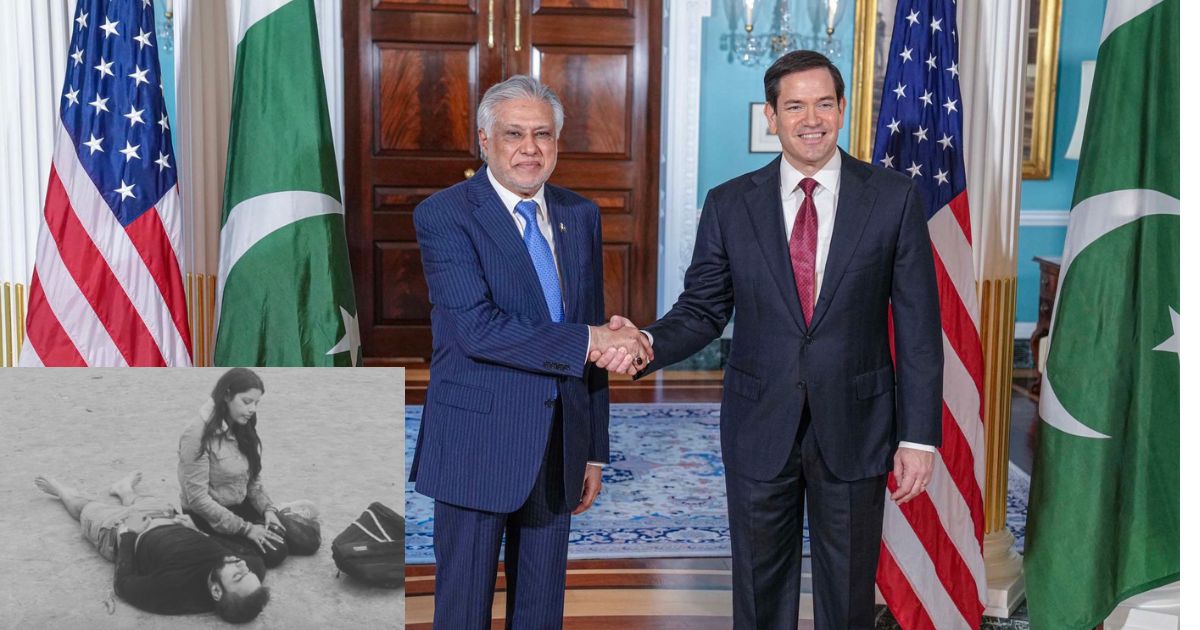
US Foreign Secretary Marco Rubio received Pakistan Deputy Prime Minister and Foreign Minister Ishaq Dar on July 25, 2025, in Washington for senior-level discussions focused on counterterrorism, trade, and recent tension in the region due to the Operation Sindoor crisis between India and Pakistan.
India Skeptical, asserts ‘No Third Party’
For India, the timing and agenda of the meeting have underlined a few tensions in US-Pakistan relations that have been persisting over time. Although the two officials talked up increased cooperation on counterterrorism, mining, and commerce, Minister Dar personally thanked the US for what he referred to as a “constructive role” in bringing about recent India-Pakistan ceasefire—a contention New Delhi has long disputed.
India asserts that the ceasefire, announced on May 10 following days of fierce exchanges of fire after the Pahalgam terror attack which left 26 civilians dead, was brought about through direct military and diplomatic pressure and not through mediations from outside. The Modi regime has once again asserted that Kashmir and broader bilateral matters should be resolved only between India and Pakistan and not with the help of third nations or facilitators.
Iran in talks, US ‘grateful’
During his meeting, Rubio “commended Pakistan for remaining willing to engage constructively in negotiations with Iran and for remaining committed to regional stability,” a US State Department spokesperson stated. Plans to enhance counterterrorism cooperation were reportedly on the table, referencing challenges such as ISIS-K. Still, US comments—gratefully thanking Pakistan for its “partnership in the fight against terrorism”—did not mention India or the Kashmir cease-fire, much less any Pakistani responsibility for the April 22 Pahalgam attack. India continues to urge the international community to identify and act against Pakistan-based terror groups, which New Delhi blames for the ongoing violence in Jammu and Kashmir.
Pakistan eyes ‘investment’
Most importantly, Dar highlighted the possibility of significant US investment in Pakistan’s natural resource and mineral sectors, boasting reserves with a value of as much as $8 trillion and painting Pakistan as a prime location for American business. This overture comes as Islamabad has been trying to diversify its economic and strategic wagers—highlighting its “bridge” position between China and the US even as it also defends its close relations with Beijing.
For Indian policymakers, these US-Pakistan interactions evoke a combination of suspicion and caution. Official reports point out that foreign “facilitation” narratives have the potential to embolden Islamabad diplomatically, leading to more equivocation on cross-border terrorism instead of actual accountability. The Indian position is clear: real peace demands Islamabad to eliminate terror infrastructure on its territory, not diplomatic symbolism or transactional alliances with external powers.
As the subcontinent digests the consequences of Operation Sindoor and the fleeting calm that ensues, New Delhi will keep a hawk’s eye on Washington’s next steps, looking for concrete commitments on terrorism and India’s insistence that only bilateral talks—without foreign intervention—can achieve enduring stability in South Asia.