
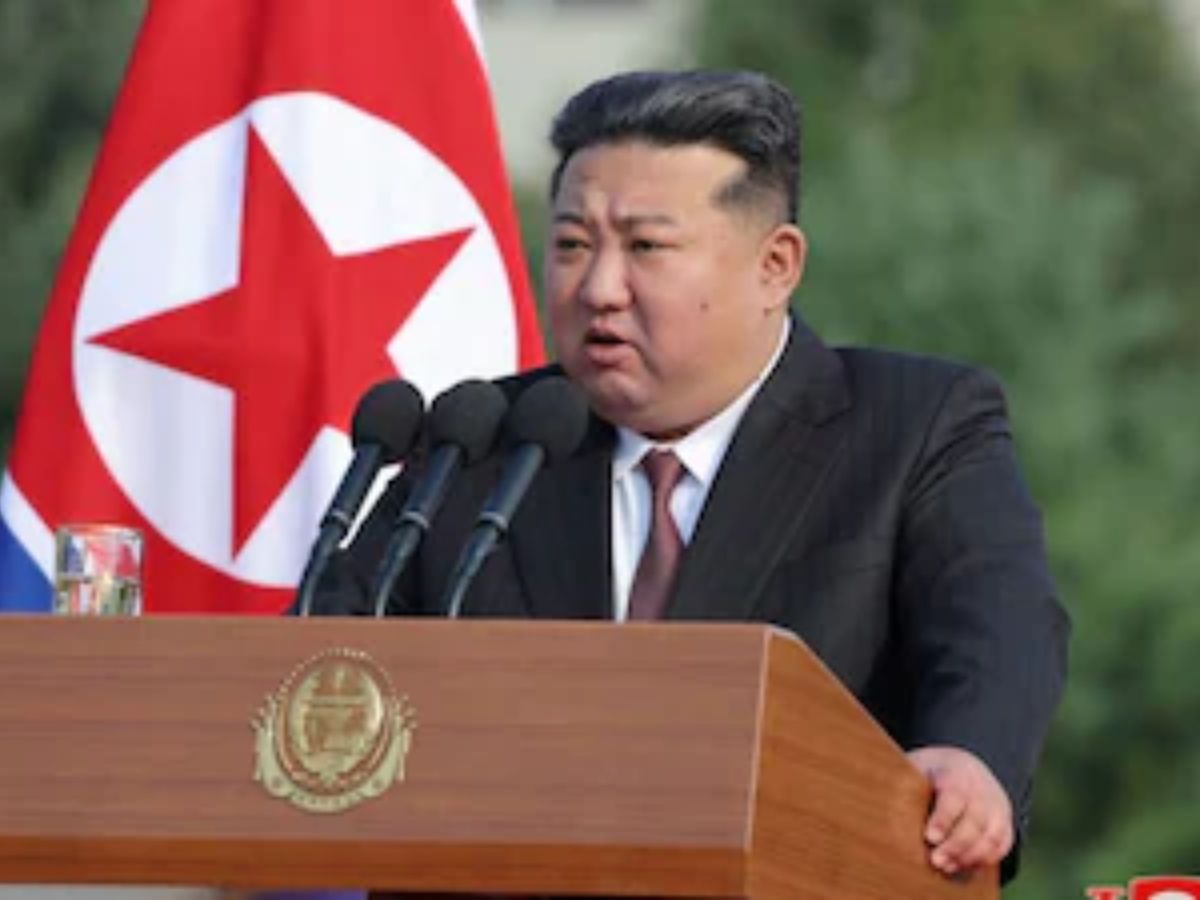
North Korean leader Kim Jong Un has reportedly ordered a linguistic crackdown, banning everyday English words like ‘hamburger’, ‘ice-cream’, and ‘karaoke’ to curb Western influence and promote homegrown culture.
As per local accounts, tour guides at the new Wonsan beach resort have been told to stop using well-known Western or South Korean words. Instead, they will have to use state-sanctioned North Korean phrases.
For instance, a hamburger is henceforth dajin-gogi gyeopppang, which literally means ‘double bread with ground meat’, and ice cream is now eseukimo (‘eskimo’). Karaoke machines, found in South Korea, are called ‘on-screen accompaniment machines’.
ALSO READ: Is Kim Jong Un’s Security Erasing his DNA After Putin Talks? | VIDEO
Daily NK cited the official instructions saying, “Trainees should pronounce dajin-gogi gyeopppang for hamburger and eseukimo for ice cream. And karaoke machines, which are common in South Korea, can be referred to as ‘on-screen accompaniment machines.”
20 to 30 tour guides are purportedly being trained intensively in Kangwon province under the direction of the Workers’ Party of Korea’s Cadre Department. The syllabus covers intense lessons in tourist management and obligatory memorization of sanctioned slogans and quotations. Trainees have to pass an examination to graduate.
ALSO READ: Kim Jong Un Crosses Border Into China On His Mysterious Train, State Media Reports
This is not the first drastic move from North Korea to restrict foreign influence. Previously, it was reported that citizens arrested for watching or spreading foreign TV shows and films are severely punished, including execution. A 2023 defector reported to the BBC that three of her friends were executed just for having South Korean dramas.
The new language bans underscore the regime’s continued determination to manage culture and protect citizens from foreign ideas, even to do something as mundane as indulge in their own ‘ice cream’ or ‘hamburger’.